Africa
Nigerians, Religious, Spiritual Or Values Erodium? -By Prince Charles Dickson, Ph.D
To address the challenges of values erodium, Nigeria must move beyond superficial religiosity and embrace a deeper, more transformative spirituality. This requires that religious leaders and institutions prioritize moral education and hold their members accountable for ethical behavior. Nigerians must demand integrity from their leaders, regardless of their religious affiliations. Reconnecting with the positive aspects of traditional African values can also provide a moral foundation for modern society. And our education systems should emphasize critical thinking and moral reasoning, equipping young people to navigate ethical challenges.

Cynics see Nigeria through a lens of perpetual distrust, convinced that every effort is doomed to drown in the same murky waters of past failures. They’ll tell you, “Na who dey push wheelbarrow full of sand dey build skyscraper?”—mocking ambition as naivety. But their skepticism, though rooted in the scars of unmet promises, often overlooks the quiet revolutions: the techpreneur in Lagos coding solutions, the teacher in Kano rebuilding minds brick by brick. I am no cynic. I choose to see the cracks not as proof of collapse but as spaces where new foundations can be laid. Nigeria is a patient, not a corpse—and healing demands more than folded arms.
Critics dissect with scalpels, slicing through policies and programs to ask, “Wetin be the koko?” Their questions are necessary—like the hawk-eyed auntie at the market who inspects each yam tuber for rot. But critique without creation is a symphony without rhythm; it diagnoses the fever but brews no tonic. Yes, LazyJos’ low turnout exposes gaps—between intent and access, hope and hustle. Yet, while critics tally flaws, I’d rather roll up my sleeves and recalibrate. Nigeria’s blueprint is being redrawn in real time; even imperfect strokes add to the canvas.
Complainants wield grievances like a Fuji anthem on repeat: “This country no balance!” Their frustration is valid—fueled by blackouts, inflation, and roads smoother on Twitter than in reality. But complaint, when it becomes a lifestyle, dims the fire to innovate. The youth chasing clout over grants? It’s survival, yes, but also a cry for reinvention. I refuse to drown in lament. Nigeria’s story isn’t a Nollywood tragedy on loop; it’s a palm wine tap—slow, sticky, but yielding sweetness for those patient enough to cup their hands.
I am none of these—but a cautiously optimistic architect. Nigeria works because we make it work: patch here, weld there, eyes on a horizon beyond today’s chaos. Is it grueling? Kai! But as the proverb goes, “The river that forgets its source will dry.” My quota? To keep digging wells, even if some only come to fetch water when the rain fails. The dance continues—Shaku Shaku steps on cracked pavements, but the music? E get as e be. We dey try.
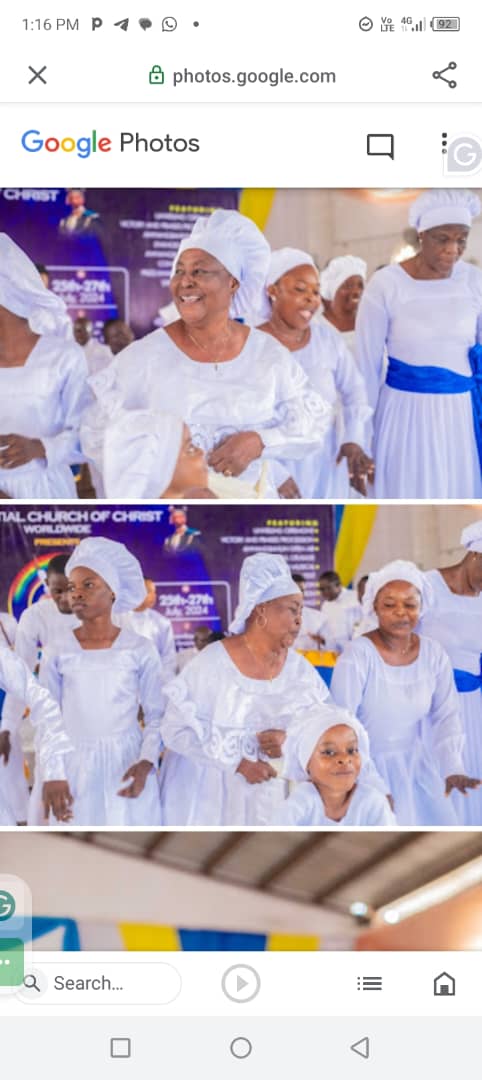
So, when I take on certain subject matters, it is out of love for my country—Nigeria is often described as one of the most religious countries in the world. From the bustling cities to the quiet villages, churches and mosques dot the landscape, and religious slogans adorn buses, shops, and even business logos. Yet, beneath this outward display of faith lies a paradox: a nation deeply devoted to religion but seemingly disconnected from spirituality and moral values. Let me explore Nigeria’s allure to religion at the expense of spirituality, the role of religious individuals in governance and corruption, and how the erosion of values—values erodium—has become a pressing concern amid religious fervor.
Nigeria’s religious landscape is dominated by Christianity and Islam, with a significant number of adherents to traditional African religions. On the surface, this religious devotion appears to be a source of unity and moral guidance. However, the reality is more complex. While Nigerians are quick to identify as “religious,” there is often a disconnect between their faith and their actions.
Religion has become more about outward expressions—attending services, wearing religious attire, or displaying religious symbols—than about inner transformation or spiritual growth.
This focus on religion over spirituality has created a society where people can quote scriptures or recite prayers but fail to live out the core values of their faith: honesty, compassion, justice, and integrity. Spirituality, which emphasizes a personal connection with the divine and a commitment to ethical living, is often overshadowed by the performative aspects of religion. As a result, Nigeria’s religious devotion has not translated into a more just, equitable, or morally upright society.
One of the most glaring contradictions in Nigeria is the prevalence of corruption and bad governance among individuals who identify as deeply religious.
Politicians, business leaders, and public officials often attend religious services, donate generously to religious causes, and publicly proclaim their faith. Yet, many of these same individuals are implicated in corruption, embezzlement, and other forms of misconduct.
This raises important questions: How can a nation so devoted to religion struggle with such high levels of corruption? Why does faith not translate into ethical leadership? The answer lies in the superficiality of Nigeria’s religious culture. For many, religion is a tool for social validation or a means to gain divine favor, rather than a guide for moral living. This disconnect between faith and action has allowed corruption to thrive, even among those who claim to be religious.
Moreover, religious leaders are not exempt from this critique. Some have been accused of exploiting their congregations for financial gain, aligning with corrupt politicians, or remaining silent in the face of injustice. This complicity undermines the moral authority of religion and contributes to the erosion of societal values.
Nigeria’s history is marred by religious conflicts, often fueled by political and economic interests. From the Sharia law controversies in the North to the sectarian violence in the Middle Belt, religion has been a flashpoint for division and violence. While these conflicts are often framed as religious, they are frequently driven by deeper issues such as resource control, political power, and ethnic identity.
Politicians and elites have exploited religious differences to manipulate public opinion, secure votes, or divert attention from their failures. This manipulation has deepened divisions and eroded trust among Nigeria’s diverse religious communities. Instead of fostering unity and understanding, religion has become a weapon for perpetuating conflict and maintaining the status quo.
Amid Nigeria’s religious fervor, there is a growing concern about the erosion of values—values erodium. Traditional African values such as honesty, community, respect for elders, and hard work are increasingly being replaced by materialism, greed, and a “get-rich-quick” mentality.
This decline in moral values is evident in various aspects of Nigerian society—From petty bribery to large-scale embezzlement, corruption has become normalized, even among those who claim to be religious. Rising levels of crime, including kidnapping, fraud, and cybercrime, reflect a society where moral boundaries are blurred. The breakdown of family structures and community ties has led to a loss of social cohesion and mutual support. The emphasis on certificates over character has created a generation that prioritizes success over integrity.
The erosion of values is particularly troubling in a nation that prides itself on its religious identity. If religion is meant to guide moral behavior, why are values declining? The answer lies in the gap between religious profession and spiritual practice. Without a genuine commitment to spirituality and ethical living, religion becomes an empty shell, incapable of addressing the moral challenges facing society.
To address the challenges of values erodium, Nigeria must move beyond superficial religiosity and embrace a deeper, more transformative spirituality. This requires that religious leaders and institutions prioritize moral education and hold their members accountable for ethical behavior. Nigerians must demand integrity from their leaders, regardless of their religious affiliations. Reconnecting with the positive aspects of traditional African values can also provide a moral foundation for modern society. And our education systems should emphasize critical thinking and moral reasoning, equipping young people to navigate ethical challenges.
Nigeria’s allure to religion is undeniable, but its disconnect from spirituality and moral values is a cause for concern. The prevalence of corruption, religious conflicts, and the erosion of values—values erodium—reveals the limitations of a faith that is performative rather than transformative. For Nigeria to realize its potential, it must move beyond religious devotion and embrace a spirituality that fosters ethical living, unity, and justice. Only then can the nation truly reflect the values it so passionately professes—May Nigeria win!
—