
Connect with us

Africa

Nigeria’s Billion-Naira Mystery -By Abdulazeez Toheeb Olawale

The way forward is clear: stronger institutions, full disclosure of public spending, real accountability for looters, protection for whistleblowers, and the use of technology to block leakages. But what Nigeria truly needs is political will. Too often, the so-called anti-corruption fight is selective, shielding allies while chasing opponents.

Published

on

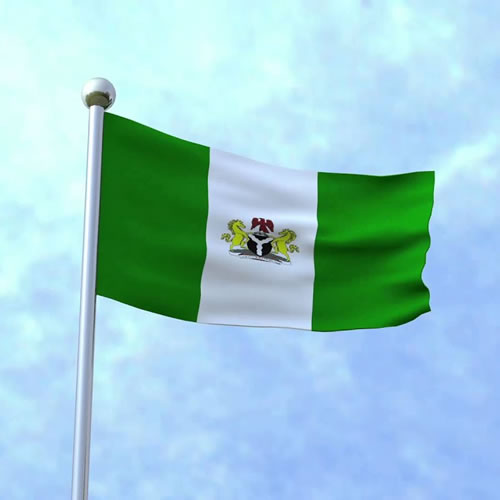
quality-nigerian-flag-for-sale-in-lagos

The Nigerian government says ₦350 billion has been shared among the poor. Yet, not a single beneficiary can be identified. This is the latest billion-naira mystery in a country where corruption has become a way of governance. How can so much money vanish in the name of poverty alleviation, while the poor remain as hungry and hopeless as ever?

Just last two week, the Minister of Finance made the bold claim that billions were distributed to Nigerians in need. But without names, records, or proof, the announcement has only fueled suspicion. In a nation of 250 million people, citizens are left asking: who really got this money?

This is not an isolated episode. From the ₦1.7 trillion fuel subsidy fraud to the $2.1 billion arms procurement scandal, and the recent financial mismanagement at the Central Bank of Nigeria, the pattern is depressingly familiar—billions vanish, nobody is punished, and life for ordinary Nigerians gets worse.

Aisha Usman, a food vendor in Kano, summed it up: “They keep saying they are sharing billions to the poor, but the poor are still hungry.”

The private sector is equally guilty. From inflated COVID-19 contracts to small businesses forced to pay bribes for licenses, corruption has become the price of doing business in Nigeria. As young entrepreneur Emeka Okafor put it: “Before you even register your company, someone is already asking you to ‘settle’ them. How can youths survive in such a system?”

Advertisement

The human cost is devastating. Looted health funds mean mothers die during childbirth. Stolen education budgets leave children learning under trees. Embezzled infrastructure funds mean more accidents on bad roads. Corruption is not just numbers—it is lives cut short and dreams destroyed.

Transparency should be the antidote. Nigeria has tried with the Treasury Single Account and the Nigeria Extractive Industries Transparency Initiative, but secrecy still defines public finance. Empty pronouncements of billions “shared” without evidence only deepen mistrust.

The way forward is clear: stronger institutions, full disclosure of public spending, real accountability for looters, protection for whistleblowers, and the use of technology to block leakages. But what Nigeria truly needs is political will. Too often, the so-called anti-corruption fight is selective, shielding allies while chasing opponents.

Until Nigeria confronts corruption sincerely, development will remain a mirage. The question remains: in a nation drowning in poverty, who really benefits from these billion-naira mysteries? Because the poor certainly don’t.


Advertisement
Continue Reading
Advertisement
Click to comment

You must be logged in to post a comment Login

Leave a Reply

Trending Contents

Topical Issues

Breaking News4 hours ago

53,843 Drug Users Rehabilitated by NDLEA in Five Years, Says Marwa

The NDLEA says it rehabilitated 53,843 drug users and conducted 17,213 anti-drug outreaches in five years as Marwa calls for...

Jeff Okoroafor - Africans Angle Jeff Okoroafor - Africans Angle
Politics5 hours ago

The Sumner Sambo Smokescreen: Why Peter Obi’s Policies, Not Nonsense, Should Decide 2027, by Jeff Okoroafor

Sumner Sambo can call Tinubu a democrat. He can dismiss Peter Obi as policy-free. He can treat the inducement of...

CNG CNG
Forgotten Dairies7 hours ago

CNG: The Transport Revolution In Nigeria Must Get Right, by Yekini Lukmon

Now is the time to turn Nigeria’s abundant natural gas resources into affordable mobility, stronger commerce and better economic opportunities...

Crypto transaction bitcoin finance tech Crypto transaction bitcoin finance tech
Global Issues7 hours ago

Stable Money, Arbitrary Power: Tether’s Accountability Test, by Fransiscus Nanga Roka

An effective digital-dollar system needs to buy-off prevention from financial crime and unwarranted deprivation. Otherwise, the token price is described...

Aliko Dangote Aliko Dangote
National Issues7 hours ago

How Do We Explain to Our Children How Nigeria Spent Up to $25 Billion on Broken Refineries but Struck Gold with a $1 Billion Dangote Stake?, by Daniel Nduka Okonkwo

Our children should not inherit another cycle of promises, rehabilitation ceremonies, and abandoned industrial capacity. They should inherit institutions capable...

NYSC NYSC
Forgotten Dairies8 hours ago

How Do I Repay the N6 Million I Borrowed?, by Abdulkadir Salaudeen

The Tinubu government is now being advised to make a provision of trillions of naira in its annual budget as...

Breaking News10 hours ago

NYSC Abduction: Families Reveal N3m–N6m Ransom Payments as Imo Police Deny Knowledge

Families reveal how they raised millions in ransom to free 20 abducted NYSC members in Imo State as police deny...

NNPCL - fuel NNPCL - fuel
Breaking News11 hours ago

Opposition Parties Slam FG’s N1,350 Petrol Offer, Ask What Happens After 30 Days

FG plans to sell petrol at N1,350 per litre for 30 days, but Atiku Abubakar, ADC and NDC question the...

Hajia-Hadiza-Mohammed Hajia-Hadiza-Mohammed
National Issues21 hours ago

The Niger State Cash Distribution Stampede, Mass Impoverishment And Hunger In The Land, by Hajia Hadiza Mohammed

These events are unfortunate and tragic. They occur because people and hungry, impoverished by wrong economic policies of the government...

Job Joseph Job Joseph
Opinion22 hours ago

An Examination Of The Legal Framework For The Protection Of Indigenous Knowledge And Cultural Expressions Under Nigerian Law, by Jobs Joseph

For Nigeria, the adoption of a sui generis legal framework deserves serious consideration. Such a system could recognise communal ownership,...












