
Africa
No Work, No Pay: A Threat That Solves Nothing -By Muhammad Umar Shehu
If we truly want to equip our education system for the poor and the future, we must stop treating teachers as enemies and start treating them as partners. A nation that punishes those who fight for education is a nation that has already given up on its future.

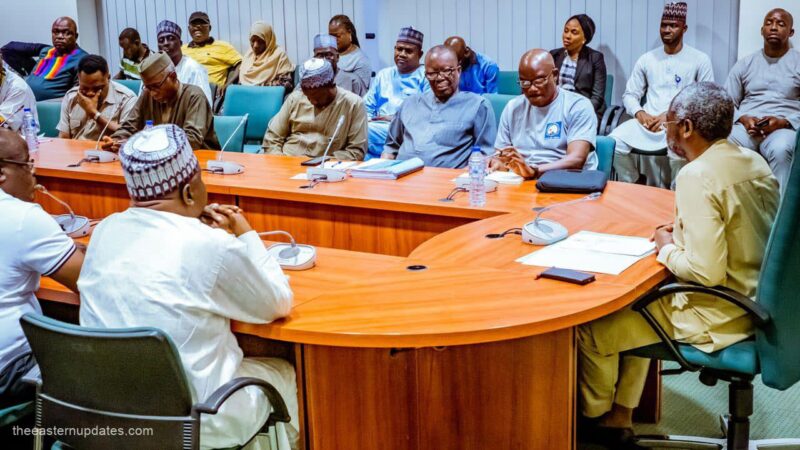
Once again, the federal government is threatening the Academic Staff Union of Universities (ASUU) with its usual weapon, no work no pay. It’s the same tired approach used by past administrations whenever the union insists on the full implementation of agreements that were freely signed. But history has shown that this policy does not solve problems; it only deepens mistrust, kills morale, and pushes our universities further into decline.
The no work no pay policy was applied during the Buhari administration, particularly after the 2022 ASUU strike that lasted eight months. Lecturers were denied their salaries for the period of the strike, even though the government’s failure to meet its own promises was the reason for the industrial action in the first place. Buhari’s government insisted on punishment rather than dialogue, and what was the result? Did it end the strikes? Did it fix the rot in our universities? No. It only created resentment and weakened the relationship between the government and the academic community. The issues that triggered that strike, poor funding, unpaid allowances, decaying infrastructure, remain unsolved today.
Education is not like any other sector. ASUU is not just another pressure group that you can intimidate or silence with threats. This is a body of intellectuals, people whose weapon is knowledge and whose struggle is for national development. You can’t use the same tactics that might work on transport unions or political protesters on an organization built on principles, history, and intellectual resistance.
Globally, similar unions in countries like South Africa, the United Kingdom, and even the United States have stood their ground when governments failed to meet academic demands. In 2016, for instance, the South African “Fees Must Fall” movement forced the government to rethink its policies and increase education funding. In the UK, university staff have gone on strikes repeatedly over pay and working conditions, yet the government had to return to the negotiation table, not threaten them. These examples show that dialogue and respect for agreements are the only sustainable paths, not coercion.
In Nigeria’s own history, ASUU has endured decades of intimidation and threats. From the military era to the present democratic dispensation, their fight has remained consistent to protect public universities from total collapse. They have been banned, unbanned, and blacklisted, yet they remain because they represent something deeper than just salary negotiations. They represent the conscience of our educational system.
The government’s repeated use of no work no pay is not just short-sighted, it is a confession of leadership failure. Instead of fixing the root causes of the strikes, those in power prefer to silence those who expose their neglect. The result is what we see today, poor learning conditions, brain drain, and a generation of students whose academic lives are constantly interrupted.
It’s time the government understood that ASUU’s strength lies in its moral ground. Their struggle is not for personal gain but for the survival of education in Nigeria. Threats won’t work; intimidation won’t help. Only commitment, dialogue, and respect for signed agreements will bring peace to our universities.
If we truly want to equip our education system for the poor and the future, we must stop treating teachers as enemies and start treating them as partners. A nation that punishes those who fight for education is a nation that has already given up on its future.
Muhammad Umar Shehu
Wrote from Gombe and can be reached via
umarmuhammadshehu2@gmail.com


























You must be logged in to post a comment Login