Africa
Nigeria’s Democracy Under Challenge: Military Overreach in Fisayo Soyombo’s Arrest Calls for Leadership Action from CDS General Musa and Army Chief Oluyede, by John Egbeazien Oshodi

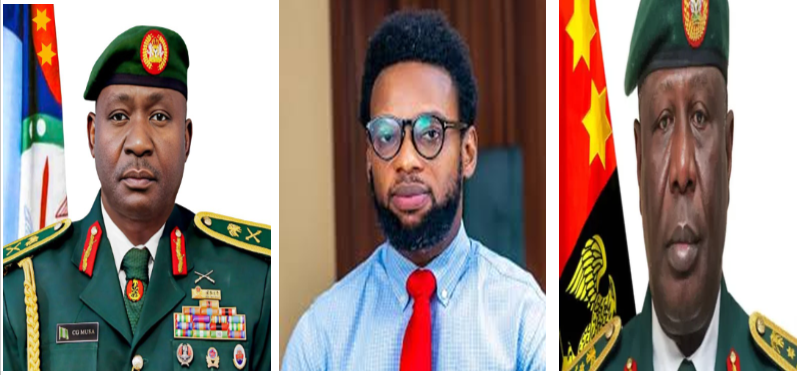
The detention of investigative journalist Fisayo Soyombo by the Nigerian Army underscores a glaring disregard for constitutional governance and the roles of civilian law enforcement. It reflects a dangerous pattern of military overreach, and it is now incumbent on the leadership of the Nigerian armed forces, including Chief of Defence Staff (CDS) General Christopher Musa and newly appointed Chief of Army Staff Major General Olufemi Oluyede, to act decisively. Their leadership is critical to restoring the rule of law, protecting press freedom, and ensuring the military operates within its constitutional boundaries.
Lieutenant Colonel Danjuma John Danjuma, Acting Deputy Director of 6 Division Army Public Relations, claimed that Soyombo was “arrested at the scene” of an illegal oil bunkering site. Even if this is true, the Army’s actions following the arrest were not only unconstitutional but also deeply troubling. Soyombo is a civilian journalist, and Nigeria’s Constitution clearly mandates that the investigation and prosecution of civilians are the exclusive responsibility of the Nigeria Police Force (NPF). By detaining Soyombo for three days, seizing his gadgets, and keeping him incommunicado, the Army has grossly exceeded its authority, undermining both civilian institutions and democratic principles.
A Leadership Test for General Musa and Major General Oluyede
This case presents a critical leadership test for General Christopher Musa, the CDS, and Major General Olufemi Oluyede, the new Chief of Army Staff. The military under their watch has demonstrated an alarming disregard for the principles of democracy, and the world is watching how they respond. General Musa, as the highest-ranking military officer, must ensure that the armed forces respect the separation of powers and adhere strictly to their constitutional roles. Similarly, Major General Oluyede, who recently assumed office following the untimely death of Lt. General Taoreed Lagbaja, must demonstrate a clear commitment to upholding the rule of law and protecting civilian authority.
The continued detention of Soyombo is a stark violation of his rights and a direct affront to the Nigeria Police Force, which has been sidelined in this matter. The NPF, established under Section 214 of the Constitution, is the only body legally empowered to handle criminal investigations involving civilians. The Army’s actions not only undermine the police but also suggest a dangerous power struggle between the military and civilian institutions. This is a slippery slope that could lead to further erosion of democratic norms.
The Role of the Police and the Army’s Misstep
The Nigeria Police Force plays a central role in maintaining law and order, investigating crimes, and ensuring justice through due process. Its officers are trained to handle evidence, interrogate suspects, and follow legal protocols designed to protect human rights. By detaining Soyombo and confiscating his gadgets, the Army has not only overstepped its mandate but has also risked jeopardizing critical evidence. Any materials taken from Soyombo must be immediately preserved and transferred to the NPF to ensure transparency and accountability.
This blatant disregard for the NPF’s authority raises serious questions about the military’s intentions. Is this an isolated incident, or does it reflect a broader attempt by the military to assert dominance over civilian institutions? General Musa and Major General Oluyede must address these concerns head-on by ensuring that the Army’s actions align with its constitutional responsibilities and do not encroach on civilian governance.
Implications for Press Freedom and Democracy
The detention of Soyombo is more than an isolated case; it is a direct attack on press freedom and a warning to journalists across Nigeria. The military’s actions suggest that exposing corruption or systemic failures could lead to intimidation, detention, or worse. This is a dangerous precedent that undermines the principles of accountability and transparency essential to any democracy.
The Foundation for Investigative Journalism (FIJ) has made it clear: “Journalism is not a crime! #FreeFisayoNow.” The organization has also called for the immediate preservation of all evidence confiscated from Soyombo and its transfer to the police. The military’s continued custody of this evidence only deepens suspicions of tampering or suppression, further eroding public trust.
Calls for Immediate Action
If Soyombo remains in military custody at the time of this publication, it is imperative for the presidency, civil society organizations, and international human rights bodies to intervene. President Bola Tinubu must demand his immediate release, the transfer of all evidence to the police, and a full investigation into the military’s overreach. General Musa and Major General Oluyede must also take responsibility and ensure that such incidents do not recur under their leadership.
The Nigerian military must be reminded that its role is to support, not supplant, civilian authority. Detaining civilians, seizing evidence, and bypassing the police are actions that belong to authoritarian regimes, not democracies. General Musa, as CDS, must set a clear tone that the armed forces will respect constitutional boundaries and operate transparently.
A Defining Moment for Nigeria
This case is a critical test of Nigeria’s democracy and the leadership of its military. General Christopher Musa, the Chief of Defence Staff, and Major General Olufemi Oluyede, the Chief of Army Staff, have an opportunity to demonstrate that the Nigerian military can be a force for good—one that upholds the law and respects civilian institutions. Failing to act decisively will not only damage their reputations but also weaken Nigeria’s already fragile democratic foundations.
Nigerians must demand accountability—not just for Fisayo Soyombo but for the preservation of the principles that underpin a functioning democracy. This is a defining moment for the country, and the actions of its leaders will determine whether Nigeria continues to progress as a constitutional democracy or slides further into authoritarianism. Journalism is not a crime, and no institution, no matter how powerful, is above the law. It is imperative for the Nigerian military to act within its constitutional mandate and restore public confidence in its commitment to justice and democracy.
If, at the time of this publication, Soyombo remains in military custody, the world must take notice. The global press, international human rights organizations, national civil societies, and even the Nigeria Police Force (NPF) itself must collectively raise their voices and call for action. President Bola Tinubu must be confronted with the urgency of this matter, as must General Musa and Major General Oluyede. The continued silence of journalists, civil institutions, or the police in the face of such undemocratic practices would embolden further violations and undermine the freedoms of every Nigerian citizen.
The press, as the fourth estate of democracy, cannot afford to be silent. Civil society groups, both national and international, must demand the immediate release of Soyombo and the transfer of any evidence or confiscated materials to the NPF for proper handling. This is not just about one journalist; it is about safeguarding the core tenets of democracy. The Nigerian military must be reminded of its duty to protect the nation, not to suppress its voices. Failing to do so would represent a betrayal of the democratic values Nigerians have fought to uphold.
The Nigerian military urgently needs to establish and implement comprehensive training programs focused on civilian-military relations, emphasizing the distinct constitutional roles of the military and the police in a democracy. These programs should provide clear guidance on the military’s mandate to protect national security and address external threats, while highlighting the Nigeria Police Force’s exclusive jurisdiction over internal security, crime investigations, and civilian law enforcement. It must be stressed that the military’s involvement in civilian matters should only occur under strict constitutional guidelines and with full deference to civilian authority.
To ensure these training programs are effective, they must be led by a qualified constitutional law expert with a deep understanding of democratic governance and the separation of powers. This expert would provide critical insights into the legal boundaries of military operations and the importance of respecting human rights, transparency, and accountability. Such training should also underscore the need for cooperation between the military and civilian institutions to foster mutual respect and adherence to the rule of law.
This initiative offers a critical opportunity for military leaders, including General Christopher Musa and Lieutenant General Olufemi Oluyede, to reinforce the military’s role as a protector of democracy rather than an institution that oversteps its bounds. Implementing this training is essential not only to prevent incidents like the unlawful detention of journalist Fisayo Soyombo but also to rebuild public trust in the military as a vital and accountable part of Nigeria’s democratic framework. Without such proactive measures, the military risks perpetuating constitutional violations that could erode Nigeria’s democratic progress and damage its national and international credibility.

Professor John Egbeazien Oshodi, born in Uromi, Edo State, Nigeria, is an American-based police and prison scientist, forensic/clinical psychologist, public policy psychologist, and legal psychologist. He’s a government advisor on forensic-clinical psychological services in the USA and the founder of the Dr. John Egbeazien Oshodi Foundation for Psychological Health. With a significant role in introducing forensic psychology to Nigeria through N.U.C. and Nasarawa State University, he’s also a former Secretary-General of the Nigeria Psychological Association. He’s taught at esteemed institutions like Florida Memorial University, Florida International University, Nova Southeastern University, and more, and is currently an online faculty member at ISCOM University, Weldios University and Walden University.