
Africa
Nigeria’s Economic Recovery Masks a Deepening Humanitarian Crisis -By Kuma Abubakar shettima Ali
Nigeria’s recovery must be people-centered. The goal of economic policy should not just be to grow GDP but to improve lives. A nation cannot truly claim progress when the majority of its citizens are hungry and hopeless. With sound leadership, transparency, and sustained investment in human and physical capital, Nigeria can transform its current crisis into an opportunity for renewal. But that will require more than economic reforms; it will require moral reform—a collective commitment to build a nation where progress is measured not by numbers but by the well-being of its people.

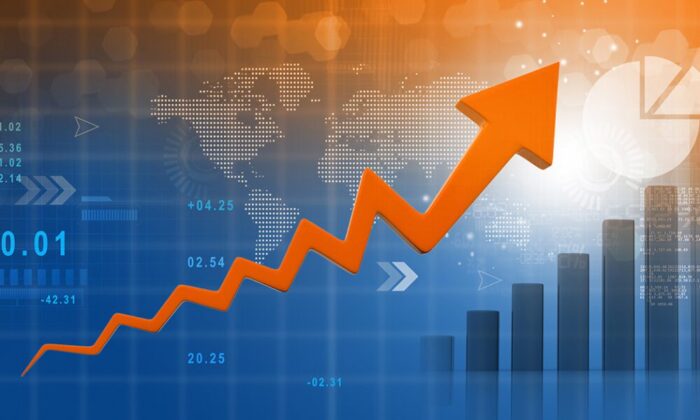
Nigeria, Africa’s most populous nation, is at a turning point. Recent reports from the National Bureau of Statistics indicate that the economy is showing signs of recovery, with the country’s Gross Domestic Product rising to ₦372.8 trillion in 2024 after a rebasing exercise. On paper, this appears to be a positive development, as the debt-to-GDP ratio has also improved to about 39.4 %, slightly below the federal government’s 40 % target. To the average observer, this may suggest that Nigeria’s economic problems are easing and that the nation is finally emerging from years of stagnation.
Yet, beneath these promising numbers lies a harsher reality. For millions of Nigerians, economic recovery remains an illusion. The prices of food, transport, rent, and other basic necessities continue to soar, pushing many families into deeper poverty. While GDP growth suggests that more wealth is being created, it does not reveal who benefits from it or whether it translates into better living conditions. This disconnect between economic indicators and the lived experiences of ordinary citizens has become one of the most pressing challenges facing the nation today.
The sharp rise in the cost of food is perhaps the clearest evidence of this crisis. Food inflation, which has remained stubbornly high, has devastated households across the country. The price of basic staples such as rice, beans, garri, and yam has more than doubled in many markets. For instance, the cost of preparing a simple pot of jollof rice—once a symbol of comfort in Nigerian homes—has increased by over 150 % between 2023 and 2024. Many families now spend more than a third of their income just to put one meal on the table. For low-income earners, that often means skipping meals or relying on debt to survive.
Behind the statistics are human stories of struggle and endurance. A growing number of Nigerians now depend on charity, borrowing, or handouts to get by. It is increasingly common to see civil servants, teachers, and even small business owners appealing for help to pay rent or school fees. The so-called “economic recovery” feels remote to them, overshadowed by daily battles with hunger, power outages, and job insecurity. The country’s poverty rate remains alarming, with more than 100 million people estimated to live below the international poverty line of $2.15 a day.
Despite numerous government interventions through social programmes such as the National Social Investment Programme (NSIP), the situation has not improved meaningfully. Billions of naira have been spent on various empowerment and cash-transfer initiatives, yet poverty continues to grow. Experts argue that the problem lies not just in funding but in poor targeting, weak institutions, and corruption. Many of the beneficiaries of these programmes are not the most vulnerable, while bureaucratic inefficiencies and political interference erode their impact. The result is a nation where the poor grow poorer despite billions being spent in their name.
Meanwhile, Nigeria’s fiscal position remains fragile. Although the debt-to-GDP ratio has improved, the country still spends a massive portion of its budget on debt servicing. Projections for 2025 suggest that over ₦15 trillion will be used to service debts—money that could otherwise be invested in infrastructure, healthcare, or education. Without a significant increase in revenue or a broad-based economic expansion, Nigeria risks trading short-term stability for long-term vulnerability. The government’s ongoing reforms in tax administration and energy pricing are necessary but painful, and without proper cushioning for the poor, they could worsen inequality.
Another deep-rooted challenge undermining progress is the country’s chronic infrastructure deficit. Nigeria’s infrastructure stock remains far below international standards, accounting for roughly 30 % of GDP compared to the global benchmark of 70 %. The electricity sector is particularly problematic: only about half of the population has access to reliable power, forcing businesses and households to depend on expensive diesel generators. This drives up production costs, discourages investment, and reduces job opportunities. No economy can thrive when its productive sectors operate in near darkness.
Security concerns further complicate Nigeria’s economic landscape. Persistent issues such as banditry, kidnapping, herder-farmer clashes, and insurgency continue to destabilize rural communities and displace farmers. The impact on agriculture has been devastating. Many farmers are unable to return to their fields, leading to reduced food production and higher prices. This vicious cycle—where insecurity fuels hunger and hunger fuels unrest—poses one of the gravest threats to national stability.
At the heart of Nigeria’s challenges lies a crisis of governance and public trust. Years of mismanagement, corruption, and opaque decision-making have weakened public confidence in institutions. Even well-intentioned reforms often face resistance because citizens doubt that they will benefit from them. Democracy in Nigeria remains fragile, and until governance becomes more transparent and accountable, it will be difficult to achieve lasting progress. Public resources must be managed with honesty, and leaders must communicate policies clearly and sincerely if they expect the people to bear the short-term pain of reform.
The divide between the political elite and ordinary citizens also continues to widen. While top government officials live comfortably, millions struggle to survive. This social gap fuels anger and cynicism, especially among the youth, who increasingly see migration—the “Japa” phenomenon—as their only path to a better life. The danger is that Nigeria could lose its brightest and most energetic citizens, leaving behind a population that feels trapped and voiceless. No amount of economic growth can compensate for the loss of human capital and hope.
If Nigeria is to turn its current situation around, it must act decisively. The government must prioritize food security by supporting farmers, investing in irrigation and storage facilities, and reducing post-harvest losses. Social safety nets should be restructured to directly reach the poorest households, while investments in education and healthcare must become central to the national agenda. Economic diversification should go beyond slogans—agriculture, manufacturing, and the digital economy all hold potential for job creation and inclusive growth.
Finally, Nigeria’s recovery must be people-centered. The goal of economic policy should not just be to grow GDP but to improve lives. A nation cannot truly claim progress when the majority of its citizens are hungry and hopeless. With sound leadership, transparency, and sustained investment in human and physical capital, Nigeria can transform its current crisis into an opportunity for renewal. But that will require more than economic reforms; it will require moral reform—a collective commitment to build a nation where progress is measured not by numbers but by the well-being of its people.
Kuma Abubakar shettima Ali, student of mass communication Kashim Ibrahim University ,Maiduguri




















You must be logged in to post a comment Login