
Africa
Nigeria’s Insecurity: A National Crisis, Not A Religious War -By Leonard Karshima Shilgba
If foreign governments and organizations wish to help, let them help wisely: support IDPs with food, water, medicine, and temporary shelter; provide technology for surveillance, intelligence, and border control; strengthen Nigeria’s capacity to fight terrorism without inflaming sectarian tensions. Let no one, whether naïve or mischievous, label our national tragedy a “Christian genocide.”

Discordant attempts to paint Nigeria’s current insecurity as a “religious war” have again drawn out the ludicrous—from those who relish being called “religious” to those who ordinarily care nothing for religion except when it becomes a convenient tool for political manipulation or foreign policy theatre. Curiously, even individuals—Nigerians and non-Nigerians—whose lifestyles, values, and politics stand far from the Christian virtues of mercy, truth, and justice have suddenly discovered a self-appointed mission: to “defend Nigerian Christians.” They speak with passion, tweet with outrage, and write with sobering urgency, insisting that Christians in Nigeria are undergoing a calculated genocide.
It is a flattering narrative for those who want applause, but it is not the truth.
Across Nigeria today, the land is littered with internally displaced persons—men, women, and children—who include both Muslims and Christians. These displaced Nigerians are not asking for theological treatises or foreign lectures on religious identity. They are asking for food, clean water, medical care, hygiene, safety, and the opportunity to return home. It would be commendable if the global apostles of “defending Nigerian Christians” first showed compelling commitment by defending Nigerians against hunger, disease, homelessness, and crushing poverty.
Nigeria does not have a “religious crisis”. Nigeria has a security crisis—a crisis that threatens families of every faith and no faith. And in a country where many families contain both Christians and Muslims, the simplistic narrative of “Christian victims versus Muslim aggressors” collapses under the weight of real life.
Those who desire to “save Nigerian Christians” must first do their homework, because some of the Christians they seek to “rescue” have Muslim siblings, Muslim parents, Muslim spouses, and Muslim neighbours who are equally endangered, equally bereaved, and equally displaced.
Rather than importing Hollywood-styled “Fast, Furious, and Sweet” assaults from abroad under the pretext of saving “amazing Nigerian Christians,” it is time for Nigerians to confront the real questions—questions only our own government can answer:
1. Why is the Nigerian Government Afraid of State Police?
In a country of over 220 million people, with vast ungoverned spaces, internal migration, and porous borders, a centralized police force is structurally incapable of policing every community. State policing is not a cosmetic reform—it is an existential necessity.
Why then does the Nigerian Government (Executive and Legislative) remain allergic to the idea?
Is it fear of misuse?
Is it political ego?
Or is it the inexplicable unwillingness to relinquish federal monopoly over a responsibility the federal government cannot effectively discharge?
Whatever the reason, Nigerians are dying while the debate drags on.
2. Why the Reluctance to Recruit Adequate Police and Military Personnel?
Nigeria is one of the most under-policed large nations in the world. Terrorists, bandits, and criminal syndicates drift effortlessly through vast unpoliced regions—forests, villages, and highways.
Why has the recruitment of police officers and military personnel been relegated to bureaucratic procrastination?
Why is the nation not flooded with trained security personnel who can overwhelm, deter, and dismantle militant networks?
An unprotected people is an undefended nation.
3. Why Do We Spend Billions Annually on “Official Vehicles” Instead of Security Infrastructure?
Every year, billions of naira are spent on convoys, comfort, and political luxury. Meanwhile communities suffer repeated attacks, police stations operate like under-funded kiosks, and border surveillance remains embarrassingly inadequate.
What is the justification for prioritizing vehicles for politicians over equipment for those who guard the nation?
These are questions the Federal Executive Government and National Assembly must answer—not with rhetoric but with measurable action.
A Warning to Foreign Voices
Nigeria is not a movie set for ideological battles.
This nation does not need outsiders wielding guns and creating new fronts of conflict under the pretext of humanitarian rescue.
If foreign governments and organizations wish to help, let them help wisely: support IDPs with food, water, medicine, and temporary shelter; provide technology for surveillance, intelligence, and border control; strengthen Nigeria’s capacity to fight terrorism without inflaming sectarian tensions. Let no one, whether naïve or mischievous, label our national tragedy a “Christian genocide.”
The United States—which some now look to as a moral interpreter—battles its own horrors: gun violence, inner-city crime, school shootings, and attacks inside churches and synagogues. Yet neither their president nor ours has declared these as religious genocides.
Nigeria must refuse any narrative that oversimplifies complex realities or invites external militarization of our domestic problems.
A Call to the Nigerian Government: Act, and Act Decisively
It is time to do what we have consistently failed to do:
Introduce state police.
Recruit and train thousands of new security personnel at once.
Equip them with modern technology—drones, surveillance systems, rapid response vehicles, and communication tools.
Secure our borders.
Treat security as a life-and-death priority, not a budgetary footnote.
Nigeria needs leadership with the courage to confront insecurity as a national, not sectarian, struggle.
A Call to Nigerians: Be Vigilant, Not Gullible
We have have seen this movie before.
Foreign narratives wrapped in selective outrage, social-media activism built on half-truths, and political exploitation disguised as compassion.
We Nigerians who think, who read, and who have not surrendered our discernment will not pay to watch this old film again.
Nigerians must reject divisive narratives;
challenge misinformation; hold government accountable; remain vigilant in their communities; and refuse to be manipulated—whether by politicians at home or actors abroad. We must defend Nigeria from terrorism, not from imaginary religious wars. And we must defend one another—not as Christians or Muslims—but as citizens whose lives matter equally before God and before the nation.
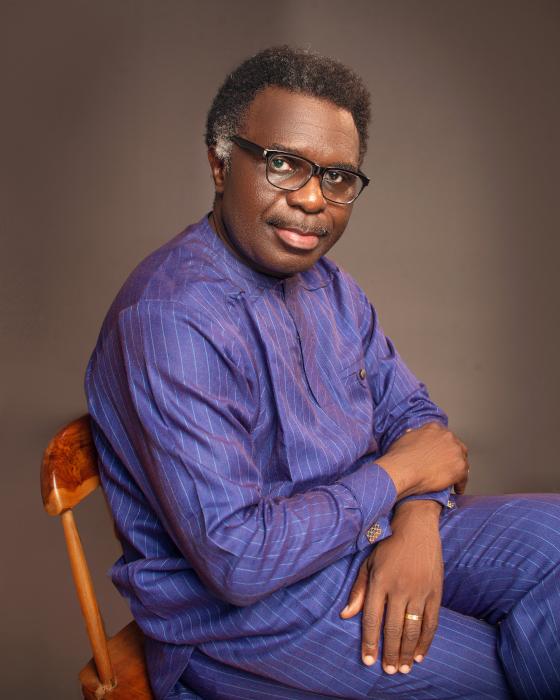
Leonard Karshima SHILGBA: University Professor and General Overseer of Bible Clinic Ministries
© Shilgba

















You must be logged in to post a comment Login