
Africa
Nigeria’s Silent War: Why Fulani Herdsmen Must Be Declared Terrorists -By Jeff Okoroafor
The National Assembly must amend the Terrorism Prevention Act to include Fulani militant groups. The Nigerian Army should launch a decisive military crackdown to flush out armed herdsmen, just as it does with Boko Haram. A nationwide disarmament program must be implemented to confiscate illegal weapons, and Fulani warlords, along with their sponsors, must be arrested and prosecuted. Additionally, the international community, including the UN, EU, and US, should impose sanctions on individuals fueling this crisis.

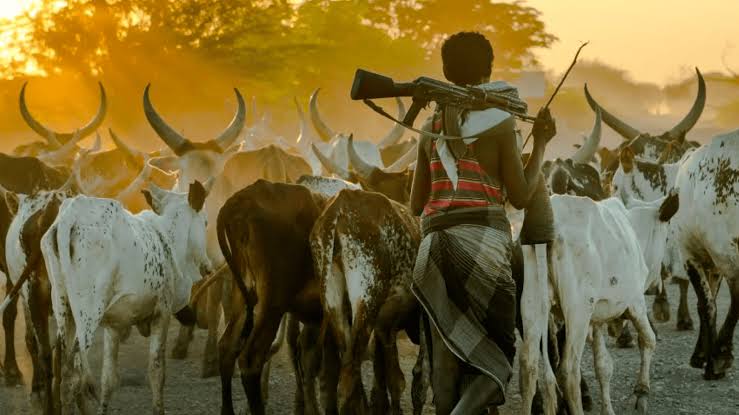
For over a decade, Nigeria has been grappling with an escalating security crisis fueled by armed Fulani herdsmen. These militant pastoralists have carried out systematic attacks on farming communities, leading to mass killings, displacement, and economic devastation. Despite overwhelming evidence of their brutality, the Nigerian government has failed to classify them as terrorists, opting instead for weak policies and half-hearted interventions.
The time has come for the Nigerian state to acknowledge the reality: Fulani herdsmen are not mere criminals but terrorists, and they must be treated as such. This op-ed examines the empirical evidence of their atrocities, their modus operandi, and why the government’s reluctance to designate them as terrorists is a grave dereliction of duty.
Empirical Evidence of Terrorist Activities
The death toll attributed to Fulani militant groups has, in some years, exceeded that of Boko Haram. According to the Global Terrorism Index (GTI), Fulani extremists were responsible for more fatalities in Nigeria than Boko Haram in both 2018 and 2019. The GTI 2020 report revealed that these herdsmen killed over 1,600 Nigerians in 2018 alone, surpassing the number of deaths caused by Boko Haram during the same period.
Fulani herdsmen have been implicated in genocidal massacres, particularly in Benue, Plateau, Southern Kaduna, Taraba, and Enugu. Among the most gruesome attacks was the Agatu Massacre of 2016, where over 500 people were slaughtered in Benue State. In 2018, another wave of violence swept through Plateau State, leaving 200 villagers dead in Barkin Ladi and Riyom. Southern Kaduna has suffered relentless bloodshed, with over 1,000 deaths recorded between 2020 and 2023, including the complete destruction of entire villages. The 2016 Nimbo attack in Enugu State saw 40 farmers butchered in a single night. These attacks follow a disturbing pattern: herdsmen invade farming communities, kill indiscriminately, burn homes, and occupy the land. This is not mere banditry; it is ethnic cleansing.
Unlike traditional herders who carry sticks, these militants wield AK-47s, RPGs, and other sophisticated weapons. Security reports indicate that many of these gunmen are foreign Fulani mercenaries from Niger, Chad, and Mali, smuggled into Nigeria to reinforce local militias. There is also growing evidence of collaboration between Fulani herdsmen and jihadist networks. A 2021 report by the Tony Blair Institute warned that Fulani militias are being radicalized and could merge with groups like ISWAP and Boko Haram. In 2022, the US State Department listed Fulani extremist groups as a growing threat in West Africa, further underscoring their terrorist nature.
The economic impact of these attacks is devastating. Farmers across Nigeria’s Middle Belt and Southern regions now abandon their lands out of fear, leading to a sharp decline in agricultural productivity. The Food and Agriculture Organization (FAO) estimates that herdsmen violence has reduced Nigeria’s agricultural output by 30%, exacerbating food insecurity in a nation already struggling with hunger and inflation.
Why the Government Must Declare Them Terrorists
Fulani herdsmen meet the legal definition of terrorism under Nigeria’s Terrorism Prevention Act (2011, as amended). The law defines terrorism as acts of violence against civilians intended to instill fear, systematic attacks aimed at displacing communities, and the use of weapons of war to destabilize the state. Fulani militants fulfill all these criteria, yet the government continues to treat them with kid gloves.
This reluctance stands in stark contrast to the swiftness with which the government designated IPOB as a terrorist group for its separatist agitations. The selective enforcement of anti-terrorism laws fuels suspicions of ethnic bias within the government. If a group that has killed thousands is not classified as terrorists, while others are proscribed for lesser offenses, the government’s credibility is severely undermined.
Past initiatives such as RUGA, Cattle Colonies, and the National Livestock Transformation Plan (NLTP) have failed because they reward violence instead of punishing terrorists. No other country negotiates with armed groups that destroy communities. International precedents exist: Kenya has designated violent herders as terrorists, and Benin Republic has taken military action against Fulani militants. Nigeria’s inaction is an embarrassment and a sign of weak governance.
The Nigerian government’s refusal to label Fulani herdsmen as terrorists is a betrayal of victims and a threat to national security. The evidence is undeniable: these militants are engaged in terrorism, ethnic cleansing, and economic sabotage.
The National Assembly must amend the Terrorism Prevention Act to include Fulani militant groups. The Nigerian Army should launch a decisive military crackdown to flush out armed herdsmen, just as it does with Boko Haram. A nationwide disarmament program must be implemented to confiscate illegal weapons, and Fulani warlords, along with their sponsors, must be arrested and prosecuted. Additionally, the international community, including the UN, EU, and US, should impose sanctions on individuals fueling this crisis.
If Nigeria continues to tolerate this terrorism, the country risks total disintegration. The time for decisive action is now.

Jeff Okoroafor
Jeff Okoroafor is a social accountability advocate and a political commentator focused on governance, accountability, and social justice in West Africa.

























You must be logged in to post a comment Login