
Africa
Nigeria’s Sovereignty in the Spotlight: Security, Diplomacy and the Cost of Crisis -By Maryam Mallum Yerima
Nigeria finds itself at a crossroads: the international spotlight may have shone abruptly on its security failings and sovereignty claims, but the deeper story is also about governance, economy and public trust. How the country responds could determine whether this moment becomes a turning point — or another chapter in a repetitive cycle of crisis.

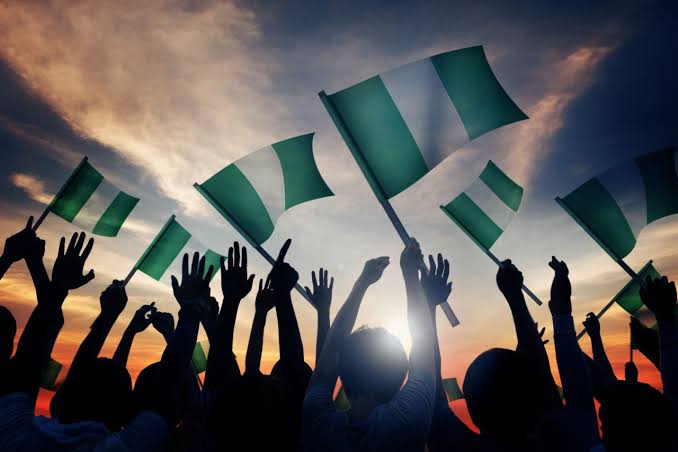
The recent remarks by Donald Trump threatening possible military action in Nigeria have thrust the country’s sovereignty and global standing into sharp relief. He cited alleged large-scale killings of Christians and floated the possibility of U.S. troops or air strikes if Nigeria did not act.
In response, Nigeria’s government affirmed that it is open to assistance in tackling Islamist insurgencies and banditry — but only if the nation’s territorial integrity and decision-making are fully respected.
What stands out is the framing of the violence: while Trump emphasised attacks on Christians, Nigerian officials and analysts say the reality is more complex — many victims are Muslim; the violence often stems from terrorism, banditry, communal conflict, not simply religious persecution.
Beyond the immediate security angle, there are broader implications: the U.S. designation of Nigeria as a “Country of Particular Concern” over religious freedom issues could strain diplomatic relations, affect military-and-security cooperation, and even influence investment and aid flows.
Meanwhile, at home Nigeria is already grappling with worsening poverty, insecurity, weak institutions, and faltering democratic norms — factors that leaders say demand urgent reforms if future shocks are to be contained.
The security challenges are multi-layered: insurgency in the northeast, herder-farmer conflicts in the Middle Belt, kidnappings and banditry in the northwest — all of which drain public resources, disrupt agriculture and deepen vulnerability.
On the economic front, Nigeria’s status as Africa’s largest economy belies the scale of human hardship: poverty rates rising, many households suffering food insecurity, and public institutions failing to deliver basic services. One global institution warned of a “poverty-induced economic meltdown” if reforms are not fast-tracked.
With the threat of foreign intervention now part of the discourse, Nigeria’s leadership must walk a tightrope: assert national sovereignty, reassure citizens of protection and democracy, while also acknowledging that internal reform and stronger governance are non-negotiable for long-term stability.
Key questions for Nigeria moving forward include: How can security efforts be scaled up without undermining rights? How can poverty and inequality be tackled in tandem with security reforms? What role should international partnerships play — carefully calibrated to avoid dependency or compromise?
Nigeria finds itself at a crossroads: the international spotlight may have shone abruptly on its security failings and sovereignty claims, but the deeper story is also about governance, economy and public trust. How the country responds could determine whether this moment becomes a turning point — or another chapter in a repetitive cycle of crisis.
Maryam Mallum Yerima student of mass communication Kashim Ibrahim University, Maiduguri.















You must be logged in to post a comment Login