
Africa
Nigeria’s Supreme Court is Now the Greatest Threat to Its Own Democracy -By Jeff Okoroafor
The inconsistency between the local government judgment and this emergency powers judgment is not a minor legal discrepancy. It is the fatal crack in the dam of Nigerian democracy. It tells us that the court’s principles are negotiable, its logic is for sale, and its primary role is now the ratification of power, not the protection of the constitution.


In a ruling that will be remembered as the day Nigeria’s Supreme Court signed the death warrant of its own federal democracy, a six-to-one majority on Monday delivered a judgment so legally inconsistent, politically subservient, and constitutionally corrosive that it effectively nullified the foundational principle of separation of powers. By affirming President Bola Tinubu’s power to suspend a democratically elected governor, deputy, and state assembly under emergency rule, the apex court has not only violated its own recent jurisprudence but has also unveiled a disturbing truth: Nigeria’s highest court is now the most potent instrument of democratic erosion in the nation.
The Stunning Hypocrisy: One Rule for Governors, Another for the President
The cruelty of this judgment lies in its breathtaking hypocrisy. Just months ago, in the landmark case of Attorney-General of the Federation v. Attorneys-General of States (SC/CV/343/2024), the same Supreme Court delivered a unanimous and celebrated judgment. It held unequivocally that state governors do not have the constitutional power to dissolve, sack, remove, or suspend democratically elected local government chairmen and councillors. The court declared such actions “unlawful, unconstitutional, null and void,” affirming the autonomy of local government as a third tier of government. The principle was clear: Democratically elected officials cannot be arbitrarily removed by a higher executive authority.
Fast forward to Monday, and that principle has been shredded. The court now argues that while a governor cannot suspend a local council chairman—a lower-tier official—the President can suspend a state governor, a whole chief executive of a federating unit. This is not legal reasoning; it is political sophistry. The constitution establishes a clear hierarchy of sovereignty: the people are supreme, and they delegate power through elections. The court’s contradictory rulings create an absurd and tyrannical ladder: The President can suspend a Governor, who (the court says) cannot suspend a Chairman, but the Chairman, once suspended by an illegal caretaker committee appointed by the Governor, has no recourse because the court has now legitimized the logic of executive suspension.
Deconstructing the Flaws: A Judgment Built on Sand
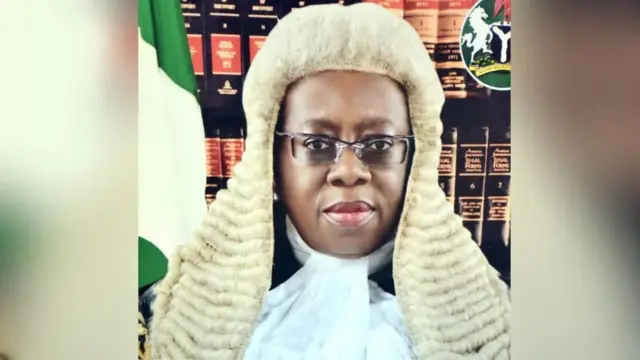
The majority judgment, delivered by Justice Mohammed Idris, is legally frail and dangerously expansive.
1. The Misreading of Section 305: The court held that Section 305 of the Constitution grants the President “discretion on how to proceed” with “extraordinary measures.” This is a wilful misconstruction. The Constitution meticulously outlines the procedures for declaring a state of emergency and the role of the National Assembly in scrutinizing it. Nowhere does it mention the suspension of elected state executives or legislators. To imply this power exists in a “silence” or “discretion” is judicial activism of the most dangerous kind—it inserts into the constitution what the framers deliberately excluded. The dissenting Justice Obande Ogbuinya rightly identified this: emergency powers are for restoring order, not for politically decapitating a rival government.
2. The Evasion Through “Locus Standi”: The court’s dismissal based on the plaintiffs’ lack of a “cause of action” or a “dispute between the federation and a state” is a cowardly abdication of duty. When the President suspends a governor and installs a sole administrator, and 11 states file a suit challenging the constitutionality of that act, what greater dispute between states and the federation can exist? This technical dodge exposes the court’s fear of confronting the substantive, existential question: Is Nigeria a federation of equal units, or a unitary state where the center can dismantle state governments at will?
3. The Ghost of 1983 and the Militarization of Democracy: President Tinubu’s action and the court’s sanctioning of it are not novel. They are a direct echo of Decree No. 1 of 1984, through which the military regime of Major-General Muhammadu Buhari suspended state governors and installed military administrators. The Supreme Court has now provided a democratic fig leaf for what is essentially a civilian coup d’état. By approving the appointment of a Sole Administrator (Vice Admiral Ibas), the court has legitimized the replacement of an elected government with a single, unelected appointee of the center—a concept alien to any true federation.
The Larger Pattern: A Court Enabling Autocracy
This is not an isolated error. It is part of a pattern where the Supreme Court has consistently centralized power and weakened democratic checks.
- It has upheld the unprecedented use of the currency redesign policy as a political weapon.
- It has validated elections riddled with institutional doubt.
- And now, it has invented a presidential power to remove sitting state governments.
With this judgment, the court has done three catastrophic things:
1. Destroyed Federalism: Nigeria’s federation is now a legal fiction. States are no longer co-sovereign entities but administrative units that can be placed under federal receivership.
2. Neutralized Opposition: The ruling sends a clear message to any opposition state governor: step out of line, and the “emergency powers” provision, backed by a compliant legislature and judiciary, will be weaponized against you. The capture of all South-South states by the APC is now complete, not through elections, but through legalized coercion.
3. Emasculated the Constitution: If the supreme law of the land can be stretched to mean its opposite—protecting local autonomy from governors while destroying state autonomy from the president—then the constitution is merely a piece of paper to be interpreted according to the political whims of the moment.
Conclusion: The Judiciary as the Midwife of a One-Party State
The greatest threat to Nigerian democracy is no longer the overbearing executive or the rubber-stamp legislature. It is the Supreme Court, which has chosen to be the legal architect of unitary rule. By this judgment, the court has not only failed Rivers State; it has failed the Federal Republic of Nigeria.
The inconsistency between the local government judgment and this emergency powers judgment is not a minor legal discrepancy. It is the fatal crack in the dam of Nigerian democracy. It tells us that the court’s principles are negotiable, its logic is for sale, and its primary role is now the ratification of power, not the protection of the constitution.
The warning is clear: when the judiciary becomes the enabler of authoritarianism, the road to a one-party state is paved with court rulings. Nigeria now stumbles down that road, with its Supreme Court holding the lamp. The descent into full-blown autocracy may soon be complete, and history will record that it was not imposed by a military junta, but sanctified by the highest court in the land. The silence of the legal community, the opposition, and the citizenry in the face of this judgment will not just be complicity; it will be the final surrender of Nigeria’s democratic soul.
May God help us all!
Jeff Okoroafor is a social accountability advocate and a political commentator focused on governance, accountability, and social justice in West Africa.

















You must be logged in to post a comment Login