Africa
“No Food For Lazy Man”: But Where Are The Jobs, Our First Lady?, by Isaac Asabor

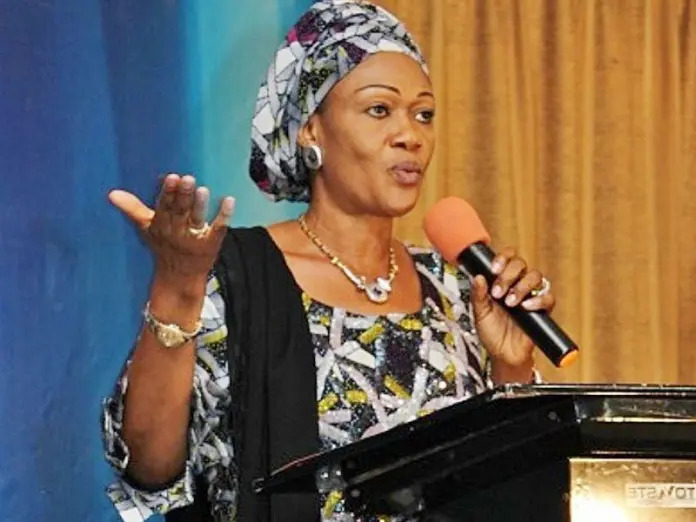
In a recent visit to the palace of the Ooni of Ife, First Lady Oluremi Tinubu made a comment that reverberated across Nigeria’s socio-political landscape. Speaking to a crowd of onlookers and dignitaries, she declared, “There is no food for the lazy man,” while encouraging Nigerian youths to embrace hard work. While her statement might seem reasonable on the surface, it brings into focus a much deeper and more complex issue: the chronic lack of job opportunities and viable economic prospects for millions of Nigerian youths.
The question that lingers in the minds of many is simple: “where are the jobs?” In a country where unemployment and underemployment rates continue to skyrocket, asking Nigerian youths to work harder without addressing the systemic obstacles to economic progress seems like a one-sided admonishment. Equally pertinent is the question of whether politicians, including those benefitting from the bloated government payrolls, are themselves demonstrating hard work or if their positions are exempt from the “No food for the lazy” principle.

The Nigerian youth have not shied away from working hard when opportunities present themselves. Whether in the agricultural sector, as entrepreneurs, or through the gig economy, countless young Nigerians struggle every day to make ends meet. The unfortunate reality, however, is that these efforts are often in vain because the larger economic structures needed to support their hard work are simply absent or dysfunctional.
Unemployment and underemployment have plagued Nigeria for decades, but recent data shows that the situation is direr than ever. According to Nigeria’s National Bureau of Statistics (NBS), the unemployment rate stood at a staggering 33.3% in the fourth quarter of 2020, making Nigeria one of the countries with the highest unemployment rates globally. It is estimated that over 53 million youths are either jobless or working in less-than-optimal jobs that offer little in terms of career advancement or financial security.
Telling these individuals that they need to work harder feels both hollow and dismissive. How can you expect the youth to work hard when factories are closed, industries have collapsed, and even government-backed small and medium enterprises (SMEs) struggle to survive in an inflation-ridden economy? Without the structural changes required to foster economic growth, the First Lady’s statement feels like an unfair critique of a generation battling to survive in an unforgiving system.
For any society to thrive, it must create employment opportunities for its citizens. Nigeria, unfortunately, has failed to create the necessary enabling environment for job creation. The private sector, which is typically the engine of growth in a capitalist economy, is crippled by several factors: from epileptic power supply to poor infrastructure, double taxation, and unstable government policies. How can industries and businesses grow in such an environment, and consequently, where are the jobs supposed to come from?
It is one thing to ask people to work hard, but quite another when the economy is not built to support hard work. In the absence of well-paying jobs, many Nigerian youths have resorted to hustling in the informal economy, selling goods in the streets, riding motorcycles (popularly known as “okada”), and taking up menial jobs. While these efforts demonstrate resilience and ingenuity, they do not lead to the type of upward social mobility or economic empowerment that hardworking individuals deserve.
Moreover, even educated Nigerian youths, those with degrees and diplomas, find themselves in an endless loop of applications, interviews, and rejections. For some, the situation is so bad that they have resorted to leaving the country in search of greener pastures abroad. The brain drain is a symptom of Nigeria’s deep economic malaise, and it highlights the desperation of young Nigerians who simply want an opportunity to work and live dignified lives.
While Nigerian youths are being admonished to work harder, one cannot help but observe the irony of such statements coming from individuals who, through politics, have benefitted immensely from the nation’s resources. It raises the question: “Does being in politics, living off government funds, and enjoying the perks of office make someone hardworking?”
Politics in Nigeria has become synonymous with wealth accumulation, power, and privilege. Many politicians enter office with modest means and leave as multimillionaires, amassing properties, luxury cars, and assets beyond what their official earnings can explain. Yet, these individuals seldom face scrutiny or criticism for their supposed hard work.
For the average Nigerian, politics represents one of the most viable routes to wealth creation, and it is no secret that the country’s political system is deeply entrenched in corruption. According to a 2022 report by Transparency International, Nigeria ranks 154 out of 180 countries on the Corruption Perceptions Index, a testament to how pervasive the problem is. How then do we reconcile the idea that hard work is a virtue when political elites seem to grow richer by simply holding office?
It would be grossly inaccurate to suggest that all politicians are lazy or corrupt, but the optics of wealth accumulation without corresponding hard work cannot be ignored. While the masses toil under the scorching sun, waiting for the next meager opportunity to make ends meet, many politicians enjoy the fruits of their office without lifting a finger in actual labor.
Hard work should not be narrowly defined as physical or mental exertion alone; it should also reflect the value it brings to society. When youths spend hours under the hot sun selling sachet water, driving commercial motorcycles, or offering freelance services online, they are indeed working hard. But the question remains: “What value does this hard work bring, and is society structured to reward such efforts?”
In Nigeria’s current economic climate, hard work without opportunities is like plowing a field without seeds. There is no doubt that hard work is essential, but equally critical is the need for an enabling environment where such work can lead to tangible results. Job creation must go hand-in-hand with any encouragement to work harder.
Politicians and policymakers, including the First Lady, should focus on addressing the structural barriers to job creation, providing functional infrastructure, implementing supportive government policies, tackling corruption, and ensuring access to credit for small businesses. The government must take the lead in fostering an environment that rewards hard work and does not leave the youth disillusioned and discouraged.
Nigerian youths have shown time and again that they are not lazy. Whether through their efforts in the informal economy, their entrepreneurial ventures, or their attempts to carve out a living in a harsh economic landscape, they have demonstrated resilience and grit. What they need now is not another lecture on hard work, but practical solutions that provide opportunities for growth and success.
Mrs. Tinubu’s call for hard work must be matched by a commitment from the government to create jobs, improve infrastructure, and build an economy where hard work is rewarded. Until these structural changes are made, the notion that there is no food for the lazy man will remain an empty phrase, devoid of meaning for the millions of hardworking, jobless Nigerians.