
Africa
No To National Council Of Traditional Rulers -By IfeanyiChukwu Afuba
Already, Nigeria is weighed down with bursting governmental structure. Local, state and federal governments are plagued by over – bloated machinery. Several public service reforms, notably Stephen Oronsaye 2012 Report bemoaned the trend of redundant establishments in the system. The task of scrapping these duplicated or irrelevant departments is still a long way from completion. Nigerians look forward to elimination of more areas of waste not additions to the bureaucracy such as a council of traditional rulers. Reducing the cost of governance in favour of social services however does not stop at whittling down administrative organs. Some aspects of our government and politics require systemic surgery from the roots. Nigeria does not need bicameral, federal legislature. One legislative house is enough. The dual legislative chambers is a colossal drain on resources and time.

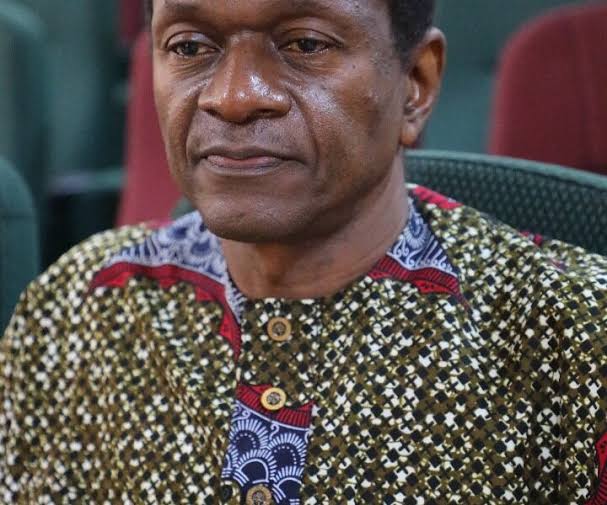
Five months after it came up for second reading at the Senate, former Governor of Plateau State, Senator Simon Lalong’s bill for creation of a national council for traditional rulers, has continued to receive knocks. Although the focus of widespread criticism of the bill, namely, designation of Sultan of Sokoto and Ooni of Ife, as permanent co – chairman, has reportedly been denied by proponents of the bill, that disclaimer does not salvage the intended legislation. The said bill is defective by reasons of misconception, divisiveness, dysfunction and administrative burden, to mention a few. It is to be noted that the flawed proposal for a structure of traditional rulers at the centre is an old one. It was one of the unfinished plans of former President, late Umaru Yardua. However, the fanciful idea had rarely overcome it’s opaque outline in terms of detailed usefulness. The historical difficulty in creating a role for traditional rulers in our republican system is because at the end of the day, it boils down to a power – grab venture. Inconsistencies between the character of accountable government and the monarchy has made the advocates unwilling or unable to define the basis of this agenda. In the instant case, Lalong’s bill is at once a romanticisation of the monarchy and power scheme. In effect, there’s no new foundation on which to stand the push of this pressure group.
However, beyond the historical involvement of the monarchy in government set out as general principles, Lalong’s bill latches on to a strange notion of security for contemporary relevance. We have excerpts on his case for the bill from The Nation of March 13, 2025. “When there are crises and killings, the first thing people say is, let’s hold the traditional ruler responsible. It is true, in their communities, they know everybody, including criminals. We need to charge them with responsibilities where they will be committed. But for now, you can’t hold them responsible. They ask to be given a role. So, I don’t see how we can jettison that when we are struggling for a constitutional amendment with respect to security. If we don’t have security, every other thing we are doing is rubbish.” Mercifully, this submission did not hold to the fantasy of preservation of culture upon which agitation for governmental recognition was often made. Yet, Lalong’s raison d’etre for the bill is two – fold; one dominantly and boldly expressed, the other, subtly and passively canvassed. The thrust of the Senator’s comment is on the perceived contribution the proposed body can make towards public peace. But this advocacy carries with it an undertone about traditional rulers being sidelined in the scheme of things; the office not receiving deserving recognition as complementary leadership.
It’s a misconception however, to suggest that the constitution of an official council of traditional rulers will add significant value to national security architecture. It’s also misplaced to bet that by reason of their advantage in citizen profiling, better security results would be achieved in the country with their consultation. Assuming that this construct is true, why must it depend on the creation of an official body to be applied as part of security strategies? What is wrong with community leaders relating with security agencies as the need arises, just as they do with other government agencies, without being made part of government? Yes, traditional rulers can make input into the process for law and order, but just as many other actors in society. Indeed, modern security approach lays emphasis on intelligence gathering and analysis, involving a wide range of operatives and tools. Such terms as informant, spy, undercover agent refer to some standard methods of security surveillance. In the present age, creative use of advanced technology is a sine qua non for meaningful security operations for every country. Even as citizens are encouraged to be security conscious; “say something when you see something” as we phrase it here; it cannot be overstressed that the security circuit verges on professionalism. Everyone, that is, all operatives involved in the multi layered security system are exposed to intensive training and retraining. Is this the kind of responsibility being suggested for traditional rulers? If it’s not, then what exactly will they be preoccupied with at the said council, that cannot be achieved by regular institutions and staff?
And where is the connection between knowing members of one’s local community and facilitating security strategies at centralised traditional rulers council? How many traditional rulers from a State will be delegated to the monarchs’ council at Abuja? On whose behalf and to what extent of “jurisdiction” would the one or two State representatives at Abuja be engaged in security engineering? Would they be preoccupied with their constituencies, where they’re presumably informed, or would the focus be nationwide, addressing issues in areas beyond their knowledge and competence? And how do the security bodies, with institutional orientation fit into this outlandish format? It should be pointed out at this stage that the uniformity element of the bill, being at variance with Nigeria’s plurality, is unhelpful. Unlike what obtains in the north, community governance in the southeast is in the hands of town unions, not traditional rulers. The latter is a ceremonial office, given to the celebration of cultural heritage. Actual community administration, from security to civil matters to infrastructure is vested in the town union leadership. The town union government operates with a written constitution under supervision of the state government. In this context, reliance on any other office beside the town union President for security advisory would be misplaced. At best, the traditional ruler may complement the reach of town union leadership.
Efforts at creating a traditional rulers council for purposes of national security and peace would be better deployed toward establishment of State Police. Greater result in law and order would flow from simultaneous operation of federal and state police in the country. The man on the ground in the State is the Governor. He knows the terrain, the issues and actors at play in the State. With a police command under his authority, the task of peaceful coexistence and social order, would be much easier compared to a centralised Police machinery. Reality of a Governor’s power to hire and fire under State Police will make the State police commissioner to sit up and deliver unlike what obtains in the current system. State Police will function at little or no additional cost to States. The reason is simple. Though unofficially, States presently bear the brunt of police operations in their jurisdiction just as they also bear the burden of rehabilitating federal roads. Security logistics demand on Governors is not limited to the Police but extends to military and paramilitary formations in the States. Let these enormous state resources be freed up and deployed to state police. The result promises to be more effective policing and safer society.
Fears have been expressed on the potential conflict between the proposed traditional rulers council and other organs of government. Senate President Godswill Akpabio and a number of Senators during deliberations on March 13, 2025, emphasised the need for clear – cut responsibilities in the bill. The senators were putting it mildly. Senator Lalong and his co travellers on the medieval route are clearly out of touch with imperatives of our democratic order as well as the pulse of the people. It’s disappointing to find elected representatives advocating the creation of a feudal – oriented institution in a republican democracy in the twenty – first century! The development is sad especially against the fact that this same maneuvering was exhaustively debated by the 1994 – 1995 constitutional conference. And the subject was thrown out for it’s promotion of the “divine right of kings.” The concept of a central council for traditional rulers was rejected for it’s divisive nature and inherent redundancy in the emerging democratic dispensation. A role for traditional rulers in government translates to combination of feudal privilege with political authority. It’s a brew for personalised power. We have only to recall how this co – habitation enabled Mangosuthu Buthelezi frustrate South Africa’s struggle for a long time to appreciate the danger of this path. No one is denying anyone their fundamental rights. If a traditional ruler wants to exercise power of government, he should go and contest election into office or seek an appointment.
Already, Nigeria is weighed down with bursting governmental structure. Local, state and federal governments are plagued by over – bloated machinery. Several public service reforms, notably Stephen Oronsaye 2012 Report bemoaned the trend of redundant establishments in the system. The task of scrapping these duplicated or irrelevant departments is still a long way from completion. Nigerians look forward to elimination of more areas of waste not additions to the bureaucracy such as a council of traditional rulers. Reducing the cost of governance in favour of social services however does not stop at whittling down administrative organs. Some aspects of our government and politics require systemic surgery from the roots. Nigeria does not need bicameral, federal legislature. One legislative house is enough. The dual legislative chambers is a colossal drain on resources and time.





















You must be logged in to post a comment Login