Africa
Overpowered, Left Struggling, and Forced Out: The DSS Officers Who Were Overrun and Shut Out at the Lagos Assembly, Barely Avoiding Tragedy—A Deeply Worrying Sight -By John Egbeazien Oshodi
DSS must rethink its approach now. Not because of politics. Not because of media scrutiny. But because its own personnel are being placed in dangerous, unwinnable situations. No elite security force should find itself becoming the crisis instead of the solution.

The events of February 17, 2025, at the Lagos State House of Assembly were not just another political dispute—they were a dangerous miscalculation that put lives at risk. The viral footage that has now been seen around the world tells a story far deeper than any political battle—it reveals a moment when the very enforcers of state power, the uniformed officers of the Department of State Services (DSS), found themselves suffocating, physically overwhelmed, and almost crushed against the very doors they were sent to secure.
As a psychologist and police/prison scientist, my focus is not on the political games at play—politicians will always have their battles, their schemes, their fights for power. My concern is for the human beings caught in the middle, those men in uniform who were put in an impossible position, left with no exit, no strategy, no backup, and ultimately no control. That day, DSS operatives were not just defending the doors of the Assembly—they were trapped against them. They were pressured into becoming human barriers, their bodies locked between the force of determined lawmakers and the heavy wooden doors that stood behind them.
The video evidence that has now traveled across the world is painful to watch. It showed force—relentless, unstoppable force—coming from men and women pushing, pressing, and cornering these officers against the door, their bodies crushed in the battle for space. The officers, clad in black jackets, their faces covered, helmets weighing heavy on their heads, stood their ground—but for how long? Seconds stretched into eternity as they struggled, gasping, unable to move, unable to retreat, unable to control what was unfolding before them.
And then, it happened.
One by one, the officers were pushed back. Pressed. Overwhelmed. The mass of bodies forced them to lose ground. The final officer, still clinging to his post, looked lost—isolated, surrounded, eyes darting in disbelief, his body caught in a human tide he could no longer resist. He was pushed out, swallowed by the overwhelming power of those determined to reclaim the chamber. And then, the doors closed.
Just like that.
Sealed shut.
A uniformed officer, once standing at the door as the last line of defense, now found himself on the outside, locked out, cast aside like a fallen pawn in a game he did not create. It was a moment of defeat, a moment of finality, a moment that should haunt the leadership of the DSS.
What if he had been injured? What if the weight of the crowd had suffocated him? What if his body had given out from the sheer pressure of the force against him? Would his name have been remembered? Would DSS leadership have mourned him—or simply replaced him with another uniformed man, another body sent into another unwinnable battle?
What happened that day should deeply trouble anyone who understands tactical enforcement, security risk, and human vulnerability in moments of crisis. These were not riot control officers, not a heavily armored military detachment—these were DSS operatives, an intelligence-based security force, suddenly caught in an escalating physical confrontation they were never trained or prepared for.
And so I ask: what if one of them had gone down?
What if, in the crush of bodies, one of those officers had lost his footing and been trampled under the weight of the lawmakers forcing their way forward?
What if, in the suffocating heat of the moment, an officer had collapsed from exhaustion, struggling for air under his helmet?
What if panic had set in, leading to a reactionary use of force—one wrong move that could have sparked uncontrollable violence?
What if, in that desperate, chaotic moment, the line between restraint and retaliation had been crossed?
Because let’s be clear—this was seconds away from becoming a deadly situation.
The official statement from the Lagos Assembly, signed by Ogundipe Olukayode, Chairman of the House Committee on Information, Strategy, and Security, laid out the undeniable facts:
Yes, the DSS was invited for security—but not to block lawmakers from their own chamber.
Yes, the Clerk requested their presence—but not to physically seal the Speaker’s office.
Yes, there were security concerns—but the DSS itself became the biggest security threat that day.
How did it come to this? How did a force as elite as the DSS find itself not as the controller of the situation, but as its victim? Who within DSS command authorized this engagement without fully assessing the risks? Who believed that a handful of officers could physically hold back an entire legislative body without confrontation? Who, in DSS leadership, failed to recognize that their operatives were walking into a situation where brute force would not be enough?
This is not just a question of tactics—it is a question of responsibility.
DSS, you have the right to defend your institution. You can sue the media if you believe you were misrepresented. But while you do that, let’s not ignore the real question—why were your officers left gasping for air against those doors? The media did not press your officers against those doors.
The media did not send them into a mission without a strategy.
The journalists did not cause their distress, their exhaustion, their struggle to breathe.
This was a failure in planning.
And again, I ask—was it worth it?
Did the DSS succeed in stopping the legislative session? No.
Did the lawmakers back down? No.
Did the situation remain under DSS control? No.
Instead, the Speaker, Mojisola Meranda, still presided over the session.
The lawmakers still convened.
The Assembly still carried out its function.
And DSS? What did it gain?
Its operatives were humiliated in front of the nation.
It suffered reputational damage as an elite force caught in a political game.
It put its own officers in serious, life-threatening danger.
DSS is not a street enforcement unit. It is not a riot squad. It is not a tool to be thrown into political disputes. It is an intelligence-based security agency, built on precision, strategy, and operational foresight. But on this day, there was no strategy. There was no foresight. There was no precision. Instead, there were uniformed men, trapped at the doors of a legislative building, suffocating under the weight of a crisis they were never meant to fight.
If DSS does not reflect on what went wrong, the consequences next time will be irreversible.
Because next time, it may not just be distress on an officer’s face.
Next time, a uniformed man may not get back up.
Next time, there may be real casualties.
And who will take responsibility?
Not the politicians who orchestrated it.
Not the government officials who benefited from the chaos.
Not the power players who will move on to their next battle.
It will be the DSS operatives—the men in uniform—who will pay the price.
DSS must rethink its approach now. Not because of politics. Not because of media scrutiny. But because its own personnel are being placed in dangerous, unwinnable situations. No elite security force should find itself becoming the crisis instead of the solution.
DSS, the world saw what happened.
The risk to your officers was undeniable.
And this time, they survived it.
But next time?
Next time, the cost may be fatal.
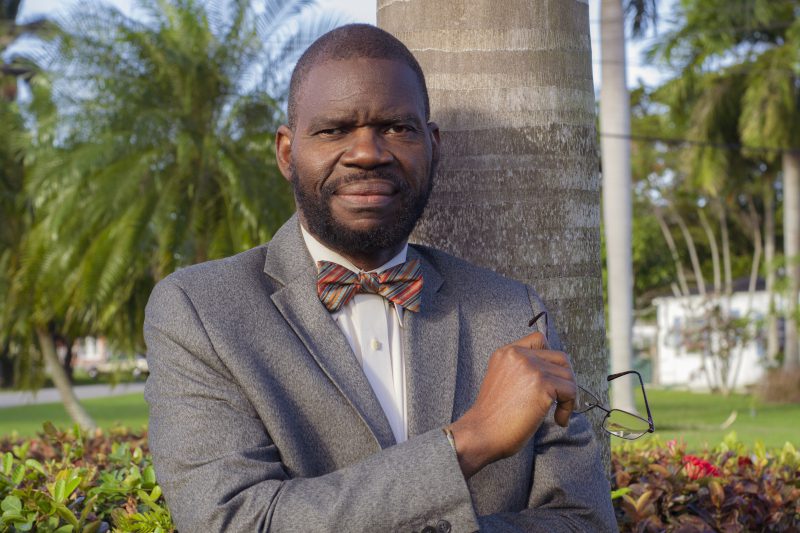
Professor John Egbeazien Oshodi is an American psychologist, educator, author specializing in forensic clinical psychology, cross-cultural psychology, police prison science, social justice. Born in Uromi, Edo State, Nigeria, he is the son of a 37-year veteran of the Nigeria Police Force, a background that shaped his commitment to justice, security, psychological research and practice.
A specialist in clinical/forensic psychology, he introduced state-of-the-art forensic psychology to Nigeria in 2011 through the National Universities Commission (NUC) Nasarawa State University, where he served as an Associate Professor in the Department of Psychology. His contributions extend beyond academia into psychological health behavioral change initiatives through the Oshodi Foundation the Center for Psychological Forensic Services.
Professor Oshodi has held faculty positions at Florida Memorial University, Florida International University, Broward College, Nova Southeastern University, Lynn University. He is also a contributing faculty member in the doctoral undergraduate psychology programs at Walden University serves as a virtual professor with Weldios University and Iscom University.
Beyond academia, he is a government consultant for forensic-clinical psychological services in the USA previously served as assistant professor and Interim Associate Dean Assistant Professor at Broward College, Florida.
He has published extensively on mental health, justice, institutional reform is the founder of the Psychoafricalysis theory, which integrates African sociocultural perspectives into psychology.
Professor Oshodi remains an influential force in advancing psychology institutional reform globally, particularly in Africa.