
Africa
Political Parties in Nigeria; Electoral Vehicles or Ideological Communities? -By Kator Ifyalem
The challenge, then, is how to break this cycle and restore meaning to party politics. The answer lies in fostering a culture of political education and civic engagement, where citizens are empowered to demand accountability, transparency, and clear policy platforms from their leaders. Only by insisting on principles over expediency, and by holding politicians to their promises, can the people hope to build a political system that truly serves the national interest.

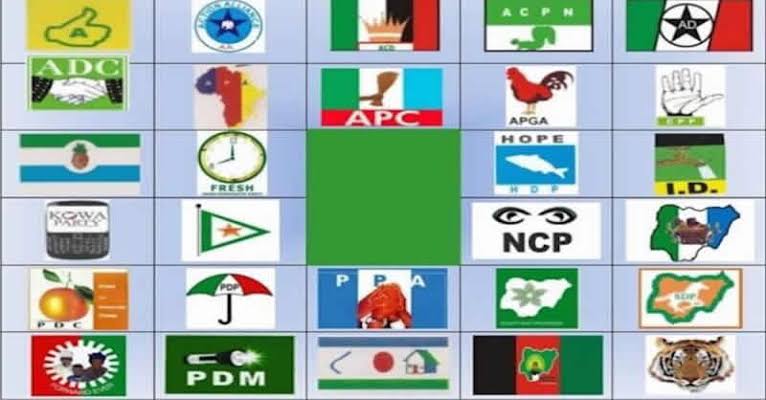
Political parties in Nigeria were sanctuaries of ideology, platforms where like-minded individuals united under a shared vision for the future of the country. Today, however, these parties often resemble little more than alphabets or catchy phrases under which ambitious politicians queue for their turn at power, with ideology taking a back seat to personal ambition and expediency.
The recent wave of defections, highlighted by the high-profile exit of some founding members of a certain party, serves as a vivid example of this trend. Their move, followed by their open association with figures from the other parties, was less about ideological realignment and more about political calculus. The justifications offered for such defections, ranging from “irreconcilable differences” to sudden revelations about the “true path” for national progress, often ring hollow to a populace weary of recycled promises and shifting allegiances.
This pattern is not limited to a few prominent figures. The 10th National Assembly has witnessed a flurry of defections: A Senator moved from the Labour Party to the APC, reportedly to position himself for governorship; another left the PDP for the APC, citing internal crises and a lack of space to function within his former party. Several other lawmakers, from both the Senate and the House of Representatives, have followed suit, crossing party lines with little regard for the ideological implications of their actions.
The motivations behind these moves are rarely about principle. Instead, they are often driven by the desire to secure political survival, access to resources, or better prospects for electoral victory. Research shows that Nigerian politicians tend to defect not to smaller parties or to form new movements, but to the dominant parties, where their chances of securing party tickets and winning elections are highest. Even those with significant personal followings leverage the visibility and structure of these big parties to boost their electoral fortunes, further reinforcing the notion that party platforms are mere vehicles for personal ambition rather than instruments of collective vision.
This relentless political musical chairs has profound consequences for democracy. When politicians switch parties with such ease, they undermine the foundation of representative governance. Voters who cast their ballots for a candidate based on party affiliation and the values it supposedly represents are left feeling betrayed when that candidate defects, often to the same party they once vehemently opposed. This breeds cynicism, apathy, and a growing disillusionment with the entire political process.
Moreover, the absence of clear ideological distinctions between parties reduces elections to personality contests, where charisma and name recognition outweigh competence and policy substance. The result is a shallow and divisive political discourse, where identity politics (ethnic, religious, or regional), takes center stage, further fragmenting the nation and making it harder to build consensus on critical issues.
The roots of this phenomenon run deep. Party structures are often weak, revolving around powerful individuals rather than robust institutions. Internal democracy is lacking, making it easy for disgruntled members to jump ship when their personal ambitions are thwarted. This personalization of politics stifles genuine ideological debate and hinders the development of coherent policy agendas.
Yet, it would be simplistic to dismiss all defections as mere opportunism. Some politicians, claim to be motivated by a desire for good governance and the welfare of their constituents. However, such justifications are difficult to separate from the broader pattern of political calculation that defines the country.
The challenge, then, is how to break this cycle and restore meaning to party politics. The answer lies in fostering a culture of political education and civic engagement, where citizens are empowered to demand accountability, transparency, and clear policy platforms from their leaders. Only by insisting on principles over expediency, and by holding politicians to their promises, can the people hope to build a political system that truly serves the national interest.

























You must be logged in to post a comment Login