
Africa
The 2025 UTME Catastrophe – Why Professor Ishaq Oloyede Must Step Down Immediately -By Jeff Okoroafor
The human cost of this failure cannot be overstated. Behind the statistics are countless bright students whose dreams have been derailed by JAMB’s incompetence. Many who aspired to study medicine, engineering, or law may now miss their admission cutoffs due to no fault of their own. Families who invested time, money, and hope in their children’s education are left disillusioned, wondering whether the system is rigged against them. Nigeria’s already struggling education sector cannot afford another blow to its credibility, yet JAMB, under Oloyede’s leadership, has delivered exactly that.

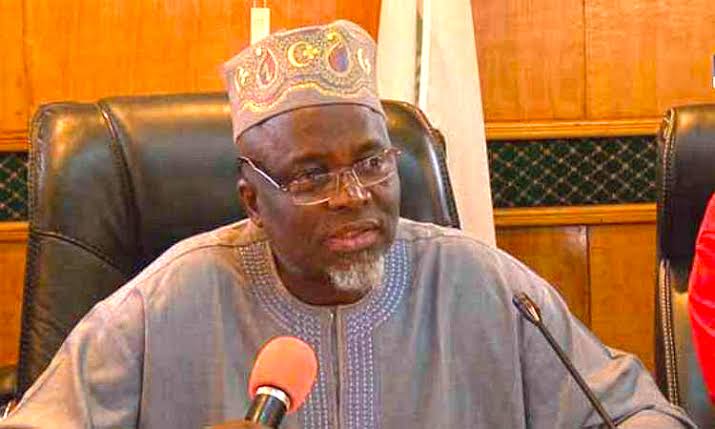
The recently concluded 2025 Unified Tertiary Matriculation Examination (UTME) has exposed the deep-rooted failures of the Joint Admissions and Matriculation Board (JAMB) under the leadership of Professor Ishaq Oloyede. What was meant to be a fair and credible assessment of students’ readiness for tertiary education has instead become a national disgrace, marked by systemic incompetence, technical failures, and a shocking disregard for the futures of millions of Nigerian youths. The sheer scale of the disaster leaves no room for debate—Professor Oloyede must resign or be removed from office without delay.
The most damning evidence of JAMB’s failure is the unprecedented mass failure recorded in this year’s examination. Across the country, students who had prepared diligently, scored highly in mock tests, and demonstrated strong academic potential were handed shockingly low scores, some as dismal as 120 out of 400. These results defy logic and point to either gross negligence in the grading process or a fundamental flaw in JAMB’s assessment system. Parents, teachers, and education stakeholders have raised legitimate concerns about possible errors in score computation, yet JAMB’s initial response was to dismiss these complaints, suggesting that students were simply not prepared well enough. This arrogant deflection is unacceptable from an organization that has repeatedly failed to deliver a seamless examination process.
Even more troubling is the fact that many candidates were penalized for biometric verification failures despite having followed all examination protocols correctly. Some students reported being unable to even access their results for days due to technical glitches, while others discovered that their scores bore no resemblance to their actual performance during the test. These are not minor administrative hiccups—they are catastrophic failures that have real, life-altering consequences for young Nigerians who depend on UTME scores to secure university admissions, scholarships, and career opportunities.
Professor Oloyede’s tenure at JAMB has been characterized by a pattern of recurring crises. Every year, there are reports of examination malpractice, registration bottlenecks, server crashes, and controversial policy changes that leave students and institutions confused. Each time, JAMB promises reforms, yet each subsequent UTME brings new failures. The 2025 examination was supposed to be different—a chance for JAMB to redeem itself after years of criticism. Instead, it has proven to be the worst-conducted UTME in recent memory, cementing the perception that the board is either incapable of managing the examination process or unwilling to implement the necessary reforms.
The human cost of this failure cannot be overstated. Behind the statistics are countless bright students whose dreams have been derailed by JAMB’s incompetence. Many who aspired to study medicine, engineering, or law may now miss their admission cutoffs due to no fault of their own. Families who invested time, money, and hope in their children’s education are left disillusioned, wondering whether the system is rigged against them. Nigeria’s already struggling education sector cannot afford another blow to its credibility, yet JAMB, under Oloyede’s leadership, has delivered exactly that.
If there was ever a time for decisive action, it is now. The Federal Ministry of Education must intervene immediately by commissioning an independent audit of the 2025 UTME results to identify and rectify all grading errors. Affected candidates deserve more than vague promises—they deserve concrete solutions, whether in the form of remarking, supplementary examinations, or adjusted admission considerations. Most importantly, JAMB needs new leadership—a visionary reformer who can restore confidence in the examination process and ensure that such a disaster never happens again.
Professor Ishaq Oloyede has had nearly a decade to fix JAMB. Instead, the board’s failures have only multiplied, culminating in the 2025 UTME catastrophe. His resignation or dismissal is no longer a matter of debate; it is an urgent necessity. Nigeria’s education system cannot progress with leaders who preside over failure and expect public patience in return. The time for accountability is now. Oloyede must go.

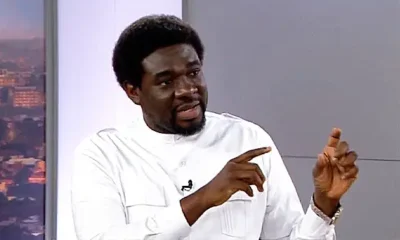
Jeff Okoroafor
Jeff Okoroafor is a social accountability advocate and a political commentator focused on governance, accountability, and social justice in West Africa.





















You must be logged in to post a comment Login