Africa
Politicians And Their Reckless Culture Of Living Beyond Their Means -By Isaac Asabor
If, as children, we were taught to live within the modest limits of one penny or ten kobo, surely, our leaders, entrusted with billions in public funds, must be held to even higher standards. For Nigeria to have any hope of progress, our political class must first learn the lesson from the “Mama Put” stalls of the 1970s: spend only what you are given, and account for every penny.

As a primary school pupil in the early 1970s, some of us who patronized “Mama Put” food vendors within the school premises during break-time were often under scrutiny. The feeding allowance given to children then could be as little as one pence, three pence, or at most six pence, depending on the financial standing of one’s family. If any pupil was found spending beyond this modest provision, suspicions were immediately raised. The matter did not end there; it was often escalated to parents, who would interrogate their child and sometimes even the vendor. The suspicion was simple: the child must have stolen money.
Even when the Nigerian currency changed from pounds, shillings, and pence to naira and kobo in 1973, the story did not change much. We were rarely given more than 10 kobo as feeding allowance, while children from wealthier homes might have received 50 kobo or even one naira. Again, the same rule applied, any pupil caught spending beyond his or her daily allocation invited suspicion and possible disciplinary measures.
That era drilled into us a culture of prudence and accountability. It instilled in us the consciousness that one must not live beyond his or her means. It is a creed I have held onto for decades, one I have deliberately passed on to my children, with the prayer that they uphold it as a guiding principle throughout their lives.
The same ethos has been echoed in professional circles. At the 2022 induction ceremony of 1,857 graduates of the Chartered Institute of Bankers of Nigeria (CIBN), which I was privileged to attend as a Reporter, former Deputy Governor of the Central Bank of Nigeria (CBN), Dr. Babatunde Lemo, emphasized the need for young professionals to live within their means. In her keynote address at the same event, Kafilat Araoye, a seasoned banker, repeated the advice that financial services professionals must match their lifestyles with their legitimate income. The principle is clear and timeless; discipline is the cornerstone of credibility.
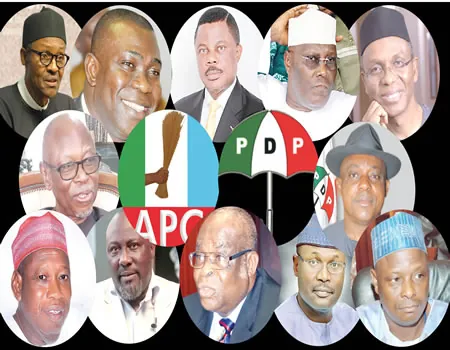
Sadly, Nigeria’s political class operates in a completely different universe. Rather than live within their means, they recklessly and arrogantly live far beyond them. Their official salaries and allowances, modestly compared to their flamboyant lifestyles, are public knowledge. Yet, the opulence they flaunt, mansions in Dubai, London, and Washington, fleets of luxury cars, private jets, and designer wardrobes, betrays a level of excess that is clearly unsustainable and, more importantly, morally indefensible.
Take, for instance, Nyesom Wike, the current Minister of the Federal Capital Territory (FCT). He has, on multiple occasions, displayed flamboyance through luxury items, from denim jeans worth fortunes to limousines that parade the streets of Abuja. Recently, he found himself in a spat with activist Omoyele Sowore over allegations of owning a $1 million property in Florida, USA. While Wike denies such claims, the optics reinforces a troubling reality: Nigerian politicians are constantly in the news for wealth that cannot be reconciled with their declared earnings. But Wike is not alone. He is simply one name in a long list of political figures who symbolize Nigeria’s culture of excess.
The absurdity becomes clearer when one considers the official pay structure. According to the Revenue Mobilisation Allocation and Fiscal Commission (RMAFC), a Nigerian senator’s basic monthly salary is about ₦750,000. Add allowances, and the figure rises significantly, but even at that, the total package does not logically translate into the convoys of armored SUVs, sprawling estates in Abuja’s Asokoro district, or private jets frequently chartered for trips abroad. In 2018, activist Shehu Sani, then a senator, publicly revealed that lawmakers received ₦13.5 million monthly as “running costs,” in addition to their salaries. This disclosure caused outrage, but it still does not account for the immense wealth some legislators openly flaunt.
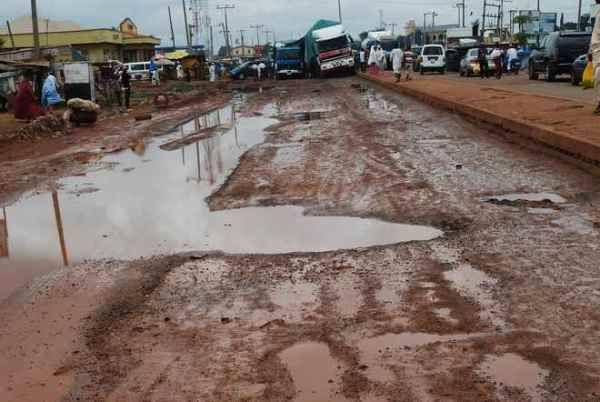
The recklessness of Nigeria’s politicians is not merely a matter of bad optics, it has devastating consequences for governance and society. While they insulate themselves in luxury, the country is in economic tatters. Inflation is biting hard, with food inflation above 30% in 2025. Millions of Nigerians are unable to afford basic meals, unemployment continues to hover dangerously high, and poverty rates remain among the highest in the world. Yet, in this same country, convoys of 20 or more luxury cars ferry politicians across pothole-ridden roads, funded by public resources.
The message this sends to ordinary citizens is corrosive. When leaders live far beyond their means without consequence, they normalize corruption. It creates a trickle-down effect where public servants, civil servants, and even private individuals begin to see fraud and financial recklessness as acceptable pathways to success. It destroys the moral fabric of society.
Contrast this with the scrutiny we faced as children in the 1970s. A child who spent one penny or ten kobo more than his allowance at “Mama Put” risked being accused of theft. Families then understood that accountability in little things mattered because it shaped character in bigger things. Today, however, politicians pillage the treasury in billions, and rather than face censure, they are often celebrated, re-elected, or rewarded with ministerial appointments.
The question then arises: what happened to accountability? Why does a society that once punished a child for “excess spending” now tolerate leaders who loot billions without shame? Part of the answer lies in weak institutions. Nigeria’s anti-graft agencies, like the EFCC and ICPC, have become more bark than bite. Prosecutions are slow, convictions are rare, and high-profile offenders often manipulate the system to evade justice. Political godfathers and party structures further shield offenders, reinforcing the culture of impunity.
But accountability is not solely the job of institutions. Citizens, too, must reclaim their voices. Civil society organizations, the media, and the electorate must insist on financial transparency from leaders. The lifestyle of every public officeholder should be measured against their official earnings, with discrepancies treated as red flags for investigation. Politicians should be compelled to publicly declare assets before, during, and after holding office, and such declarations must be subjected to independent verification.
Above all, Nigerians must reject the normalization of excess. It is not “smartness” when a politician builds a mansion in Dubai on a salary that cannot buy one flat in Abuja. It is not “success” when public funds are diverted into luxury convoys while hospitals lack basic equipment. It is theft, plain and simple. And until society begins to call it by its name and punish it as such, the cycle will continue.
Financial recklessness is more than just a personal failing of our politicians; it is a betrayal of trust and a crime against the people. Every limousine they flaunt is a hospital ward left unbuilt. Every foreign mansion they buy is a school that remains without roofs. Every luxury convoy they maintain is a road that stays impassable. Their excess is paid for by the suffering of ordinary Nigerians.
If, as children, we were taught to live within the modest limits of one penny or ten kobo, surely, our leaders, entrusted with billions in public funds, must be held to even higher standards. For Nigeria to have any hope of progress, our political class must first learn the lesson from the “Mama Put” stalls of the 1970s: spend only what you are given, and account for every penny.
Until then, the financial recklessness of our politicians will remain the greatest obstacle to Nigeria’s development.