
Africa
Post-Farouk Era: Will Dangote Refinery Maintain Its Momentum? -By Abba Dukawa
Many are watching closely to see if Dangote’s actions are driven by a desire for transparency and fairness in Nigeria’s oil and gas sector or private business interests. Did Dangote genuinely want to fight the corruption going on in the sector?, Will Dangote refinery operate for the common good or seek market dominance? Did Farouk Ahmad act in the public interest or obstruct the refinery for hidden oil interests? Will the Dangote Refinery Maintain Its Momentum in the Post-Farouk Era?The dispute between Dangote and Farouk Ahmad remains shrouded in mystery, with the ICPC investigation likely to uncover the truth

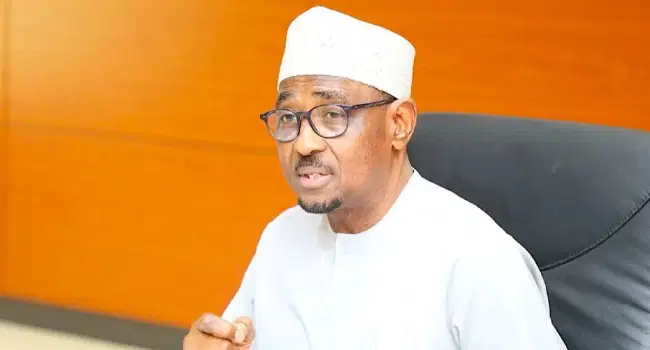
“For the marketers, I hope they lose even more. I’m not printing money; I’m also losing money. They want imports to continue, but I don’t think that is right. So I must have a strategy to survive because $20 billion of investment is too big to fail. We are in a situation where we will continue to play cat and mouse, and eventually, someone will give up—either we give up, or they will.” —Aliko Dangote
This statement reflects that while Dangote is incurring losses, he remains committed to his investment, determined to outlast competitors reliant on imports. He believes that persistence and strategy will eventually force them to concede before he does.
Aliko Dangote has faced unprecedented resistance in the petroleum sector, unlike in any of his other business ventures. His first attempt came on May 17, 2007, when the Obasanjo administration sold 51% of Port Harcourt Refinery to Bluestar Oil—a consortium including Dangote Oil, Zenon Oil, and Transcorp—for $561 million. NNPC staff strongly opposed the sale. The refinery was later reclaimed under President Yar’adua, a setback that provided Dangote a tough but invaluable lesson. Undeterred, he went on to build Africa’s largest refinery.
As a private investor, Dangote has delivered much-needed infrastructure to Nigeria’s oil-and-gas sector. Yet, his refinery faces regulatory hurdles from agency’s meant to promote efficiency and growth. Despite this monumental private investment in the nation’s downstream sector, powerful domestic and foreign oil interests may have influenced Farouk Ahmad, former NMDPRA Managing Director, to hinder the refinery’s operations.
The dispute dates back to July 2024, when the NMDPRA claimed that locally refined petroleum products including those from Dangote’s refinery were inferior to imported fuel. Although the confrontation appeared to subside, the underlying rift persisted. Aliko Dangote is not one to speak often, but the pressure he is facing has compelled him to break his silence. He has begun to speak out about what he sees as a deliberate targeting of his investments, as his petroleum-refining venture continues to face repeated regulatory and institutional challenges.
The latest impasse began when Dangote accused the NMDPRA of issuing excessive import licenses for petroleum products, undermining local refining capacity and threatening national energy security. He alleged that the regulator allowed the importation of cheap fuel, including from Russia, which could cripple domestic refineries such as his 650,000‑barrel‑per‑day Lagos plant.
The conflict intensified after Dangote publicly accused Farouk Ahmad, former head of NMDPRA, of living large on a civil servant’s salary. Dangote claimed Ahmad’s lifestyle was way too lavish, pointing out that four of his kids were in pricey Swiss schools. He took his grievance to the ICPC, alleging misconduct and abuse of office.
It’s striking how Nigerian office holders at every level have mastered the art of impunity. Even though Ahmad dismissed the accusations but the standoff prompting Ahmad’s resignation. But the bitter irony these “public servants” tasked with protecting citizens’ interests often face zero consequences for violating policies meant to safeguard the Nation and public interest.
The clash of titans lays bare deeper flaws in Nigeria’s petroleum governance. It shows how institutional weaknesses turn regulatory disputes into personal power plays. In a system with robust norms, such conflicts would be settled via clear rules, independent oversight, and transparent processes not media wars and public accusations.
Even before completion, the refinery’s operating license was denied. Farouk Ahmad claimed Dangote’s petrol was subpar, ordering tests that appeared aimed at public embarrassment. Dangote countered with independent public testing of his diesel, challenging the regulator’s claims.
He also invited Ahmad to verify the tests on-site, but the offer was declined. Moreover, NNPC initially refused to supply crude oil, forcing Dangote to source it from the United States a practice that continues.
President Tinubu later directed the NNPC to resume crude supplies and accept payment in naira, reportedly displeasing the state oil company. In addition to presidential directives, Farouk claimed Dangote was producing petrol beyond the approved quantity and insisted that crude oil be purchased exclusively in U.S. dollars a condition Dangote accepted.
From the public’s point of view, the Refinery is a game-changer for Nigeria, with the potential to end fuel imports and boost the economy. With a capacity of 650,000 barrels per day, it produces around 104 million liters of petroleum products daily, meeting 90% of Nigeria’s domestic demand and allowing exports to other West African countries.
The Dangote Refinery is poised to earn foreign exchange, stabilize fuel prices, and strengthen Nigeria’s energy security. However, the ongoing dispute surrounding the refinery underscores the challenges of aligning national interests with regulatory and institutional frameworks.
The Dangote Refinery’s growing dominance has sparked concerns among stakeholders like NUPENG and PENGASSAN, who fear it could lead to a private monopoly, stifling competition and harming smaller players. This concern stems from the refinery’s rejection of the traditional ₦5 million-per-truck levy on petroleum shipments.
However, Dangote has taken steps to address these concerns, reducing the minimum purchase requirement from 2 million liters to 250,000 liters, opening the market to smaller operators and strengthening distribution networks. The refinery has also purchased 2,000 CNG trucks to maintain operations, emphasizing its commitment to making energy affordable and accessible
Many are watching closely to see if Dangote’s actions are driven by a desire for transparency and fairness in Nigeria’s oil and gas sector or private business interests. Did Dangote genuinely want to fight the corruption going on in the sector?, Will Dangote refinery operate for the common good or seek market dominance? Did Farouk Ahmad act in the public interest or obstruct the refinery for hidden oil interests? Will the Dangote Refinery Maintain Its Momentum in the Post-Farouk Era?The dispute between Dangote and Farouk Ahmad remains shrouded in mystery, with the ICPC investigation likely to uncover the truth
To many, the government faces a delicate balancing act: protecting local refiners while ensuring fair competition. While some argue that Dangote’s success shouldn’t come at the expense of smaller players, others see it episodes like this reveal persistent contradictions: powerful interests, fragile institutions, and blurred lines between regulation and politics.The Petroleum Industry Act (PIA) promised a new era of clarity, efficiency, and accountability, but its implementation has been slow. The PIA’s success hinges on addressing these challenges.
What benefits one party can indeed threaten another. Despite entering the sector with good intentions, Dangote has faced relentless pushback, all eyes are on whether the refinery can sustain its momentum. Analysts and commentators are sharing their perspectives based on available data from relevant institutions. If anyone spreads false information, the truth will eventually come out
Dukawa is a journalist, public‑affairs analyst, and political commentator. He can be reached at abbahydukawa@gmail.com.




















You must be logged in to post a comment Login