Africa
Right of Reply: Just As Mr. President “Did Not Come to Look for Money But to Work”, We Did Not Vote to Be Killed With Hunger, by Isaac Asabor


President Bola Tinubu’s assertion that his administration is driven by the desire to work for Nigeria’s progress, not personal gain, rings hollow for millions of Nigerians who have been reeling under the weight of economic hardship since he took office on May 29, 2023. This is as despite the promises of a transformative administration focused on improving infrastructure, food security, and energy availability, the reality for many has been one of intense suffering, exacerbated by policy decisions that have hit the poorest the hardest.
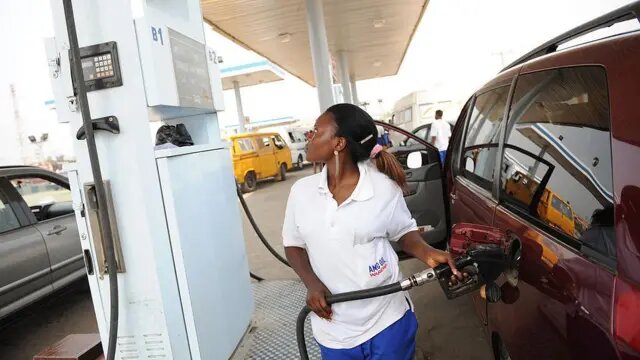
In fact, one of the earliest and most significant decisions of the Tinubu administration was the abrupt removal of fuel subsidies. Announced on his inauguration day, the decision was meant to liberate funds for national development. However, this move immediately triggered an economic shockwave, sending petrol prices soaring from around N185 to over N500 per liter, with some parts of the country reporting even higher rates, and since then it has risen above N1000 per liter; depending on the location of purchase.
The resulting ripple effect has been brutal. Transport costs skyrocketed, and the prices of essential goods and services followed suit, straining the budgets of families already struggling to get by. Commuters are paying double or triple their usual fares, while the cost of food items has doubled, making basic staples unaffordable for many households. A loaf of bread, which once cost N500, now goes for N1,000 or more, and many families have been forced to cut down on meals, unable to cope with the rising cost of living.
A Lagos resident, Tunde, captured the mood of many when he said, “We thought things would be hard, but not like this. Every time I go to the market, I feel like crying. The money I used to feed my family for a week is now barely enough for two days.”
In addition to soaring fuel prices, Nigerians have seen little improvement in the power supply, despite promises of better energy security. Frequent blackouts continue to plague homes and businesses, forcing many to rely on expensive generators, ironically made even more costly by the increase in petrol and diesel prices.
The lack of stable electricity has crippled small and medium-sized businesses, many of which are now on the verge of collapse. Hairdressers, tailors, welders, and other artisans who rely on electricity for their daily operations find themselves unable to keep up with the high cost of fuel and generator maintenance. This has led to a rise in unemployment, further deepening the economic crisis for millions of Nigerians. Even if electricity supplies have recently improved in some areas by virtue of being migrated or subscribed to Band A, the tariff has remained pricey thereby literarily pushing consumers to a state of “Frying pan to fire”.
Ngozi, a hairdresser at Mowe in Ogun State, lamented, “I used to make N10,000 daily. Now, with the high cost of petrol and no light, I’m lucky if I make N3,000. How do I feed my children and pay rent with that?”
While the government touts its focus on macroeconomic stability, Nigerians are grappling with an inflation rate that has soared to an unprecedented level, and said to be one of the highest in recent memory. The prices of food, transportation, and other basic necessities have spiraled out of control.
According to the National Bureau of Statistics, food inflation has hit an alarming rate, affecting items such as rice, yam, beans, and pepper and tomatoes, which form the core of the Nigerian diet. This has resulted in food insecurity for many families, with reports of mothers skipping meals so their children can eat and people taking out loans just to buy groceries.
At a market in Lagos, an elderly woman echoed the frustration of many Nigerians: “We can’t afford food. Everything is expensive. We didn’t vote for this suffering.”
The hunger crisis has reached unprecedented levels. As the Tinubu government pledges to tackle food insecurity, Nigerians have become increasingly disillusioned, feeling that the leadership is disconnected from their daily struggles. Food prices have risen sharply, even as the government claims to be working on initiatives to improve agriculture and make food more accessible. But for many, these promises feel distant and intangible.
The situation is worse in rural areas, where farmers are struggling with the high costs of labor and transportation, and in urban centers where the cost of basic goods is out of reach for the average worker. Nigerians are no strangers to economic hardship, but the post-inauguration period has felt like an unrelenting siege on the poor and middle class.
Beyond immediate economic concerns, Nigeria’s growing debt burden under Tinubu’s administration is causing significant worry. The country’s debt servicing costs continue to escalate, which risks diverting resources away from social services and infrastructure development that could alleviate some of the people’s suffering.
Meanwhile, the president’s economic reforms, such as his efforts to unify the exchange rate and attract foreign investment, have yet to yield tangible benefits for the average Nigerian. The naira has weakened significantly against the dollar, making imports more expensive and further driving up inflation.
For many Nigerians, the most poignant response to Tinubu’s claim that he “did not come to look for money but to work” is: “We did not vote to be killed with hunger.” While the president seeks to reassure citizens that his government is focused on the long-term improvement of the economy, the immediate needs of Nigerians remain unmet. The disconnect between the administration’s rhetoric and the harsh realities of life for millions is deepening, and patience is wearing thin.
The disillusionment is palpable. Nigerians who once held high hopes for a Tinubu presidency are now questioning whether their votes were a ticket to greater suffering. Against the foregoing backdrop, it is germane to recall that the hardship has sparked protests in several states, with citizens demanding urgent relief from the economic stranglehold they find themselves in.
Despite these challenges, President Tinubu remains optimistic, stating that “we must do our best.” However, for many Nigerians, this optimism does little to ease the hunger pangs, the rising cost of living, or the daily struggle to survive in an economy that seems increasingly hostile to its people.
While long-term reforms are crucial, the government must prioritize immediate solutions to ease the suffering of the masses. The distribution of palliatives, such as food items and cash transfers, has been uneven and riddled with accusations of corruption and favoritism. More transparent and effective measures are needed to ensure that relief reaches those who need it most.
Additionally, the government must explore options to stabilize fuel prices and provide subsidies for essential commodities to cushion the effects of inflation. The current trajectory, if left unchecked, will lead to further discontent and potential social unrest.
As the Tinubu administration charts a course for Nigeria’s future, the voices of the people must not be drowned out by political platitudes. Nigerians did not vote for hardship, they voted for change. The president’s commitment to work is commendable, but work must translate into tangible improvements in the lives of the people, not just in policy documents or economic forecasts.
The hunger and frustration spreading across the country cannot be ignored. The government must act swiftly and decisively to provide immediate relief and ensure that its promises of progress become a reality for all Nigerians, not just the elite few. The message from the streets is clear: We did not vote to be killed with hunger.