I had planned to discuss my position on this matter on “The Conversation”, a weekly political and current affairs program on Ogunsua 97.7FM, scheduled for this evening. However, the program was abruptly canceled for reasons best known to certain powerful figures. Perhaps, some fear that speaking the truth may be too uncomfortable.
An Obvious Bias in the Crisis
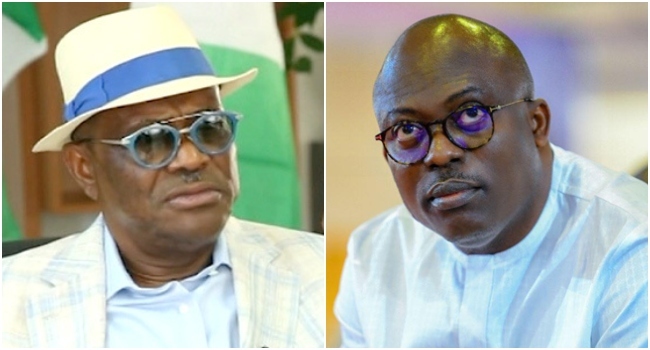
It is no secret that the President has taken a clear side in the Rivers State political impasse, backing his ally, FCT Minister Nyesom Wike, despite his role as the aggressor in the crisis. Contrary to media manipulations, no agreements made during the initial reconciliation meeting with the President were violated, except by Wike and his loyalists in the State House of Assembly. Their disregard for the President’s proposed resolution led to the Supreme Court case, which the President then used as a pretext for his unconstitutional declaration.
That said, was Governor Siminalayi Fubara also wrong in certain aspects? Yes, he made his own missteps. But does that justify the President’s overreach? Absolutely not.
For context, the Nigerian Constitution (Section 305) does grant the President the power to declare a State of Emergency without prior approval from the National Assembly, but must seek their endorsements within 2–10 days, depending on whether they are in session or not. However, this power is limited to specific situations: War or imminent danger of invasion; Actual or imminent breakdown of law and order; Natural disaster or public calamity; Any public danger threatening the nation’s existence; and a request from a State Governor approved by a two-thirds majority of the State Assembly
The crucial question is: Does the situation in Rivers State meet any of these conditions? Is there an actual war in Rivers? Has the crisis overwhelmed the Nigerian Police and Military to the point where only a State of Emergency could restore order? The honest answer is NO. If the President truly believes otherwise, why do terrorist-controlled regions in other states remain untouched by similar emergency declarations? Why Rivers?
The Emergency Powers Act of 1963, which once allowed the President to suspend elected Governors and Local Government Chairmen, has long been repealed. There is no legal framework today that grants the President the authority to suspend a Governor elected by the people.
Furthermore, a careful combined reading of Sections 188, 189, and 306 of the 1999 Constitution (as amended) outlines only three ways to remove a Governor: Resignation, Impeachment by the State Assembly, or Death, not by presidential decree. Nowhere does the Constitution grant the President the power to unilaterally suspend a Governor. The principle of expressio unius est exclusio alterius (the express mention of one thing excludes others) applies here, meaning that if the Constitution does not explicitly permit a certain action, then it is not allowed.
Using former President Olusegun Obasanjo’s illegal actions in Ekiti and Plateau States as justification for Tinubu’s move is deeply flawed. Illegality cannot justify illegality. Obasanjo was wrong, Tinubu is equally wrong. Two wrongs do not make a right.
A careful reading of Part III of the Constitution, which deals with the administration of an emergency area, explicitly states that the Governor of the affected state shall continue to perform general administrative functions under the control of the President or his designated representative. This means that even under a State of Emergency, the Governor remains in office and is not to be replaced by an unelected military administrator. President Tinubu’s actions are unconstitutional and beyond his powers.
What Must Be Done Now
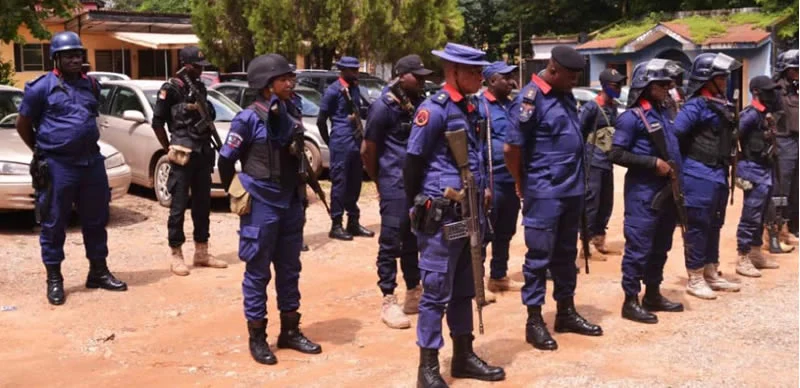
President Tinubu must immediately rescind this illegal decision, not only the suspension of the Governor, Deputy Governor, and members of the House of Assembly, but also the appointment of a Sole Administrator, as it is a direct violation of the Constitution. Instead of enforcing unconstitutional actions, he should direct the Nigerian Police and Military to focus on securing the entire state, not just government properties, to prevent further escalation of violence. A curfew may be considered if necessary, but only as a short-term security measure, ensuring public safety without overreaching constitutional boundaries. The President should reconvene talks with relevant stakeholders, including traditional rulers, political leaders, and civil society groups, to find a genuine and lasting resolution.
As the leader of a democratic nation, President Tinubu must act as a fair and neutral father figure, not as an interested party and a political enforcer for his allies. Anything less than adopting a balanced and lawful approach pushes Nigeria further down a dangerous path, one that undermines our democracy and sets a dangerous precedent for future administrations, where constitutional democracy is replaced by executive overreach. If history has taught us anything, it is that such actions always have consequences.
John Oyebanji is a Public Affairs Analyst, Media/PR Specialist, Educational Administrator, and Clergy, among many other things he represents. He writes from Modakeke, Osun State, and can be reached via thejohnoyebanji@gmail.com




















You must be logged in to post a comment Login