Forgotten Dairies
Russia Eyes African Students to Boost Strategic Influence -By Kestér Kenn Klomegâh
An educational survey released in September 2024, divided into five major groups, said Russia has made significant efforts at improving teaching (the learning environment), research, citations (research influence), knowledge transfer, and international outlook (staff, students, research) in the educational field, according to the Times Higher Education (THE) World University Rankings.

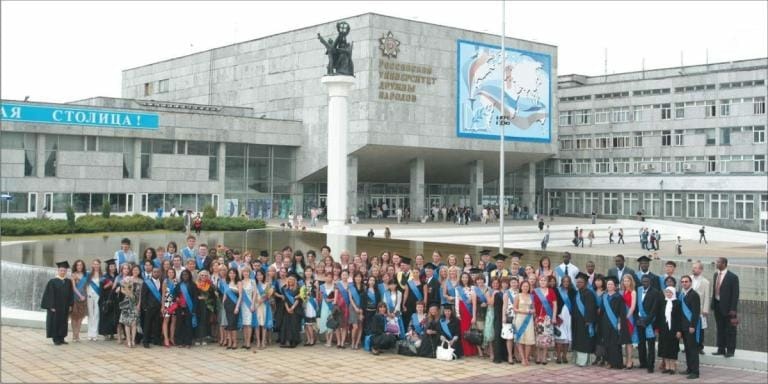
Russia’s system of foreign students’ admission is currently experiencing a completely different shape, due to the rapidly shifting geopolitical reality. The emerging trends are closely connected with increasing the number of highly-interested applicants rather than the quality of education. Geopolitical shift is pushing Russia to make education for young Africans an ultimate priority. The quota campaign has, already, began as the figure compares favorably with previous benchmarks but, to some considerable extent, noticeable challenges are currently affecting enrollment from Africa, Asia, and Latin America.
Despite that, general interest in Russian education among foreign nationals is increasing growing, the quota campaign confirms this trend. Last year for instance, there were about 144,000 registrations in Rossotrudnichestvo’s Education in Russian system. The number has exceeded 160,000 in 2026. What is important here is that Russia shows preparedness to get more students from developing countries, especially from Africa and use it as a factor for influencing its foreign policy in the region.
Regarding educational initiatives, the Russian Ministry of Foreign Affairs in conjunction with relevant agencies and organisations are active in Africa. Noticeably, Russia is developing and expanding the existing, successfully operating cooperation in the sphere of education. In fact, priority is given to projects in the field of education and training of professional personnel for African countries. Currently, over 37,000 students from Africa are studying at Russian universities. Reports say a gradual increase in the number of scholarships for African citizens and the expansion of the range of professional training programs will provide a strong incentive for further promoting education at Russian universities.
This will continue to actively strengthen inter-university ties with African partners, including through specialized umbrella organizations such as the Russian-African Network University, the Consortium of Technical Universities “Nadra Africa” based at the Empress Catherine II St. Petersburg Mining University, the Russian-African Network Transport University, and the Consortium of Russian Universities Working in West Africa based at the NGO “Center for Public Diplomacy.”
Reports further indicated that the Rossotrudnichestvo representative offices—the Russian Science and Culture Centers—operating in eight African countries, as well as the Open Education Centers operating under the auspices of the Russian Ministry of Education in 31 African countries, serve as a solid foundation for our humanitarian presence in Africa. They serve as conduits for the Russian language and culture on the continent. It is, however, hoped their number would only increase in the subsequent years.
While addressing the staff and students at the Moscow State Institute of International Relations, Foreign Affairs Minister, Sergey Lavrov, reiterated Russia’s readiness to cooperate actively in the sustainable economic development and to strengthen efforts at training the needed specialists and professionals for Africa. After the collapse of the Soviet system in 1991, there were problems to sustain relations with Africa. Then after more than a decade, Russia started to return to Africa. This process has been ongoing for the past 15 years, according to the top Russian diplomat.
According to Lavrov, these past few years have been characterized by frequent interactions between Russian and African Foreign Ministers, plethora of MoUs were signed that set out the broad parameters of cooperation. Russia’s Education Ministry and the Foreign Affairs have raised the quotas for many African countries, the highest given to Angola, Ethiopia, Namibia and Mozambique, and South Africa.
According to report posted MFA website in August, for instance, some 1,120 Angolans have enrolled, on Russian scholarships or grants, at various institutes and universities throughout the Russian Federation. Figures for other African countries are available on the official information portal of the ministry.
Besides state-sponsored students, Russia’s Education Ministry has also launched a large-scale educational campaign targeting to recruit private foreign students into its educational institutions across the Russian Federation. The program to be implemented until 2025, which has a launched website (studyinrussia) translated into different languages, seeks to boost the popularity and improve image abroad.
Undoubtedly, Russia aims at strengthening next generation of pro-Russian elites who will help promote its interests, including long-term ones in their home countries. With this in mind, the Ministry of Education and the Ministry of Foreign Affairs, ultimately, hope to improve the efficiency of “soft power” in Africa, though not to the levels during the Soviet era.
Understandably, Russia is now targeting Africa’s fast-growing population as a huge potential market for knowledge transfer and export education. Rossiyskaya Gazeta, a widely circulated Russian daily newspaper, reported that Russia has been focusing on young population in developing countries of Asia, Africa and Latin America, targeting the elite and middle class in these markets for the export of education, which has great potential.
The newspaper reported about advantages of multiculturalism and cross-cultural interactive activities paving the way for integration in the Russian society. As far back as 2023, Russia’s Federation Council and State Duma (upper and lower houses of parliament) passed a bill. That bill was finally signed into a law that allows foreign students the right to employment, a replica of work and study modelled program in the western and European countries.
Professor Viktor Sadovnichy, Rector of Moscow State University and Chairman of Russian Rectors’ Association, an organisation that unites more than 700 heads of higher education institutions, argued that education and demography are interconnected, developing countries of Asia, Africa and Latin America have growing middle-class. “This favours the export of our education, it has a great potential cooperating in education sphere, it could serve as a huge market – training young professionals that are in demand on the labour market,” Sadovnichy said, addressing a plenary meeting of the Russian Rectors’ Association at Peter the Great St Petersburg State Polytechnic University.
Professor Natalia Vlasova, Deputy Rector at the Department of International Relations and Cooperation of the Ural State University of Economics in Yekaterinburg, explained that many African countries are developing rapidly, the African elites and the growing middle-class are great potentials for sponsoring their children’s education abroad. “In times of Soviet Union, African countries were strategic partners, and now we should reactivate these relations because in the nearest future they will have big economic and political power. This could, indeed, be a huge market and has the potential for business,” she noted assertively.
An educational survey released in September 2024, divided into five major groups, said Russia has made significant efforts at improving teaching (the learning environment), research, citations (research influence), knowledge transfer, and international outlook (staff, students, research) in the educational field, according to the Times Higher Education (THE) World University Rankings.