
Politics
Atiku’s Subsidy Gambit: Tinubu Has a New 2027 Problem -By Oluwafemi Popoola
But Atiku will have to answer if he can offer a credible alternative without simply promising Nigerians the comfort of yesterday? His proposed production-based subsidy will have to survive scrutiny over cost, transparency and implementation. If he wants Nigerians to believe that subsidy can be redesigned rather than merely restored, he must explain exactly how.


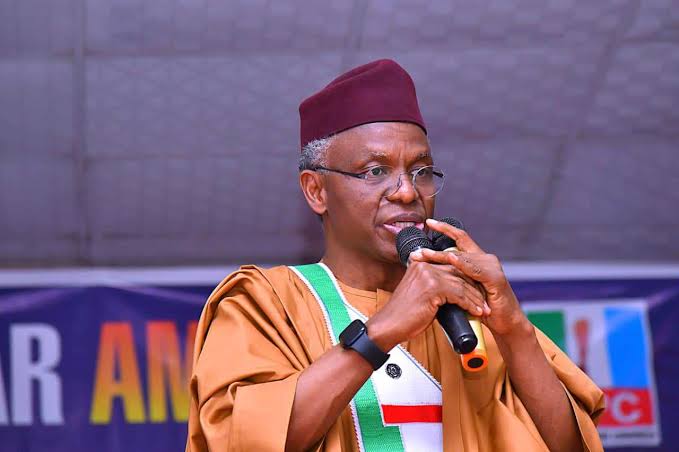
Something has changed in the sound coming from Atiku Abubakar lately. Listen closely and you will hear it. There is a new urgency in his voice. It is the cadence of a political warrior who has suddenly remembered that the road to 2027 will not be paved with silence. The former vice president appears to have remembered that opposition politics is not a gentleman’s tea party where everyone sits politely and waits for his turn to speak. It is a contest of ideas, narratives, wounds and, sometimes, who can name the people’s pain most convincingly. There is one very important rule in opposition politics. You cannot sit quietly in the corner and expect the political house to notice you. If you are not in power, you must make power uncomfortable.
In the past few days, through a series of interviews and interventions, the former vice president has moved aggressively into the conversation that matters most to ordinary Nigerians: the cost of living. And if I am to judge by what is being discussed online and, more importantly, around motor parks, markets, offices, farms and beer parlours, two economic reforms are likely to dominate the 2027 presidential conversation. It is the removal of fuel subsidy and the unification of the foreign exchange market. But something else is happening beneath the economic argument. Atiku is opening several political fronts at once, and the Presidency appears to be responding selectively.
Atiku has understood something politicians often discover too late: Nigerians may not understand every line in a macroeconomic policy document, but they understand the price of petrol, transportation, food and school fees. They understand whether their salary lasts until the end of the month. They understand whether the economy has become kinder or crueler. That is why his decision to make fuel subsidy a central campaign issue is politically significant. In a Hausa-language interview, Atiku promised to restore a form of petrol subsidy if elected, arguing that the policy, as implemented by the Tinubu administration, has not translated into better living conditions. He later clarified that his proposal is not a return to the old import-dependent arrangement but a targeted production subsidy for domestic refineries — “the subsidy will follow the barrel.”
But Atiku did not stop there. He doubled down and said he would reopen Nigeria’s land borders and develop southern ports to improve trade and reduce the cost of transporting goods to the northern parts of the country. The Presidency, through Special Adviser Sunday Dare, quickly fired back that Nigeria’s land borders are already open, pointing specifically to the reopening of the Kamba border and demanding that Atiku clarify which controls he intends to remove. The exchange is revealing because it shows that Atiku is not limiting his challenge to subsidy; he is attempting to build a broader argument around the cost of moving goods, regional trade and the economic consequences of government policy.
This is clever politics. It is also dangerous politics for the ruling party because the government can no longer simply tell Nigerians that subsidy is gone and move on. The government now has to explain what Nigerians received in return. Finance Minister Taiwo Oyedele says the removal mobilised ₦15.8 trillion between June 2023 and December 2025, with ₦5.4 trillion accruing to the Federal Government and ₦10.4 trillion shared among states and local governments. But the government also says its incremental expenditure during the period reached ₦30.64 trillion, while additional resources amounted to ₦20.4 trillion. The question from the street therefore becomes brutally simple: if Nigerians paid the price, where are the results?
To be fair, Tinubu’s administration has genuine macroeconomic arguments. Foreign reserves, according to recent government claims, have risen from roughly $28–29 billion when Tinubu assumed office to about $56–57 billion. The administration also points to greater stability in the foreign exchange market, improved investor confidence, capital-market performance and the benefits of unifying exchange-rate windows. These are not imaginary achievements. But macroeconomic recovery and household prosperity are not identical twins. A country can have healthier reserves while its citizens are still struggling to buy dinner. That is the uncomfortable gap Atiku is exploiting.
The same argument applies to the naira. Forex unification may have corrected distortions, reduced opportunities for arbitrage and improved transparency in the market. But the ordinary Nigerian does not wake up every morning asking whether the exchange-rate regime is theoretically efficient. He asks why imported goods cost what they cost, why transport fares remain high and why his purchasing power has collapsed. This is where politics becomes less about economic textbooks and more about lived experience.
Atiku’s timing is therefore important. He knows the North is politically different after the death of Muhammadu Buhari. Buhari was not merely a former president; for years he represented a political identity and emotional connection among millions of northern voters. Atiku is an experienced northern politician, and he understands that the old Buhari coalition is now politically homeless in a way it was not before. But nobody should assume that Buhari’s votes automatically belong to Atiku. Votes are not family property. They have no inheritance certificate. Still, Atiku is clearly attempting to become the principal beneficiary of the northern dissatisfaction with Tinubu, and his decision to communicate his subsidy message in Hausa language makes that strategy unmistakable. He made sure nobody will interpret the subsidy message to the talakawas. The Northern people now see him as the answer to their prayers.
I would therefore be cautious about predicting an automatic northern landslide, but I would not dismiss the possibility that Atiku could become exceptionally competitive across the North. His challenge is converting economic anger into actual votes and then finding enough support outside the region to satisfy Nigeria’s constitutional requirements for victory. That second part is where the mathematics becomes unforgiving.
And this is where Peter Obi and Rabiu Kwankwaso enter the story. The opposition coalition that many believed could produce a single formidable challenger to Tinubu has fractured. Obi and Kwankwaso moved away from the earlier coalition arrangement and joined the Nigeria Democratic Congress, with reports pointing to disagreements over the direction and leadership of the opposition project. The consequence is that what once looked like a united anti-Tinubu front has become increasingly complicated.
Whether anybody likes it or not, the political centre of gravity is beginning to tilt toward a Tinubu-Atiku contest, even though Obi and Kwankwaso remain formidable political actors. Atiku is increasingly presenting himself as the experienced opposition alternative, while Tinubu has the enormous advantage of incumbency and the opportunity to argue that today’s pain is the price of tomorrow’s stability.
That is precisely where 2027 could become fascinating. The government will insist that subsidy was an unsustainable drain that contributed to fiscal crisis. Atiku will ask whether reform must necessarily mean transferring the immediate burden to citizens without sufficient protection. And Nigerians, who have now experienced both the old subsidy regime and the post-subsidy economy, will ultimately have the most important answer.
For me, that is what makes Atiku’s recent interviews more consequential than they initially appear. He is no longer merely criticising Tinubu. He is trying to define the question Nigerians should ask before voting: has your life improved enough to justify the pain of these reforms? That question could become the unofficial slogan of 2027.
But Atiku’s recent interviews have gone beyond economics. He has made controversial assertions about Tinubu personally, including his claim that the President is 90 years old and his declaration that he has evidence which he would present in court. He has also questioned the President’s fitness for office while presenting himself as “strong,” “healthy” and “agile.” Whether these claims can withstand scrutiny is another matter entirely. But politically, they are too consequential to simply disappear, particularly because they give the Presidency another dilemma: respond and risk giving the claims more oxygen, or ignore them and allow them to circulate unchecked.
And I can imagine that the President’s spokesmen are having a rather difficult time right now. Sunday Dare, Bayo Onanuga, Reno Omokri, Daniel Bwala and even Femi Fani-Kayode — who has been unusually quiet lately; I hope he is fine — may all be wondering which Atiku statement deserves the next response. The interesting part is that responding to every claim gives Atiku more oxygen, while ignoring them allows the opposition candidate to own the narrative. That is the peculiar problem Atiku’s recent strategy has created for the Presidency. Every response can become another chapter in the story he is trying to write.
That is why these are interesting times to watch the whole ‘gbas-gbos’ between the two camps. Atiku appears determined to make the election a referendum on the Tinubu years, while the Presidency will naturally want Nigerians to focus on the gains of its reforms and dismiss what it considers political propaganda. Neither side can afford to sleep. And the closer we get to the election, the harder it will become for either camp to control the issues Nigerians choose to discuss.
It is therefore not surprising that President Tinubu on Thursday disclosed that state governors had, on their own initiative, resolved to reduce transportation costs nationwide. He said a joint federal-state committee would be established immediately to ensure that cheaper Compressed Natural Gas translates into lower transport fares from October 1, 2026. We are entering election season, and Nigerians can probably expect many beautiful things from now until the ballot boxes arrive. After all, elections have a funny way of reminding governments that the people who spend hours at bus stops also happen to carry voter cards.
Tinubu will have to answer it with results, not speeches. Every kilometre of new road, every reduction in transport fares, every improvement in electricity supply, every stabilisation of the naira and every measure that puts food within the reach of ordinary Nigerians will matter more than a dozen press conferences.
But Atiku will have to answer if he can offer a credible alternative without simply promising Nigerians the comfort of yesterday? His proposed production-based subsidy will have to survive scrutiny over cost, transparency and implementation. If he wants Nigerians to believe that subsidy can be redesigned rather than merely restored, he must explain exactly how.
Meanwhile, Nigerians will have to decide whether they prefer the painful road already travelled or the alternative road Atiku is now offering.
Oluwafemi Popoola is a Nigerian journalist, media strategist, and columnist. He can be reached via bromeo2013@gmail.com

















You must be logged in to post a comment Login