
Forgotten Dairies
Nigeria’s CNG Promise Meets the Reality of the Queue: 120,000 Converted Vehicles, 90 Refuelling Stations, and an Estimated 1,300 Vehicles per Station Amid Systemic Failures -By Daniel Nduka Okonkwo
Nigeria’s CNG programme should ultimately be judged not only by the number of vehicles converted or centres announced, but by whether motorists can obtain fuel reliably, affordably, and safely. Cheaper gas loses much of its economic value when drivers must sacrifice working hours in queues, travel long distances to find an operating station, or worry about whether their equipment meets the required standards. The programme’s promise remains significant, but fulfilling it will require more than expansion targets and public assurances.


Who is counting Nigeria’s operational CNG refuelling stations, who is verifying that they can reliably dispense gas, and who is holding the agencies and operators accountable when motorists are left stranded in queues for hours? These are no longer questions that can be answered with policy promises or conversion figures alone. The Presidential Compressed Natural Gas Initiative (PCNGI) must disclose how it defines and counts operational stations and measures supply reliability. The National Automotive Design and Development Council (NADDC) must clarify the current register of accredited conversion centres, inspection procedures, and the status of vehicle-monitoring arrangements. The Nigerian Midstream and Downstream Petroleum Regulatory Authority (NMDPRA) must explain how stations are monitored for safety and operational compliance, while the Standards Organisation of Nigeria (SON) must account for the certification and verification of approved CNG cylinders and conversion kits. NNPCL and private operators must provide, where appropriate, station-level records of outages, delivery interruptions, and dispensing capacity. Meanwhile, authorities investigating the Airport Road explosion must publish their findings when legally and procedurally permissible, including any established failures in inspection or enforcement. Until these questions receive clear, evidence-based answers, Nigeria’s CNG transition will remain vulnerable to a troubling gap between official claims of progress and the realities confronting motorists on the ground. Responses from the agencies and companies concerned are essential to distinguish documented shortcomings from allegations that remain unresolved.
Nigeria’s drive to replace petrol with compressed natural gas (CNG) is confronting a difficult test on the streets, where motorists who converted their vehicles in anticipation of cheaper fuel are spending hours, and sometimes entire days, waiting to refill. This documented frustration in Abuja, including the experience of a driver who said he was on his fifth day of trying to obtain gas. For these motorists, the promise of cheaper transportation has become entangled with a daily struggle to find CNG.
The federal government has promoted CNG as a way to reduce transport costs, diversify the country’s energy mix, and ease dependence on petrol. Official programme figures have cited more than 120,000 converted vehicles, over 400 certified conversion centres, and more than 90 refuelling stations, alongside plans to expand the network. These figures suggest growing adoption, but they do not establish whether refuelling infrastructure is keeping pace with demand or whether stations are consistently operating at their intended capacity. Assessing the programme requires more than counting conversions and facilities; it also requires evidence of how reliably those facilities serve motorists.
A simple comparison illustrates the scale of the challenge. Dividing 120,000 converted vehicles by 90 refuelling stations produces a crude ratio of approximately 1,300 vehicles per station. This is not a measure of actual daily demand, station capacity, or the number of vehicles served at each location: the figures are national totals, may cover different reporting periods, and do not account for differences in station size or geographic distribution. Nevertheless, the comparison raises a practical question for policymakers: how much refuelling capacity is available where motorists need it, and how often is that capacity interrupted by supply or equipment problems?
Reports from Abuja provide a more immediate picture. Reported motorists waiting for as long as eight hours at the Nigerian National Petroleum Company Limited (NNPCL) outlet in Wuse Zone 1. It also reported lengthy queues, including at the NASENI-Portland facility in Dei-Dei, where a driver said he joined the queue at about 4 a.m. Some station attendants have attributed delays to fluctuations in gas pressure. Such explanations point to possible operational difficulties, but station-level records and independent technical assessments would be needed to establish how frequently these problems occur and how much they contribute to waiting times.
The burden can be even more severe at individual outlets. Profiles International Human Rights Advocate had a driver complain about his experience in Kubwa, who said he waited approximately 20 hours after arriving before 5 a.m. Separately, the Profiles International Human Rights reported that motorists at a Jabi station waited from early morning for operations to begin around noon. Some drivers alleged that the NIPCO outlet near the Next Cash and Carry station had not sold CNG for about three months because of a faulty compression machine. These accounts do not establish that every CNG station faces the same problems, but they illustrate how equipment failures and delayed openings can leave motorists with few practical alternatives.
The economic appeal of CNG is clear to drivers who can obtain it without excessive delay. One motorist told reporters that gas worth about ₦5,000 could take him as far as petrol costing approximately ₦25,000. That comparison reflects an individual account rather than a controlled assessment of fuel economy, vehicle condition, or prevailing prices, but it illustrates why motorists are attracted to the alternative. The calculation changes when drivers lose hours waiting to refuel, miss passenger trips, or have to return to petrol. Some e-hailing operators have said they avoid CNG because queues lasting four to six hours, or even overnight, make it difficult to maintain work schedules and earn a reliable income.
There have also been signs of improvement in some locations. The News Agency of Nigeria (NAN) has reported that queues in the Federal Capital Territory eased after additional stations came into operation. One Uber driver said his waiting time had fallen from about eight hours to around an hour or less. A compliance officer with the Presidential Initiative on Compressed Natural Gas and Electric Vehicles (PCNGI) has argued that queues reflect demand for the fuel rather than necessarily indicating programme failure. Both points deserve consideration: growing demand can demonstrate public interest, while shorter waits may indicate that additional capacity is helping. The more revealing test is whether improvements are sustained across locations and over time, supported by data on waiting times, station availability, and fuel dispensed.
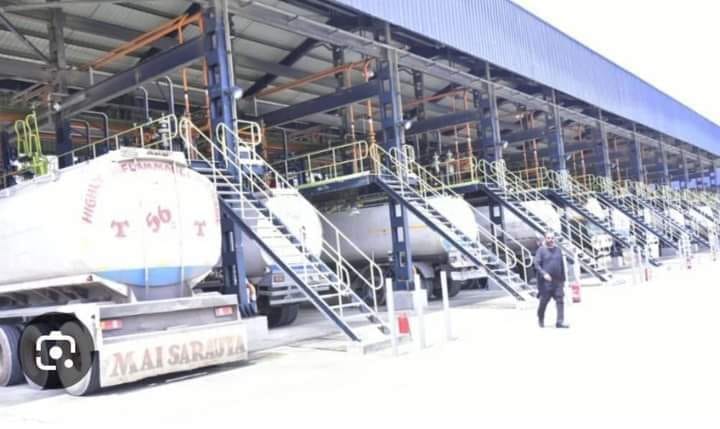
Supply logistics may also help explain the uneven experience. AFP reported in 2025 that gas was being transported by road from Kogi State to supply Abuja, a journey of roughly 235 kilometres. Where supply depends on road deliveries, interruptions in transportation, delays at loading points, or constraints at receiving facilities can affect availability. The distance alone, however, does not prove that logistics are responsible for any particular queue. Establishing the extent of the problem requires delivery records, station stock levels, outage logs, and evidence of how frequently outlets run short of gas.
The pressure created by long queues has also generated allegations of informal payments and preferential access, as reported by motorists’ claims that some attendants accepted tips to allow drivers to move ahead of others, a practice described by some users as “chwa-chwa”. This warrants scrutiny from station operators and regulators. Clear queue-management procedures, visible pricing, accessible complaint channels, and documented investigations would help establish whether such practices occur and discourage abuses where they are found.
Questions about access and efficiency are accompanied by a more serious concern: safety. On Sunday, 13 September 2026, a CNG-converted Toyota Camry with registration number MAP-962 JU was involved in an explosion while refuelling at the NIPCO Gas Filling Station on Airport Road, Abuja. In a statement published on its website that day, NIPCO said preliminary findings indicated that an additional cylinder fitted to the vehicle was unsuitable for CNG use and had ruptured shortly after refuelling began. The company reported that there were no fatalities or injuries and said the driver had been retained at the station to assist with enquiries. These details represent NIPCO’s preliminary account, not a final independent determination of the incident’s cause or responsibility.
The PCNGI responded on 14 September, saying, on the basis of information provided by NIPCO, that the cylinder was not designed or certified for storing CNG. It said the driver had been apprehended and urged motorists to use only. NADDC-accredited conversion centres and cylinders and kits certified by the Standards Organisation of Nigeria (SON). The National Automotive Design and Development Council (NADDC), in a statement dated 15 September, also said preliminary information suggested that an additional cylinder had been fitted that was neither approved nor suitable for CNG use. NADDC confirmed that no fatalities or injuries were recorded and said it was working with relevant authorities to establish the facts. These statements identify a suspected equipment problem, but the final circumstances and responsibility remain matters for investigation. Authorities should clarify the cylinder’s origin, the vehicle’s conversion history, and whether required inspections were conducted.
The Abuja incident recalls an earlier CNG-related explosion in Edo State in October 2024, after which authorities attributed the incident to an improperly welded cylinder and discussed plans for a Nigeria Gas Vehicle Monitoring System. The comparison does not establish that the two incidents had the same cause. It does, however, raise questions about how vehicle conversions are inspected, how cylinders are traced and verified, and whether monitoring arrangements can identify unsafe installations before they reach a refuelling station. Authorities should clarify the present operational status of the proposed monitoring system and publish verifiable information about inspections, enforcement, and safety incidents.
Oversight also depends on knowing who is authorised to perform conversions. Public statements have cited different figures for licensed, accredited, or certified centres: NADDC officials have referred to 80 licensed centres, an industry representative has cited more than 300 accredited centres, and government programme figures have referred to over 400 certified centres. These numbers may describe different categories or reflect different reporting dates rather than a direct contradiction. Without a current, publicly accessible register explaining each category, however, motorists may struggle to identify a legitimate facility. NADDC and PCNGI should publish an updated list, define the criteria for inclusion, and explain how facilities are inspected, monitored, and removed from the register when they no longer meet the requirements.
Conversion capacity is another area where published claims need context. NASENI’s Utako facility was reported in 2024 to have the capacity to convert about 15 vehicles in two hours, while a later report on a Kubwa centre cited a capacity of up to 20 vehicles a day. These figures may describe different facilities, equipment, and operating conditions; stated capacity should not be confused with verified output. Actual throughput depends on staffing, inspection requirements, equipment availability, the complexity of each vehicle, and the supply of approved components. Publishing stated capacity alongside verified conversion figures would help the public assess whether the programme is expanding access in practice.
Questions have also been raised about the distribution of publicly supported conversion kits. PCNGI has said that C and L Smart Energy Limited, a vendor operating from Lokogoma, was suspended from the conversion incentive programme in December 2024 following allegations that government-provided kits intended to be free were being sold for amounts ranging from ₦200,000 to ₦1.2 million. The initiative said the matter was referred to the Economic and Financial Crimes Commission (EFCC). A referral is not proof of guilt, and no publicly confirmed outcome of the referral has been established in the material reviewed for this article. The allegation warrants a documented account of the kits involved, the evidence supporting the suspension, the status of the referral, and the company’s response. More broadly, transparent distribution records and independent audits would help the public determine whether publicly supported equipment is reaching its intended beneficiaries.
PCNGI has also pushed back against criticism of the programme, describing some attacks as a smear campaign. At the same time, it was reported that allegations concerning nepotism, transparency, and the selection of approved conversion centres, as well as questions about published lists, were raised. The existence of allegations does not establish that favouritism occurred, just as an official denial does not resolve every concern. A credible assessment requires documentary evidence: the criteria used to select participating businesses, records of public support, the names of beneficiaries, relevant procurement or partnership documents, and explanations of how complaints were investigated.
Nigeria’s CNG programme should ultimately be judged not only by the number of vehicles converted or centres announced, but by whether motorists can obtain fuel reliably, affordably, and safely. Cheaper gas loses much of its economic value when drivers must sacrifice working hours in queues, travel long distances to find an operating station, or worry about whether their equipment meets the required standards. The programme’s promise remains significant, but fulfilling it will require more than expansion targets and public assurances. It will require dependable supply, transparent administration, effective regulation, and evidence that safety standards are being enforced. For drivers whose livelihoods depend on keeping their vehicles moving, success is measured not by the promise of the pump, but by whether the pump is working when they arrive.
Daniel Nduka Okonkwo is an investigative journalist, human rights advocate, and policy analyst based in Nigeria. He is the founder and publisher of Profiles International Human Rights Advocate (PIHRA), a platform documenting the courage of human rights defenders and examining issues of governance, accountability, security, and fundamental rights.
His reporting on Nigerian governance, security-sector accountability, public finance, and human rights has appeared in Sahara Reporters, Vanguard, Daily Trust, African Defence Forum, Opinion Nigeria, and Daily Intel.
Read more of his work on the PIHRA website:
https://www.profilesinternationalhumanrightsadvocate.com.ng/
For tips, feedback, or collaboration, contact him at dan.okonkwo.73@gmail.com.





















You must be logged in to post a comment Login