
Education
Beyond the Pain: How Menstrual Cramps Are Undermining Female Students’ Academic Performance -By Suleiman Jumain Shuaibat
The recommendations from both the gender advocate and the medical expert reinforce those concerns. They argue that universities have a responsibility to create an environment where students experiencing severe menstrual symptoms can seek support without their education suffering.

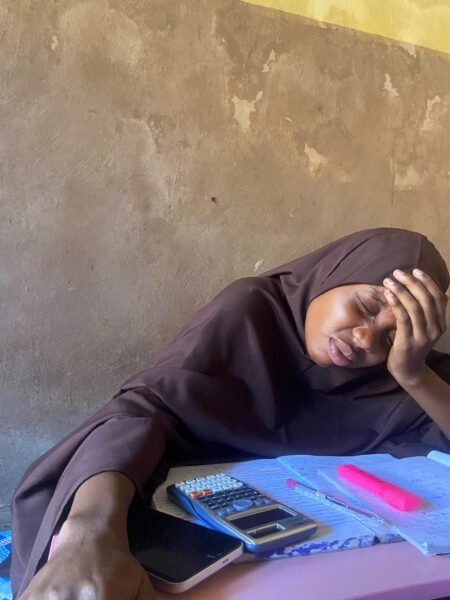
As other students focused on answering questions in the examination hall, Abdulkareem Faridat Oyindamola was battling sharp menstrual cramps that refused to ease.
The pain became so intense that tears rolled down her face. Even then, leaving the examination hall was not an option.
“I cried throughout the exam,” recalled the 300-level Biochemistry student at Kwara State University. “The pain was so intense that I found it very difficult to concentrate. Even though I managed to stay in the exam hall, I didn’t perform as well as I could have because I was focused more on the pain than on the questions.”
For Faridat, missing the examination would have meant going through the stress of arranging a make-up examination. She chose to endure the pain and complete the paper.
Her experience reflects that of many female students who, every month, find themselves balancing lectures, practicals, tests and examinations with menstrual pain. While some stay away from academic activities because the pain becomes unbearable, others attend classes despite the discomfort because they do not want to fall behind.
Their experiences are reflected in a Nigerian study involving 583 female undergraduate students. The study found that 82.2 per cent experienced dysmenorrhea (painful menstrual cramps), while 42.7 per cent reported missing classes or school days because of severe menstrual pain.
When the Pain Becomes Part of Learning
For Jeremiah Ojochegbe Comfort, a 400-level English and Literary Studies student at Usmanu Danfodiyo University, preparing for her monthly cycle has become part of her routine.
A few days before her period begins, she starts taking pain-relief medication not because she enjoys taking it, but because she worries about missing lectures, tests or examinations.
“Attendance is compulsory in my department,” she said. “I really don’t like taking medications for my period, but for the sake of not missing a lecture, test or exam, I have to.”
Even with the medication, she said the pain sometimes affects her concentration while preparing for tests and examinations.
Abdulbaki Oyinkansola Asmau, a 400-level
Biological Sciences student at Al-Hikmah University, also tries not to let menstrual pain interfere with her academics.
She experiences abdominal, back and vaginal pain during her period. One evening, the cramps became so severe that she had to stop reading and lie down for about 30 minutes before returning to her books.
She also recalled spending long hours on a project practical while experiencing menstrual pain.
“I only needed to rest,” she said.
For Aliyu Mardeeyah Opeyemi, a 100-level student in the Faculty of Pharmaceutical Sciences at Usmanu Danfodiyo University, severe menstrual cramps once meant missing a lecture because she could not stand properly.
She later visited the university clinic hoping to get pain relief. Instead, she said she waited a long time before she was attended to.
“I would like the university to provide better health support, maybe free sanitary pads,” she said. “We also need clean and well-equipped restrooms. It would also help if lecturers understand students who are experiencing severe menstrual pain.”
Maryam Feyishola Rahman, a 200-level Political Science student at Usmanu Danfodiyo University, said she usually attends lectures during her period, but that does not always mean she is able to participate fully.
She recalled struggling to concentrate throughout one lecture last semester because of menstrual cramps.
“I found it hard to concentrate and participate actively.”
When the lecture ended, she looked for somewhere to rest.
“I slept immediately after the lecture ended and felt much better,” she recalled. “Although the chairs I slept on were hard, it helped.”
She added that universities should establish menstrual support programmes that provide free sanitary pads and access to basic menstrual health services for female students.
Ahmad Tijani Azeezat, a 300-level Anatomy student at the University of Ilorin, also shared a similar experience.
She said severe menstrual cramps once made it difficult for her to walk, forcing her to miss a lecture. Although she later obtained the lecture notes from classmates, she said hormonal changes and menstrual pain sometimes disrupt her normal routine.
The Need for Better Support
The experiences shared by the students suggest that menstrual pain is more than a health issue. For many female students, it also affects class attendance, participation and their ability to keep up with academic demands.
Fatimah Hamid, a gender advocate, said such experiences are common among female students who experience severe menstrual cramps.
“The pain can be so intense that some students are unable to attend classes, causing them to miss lectures, classroom discussions, practical sessions and assessments,” she said.
She added that even students who attend classes may not be able to participate effectively because the pain affects their concentration and energy levels.
According to Fatimah, one of the biggest challenges is the lack of structured support for students experiencing dysmenorrhea.
“There are currently very few structured support systems in place for university students experiencing dysmenorrhea,” she said. “Many students who suffer from severe menstrual pain are left to cope on their own, often having to choose between attending classes in pain or missing important lectures altogether.”
She recommended that universities introduce measures to support students experiencing severe menstrual symptoms while ensuring such policies are not abused. These, she said, could include flexible attendance arrangements, make-up classes and assessment adjustments in genuine cases.
The students’ experiences also have a medical explanation.
Adeola Anifat Adetoun, a registered nurse and midwife, said hormonal changes during menstruation can affect concentration, while severe menstrual cramps may make it difficult for female students to carry out their daily activities.
She explained that the pain is linked to increased levels of prostaglandins, substances that trigger contractions of the uterus during menstruation. High levels, she said, may also cause nausea, diarrhoea, headaches and lower back pain.
“So imagine a female student having cramps and diarrhoea at the same time,” she said. “It will definitely interfere with the activities of the student for the rest of the day.”
Although she said attending lectures or examinations while experiencing menstrual pain does not have direct physical health implications, she noted that repeatedly enduring severe pain without adequate rest or support could affect a student’s psychological well-being, depending on the individual’s pain threshold.
She recommended that pain-relief medication should be readily available at campus healthcare centres. She also called for reasonable academic accommodations, including make-up classes, assignment extensions and rescheduled tests for students experiencing severe menstrual symptoms.
The experiences shared by the students may differ, but they point to a common reality: for many of them, menstrual pain is an additional burden they must manage alongside lectures, tests, examinations and other academic responsibilities.
While some have found ways to cope, they believe they should not have to do it alone.
Mardeeyah hopes to see improved healthcare services on campus, cleaner restrooms and greater understanding from lecturers when severe menstrual cramps make attending classes difficult. Maryam believes menstrual support programmes and access to basic menstrual health services would make a meaningful difference for female students.
The recommendations from both the gender advocate and the medical expert reinforce those concerns. They argue that universities have a responsibility to create an environment where students experiencing severe menstrual symptoms can seek support without their education suffering.




























You must be logged in to post a comment Login