
Africa
SE: The Roads Of Invitation & Exclusion -By IfeanyiChukwu Afuba
A southeast affirmation policy was naturally expected in the aftermath of the civil war. The depletion of Igbo ranks in the military rather than spur an adjustment plan, propelled a dismissive approach to the zone. In this put – down strategy, the southeast was almost totally ignored in the siting of military – industrial complexes. Officers from the region bore the brunt of erosion of professionalism and military discipline. Whereas a Shehu Musa Yardua could receive double promotion from lieutenant colonel to brigadier to fit in as chief of general staff, supreme headquarters, an Ebitu Ukiwe, did not deserve a slight push from naval commodore to rear admiral, to shut off those breathing down his neck as chief of general staff.

Two events in the past two weeks refreshed Nigeria’s national question and the extent of it’s geo – political implications. These occurrences relate to the selective character of past and current system engagement. By assuming the weight of trends rather than mere incidents, the developments signpost the deep contradictions of our federation project.
With specific reference to the southeast, the gaps between the present federal government’s rhetoric and action reveal an unwillingness to pursue an inclusive framework.
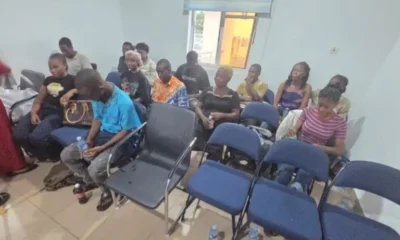
Nigerians recently woke to the alarm that youths from the five southeast states were abandoning the opportunity to enlist into the army. The widely publicised concern was raised by authorities of the Nigerian army in the course of the 2025 recruitment exercise. The disinterest is said to have assumed a worsening trend in recent years. According to Daily Trust’s report (April 14, 2025), leader of the 2025 Army Recruitment Enlightenment Team, Chima Ekeator, a brigadier-general, observed that in the last few years, youths from the zone have kept shunning their slots.
“Kaduna State recorded over 3,000 applications in the ongoing 2025 recruitment exercise while Enugu State was still struggling to get 100 applicants. Enugu State was given about 200 slots, but the people who made it were never up to 100 due to poor application. This has also become a recurring decimal in other states in the South East.” Lending credence to the observation, Enugu State Commissioner for Youths and Sports Development, Barr. Lloyd Ekweremadu, “regretted that the problem had persisted despite the collective efforts to reverse the trend and called for a review of modes of advertising the opportunities and the need to provide more details about the benefits of serving in the army.”
Nigerian Tribune of April 10, 2025 reported that while in Abia State, the enlistment team spokesman lamented that ‘the region is losing out during recruitment exercises, citing an example from last year when Abia State was allocated nearly 200 slots, but only 53 were taken up. He added that similar situations were observed in other Southeastern states.’
The unfolding scenario is definitely worrisome. Alienation of any part in an organisation inevitably leads to dysfunction. It’s effect on a State’s security architecture, as the saying goes, should be better imagined than experienced. We commend the army for being sensitive to the situation. It’s to the credit of Nigerian army leadership that it is according this potential flashpoint serious attention. Assurances of complementing ongoing sensitisation with other remedial measures are welcome. Since the situation appears to be peculiar to the southeast, the army will do well to feel the pulse in the region as it seeks solutions. The enquiry should go beyond the stereotype that disinterest in military service is as a result of IPOB’s counter campaign. There are other ideas associated with the growing boycott which either predate the IPOB or have been shaped by specific experiences.
A southeast affirmation policy was naturally expected in the aftermath of the civil war. The depletion of Igbo ranks in the military rather than spur an adjustment plan, propelled a dismissive approach to the zone. In this put – down strategy, the southeast was almost totally ignored in the siting of military – industrial complexes. Officers from the region bore the brunt of erosion of professionalism and military discipline. Whereas a Shehu Musa Yardua could receive double promotion from lieutenant colonel to brigadier to fit in as chief of general staff, supreme headquarters, an Ebitu Ukiwe, did not deserve a slight push from naval commodore to rear admiral, to shut off those breathing down his neck as chief of general staff. I know three retired military officers from the southeast who were of NDA,1983, 35th regular course. One was retired as army captain; another as lieutenant colonel and the third as navy captain. Their premature disengagement was attributed to their not having godfathers. Then, relate the treatment to the feeling that a greater disproportion of soldiers of southeast origin are tasked with anti terrorism operations in the north. But the big morale killer is the perception that before long, captured insurgents are declared repentant and set free.
Yet, the army’s initiative to regain acceptance in this part of the country is laudable. But to bear fruit, the initiative must look at the broad picture. Preliminary findings point to systemic, rather than compartmentalized problem. As an institution, the army cannot be the only agency of government grappling with social alienation. The difference seems to be that while the army admits of it’s challenges, other spheres tend to ignore the system defect.
And this leads us to the second contrary event mentioned in the opening paragraph. The media reported the shocking story of inauguration of presidential committee on census and housing on April 17, 2025, without representation from the southeast and southsouth zones. Of the seven man committee, five members are from the southwest and one each from the northwest and north central. The outrage following this divisive step is suitably captured in the statement by Otu Oka – Iwu, the apex body of Igbo lawyers. From The Punch edition, (April 22, 2025) the lawyers declared: “This is not just an omission. This is a clear and calculated act of marginalisation, one that reinforces the entrenched and widening pattern of exclusion and systemic discrimination against the Igbo people and our neighbours in the south south region.” For the avoidance of doubt, the release tackles the diversionary defence of technocracy. “A national census is not a technical exercise, it is political, economic, social and cultural. It determines representation in government, allocation of resources…It defines who counts and who is counted.” And beyond a few murmurs about the composition’s link to portfolios held, the federal government has maintained embarrassing silence on the subject. In any case, the plea of office – determined selection is not exonerating. The concentration of sectoral offices in one or two zones is deplorable.
Denial of due measures to the Igbo constituency had been on the ascent since 1970. But while the injustices of the past cannot be shifted to the present government, she is to be held to account for the inequitable treatment of groups since it’s assumption of power. On at least two occasions now, functionaries of the government have come forth with what was certified as distribution of appointments by the administration. The purpose behind the authentication was to disprove the impression that the southwest was dominating positions in government. First of the records, released in November 2024 was restricted to military/ paramilitary appointments while the schedule unveiled March 2025 extended to other political appointments. The revelation from the fact – checks was indicting nevertheless. While the lists did not catapult the southwest to overall first position, they showed brazen favouritism by the lopsided allocations to the region. What stopped the southwest from dethroning the northwest were the inherited fixtures from Buhari’s provincialism. But even as this provided a cover for current self indulgence, it did not hide the demotion of the southeast and southsouth. Out of 20 security positions, the northwest had 8; southwest took 5 and the two inconsequential zones of the south got 1 each. In the expanded list of appointments, the southwest had 29 slots; northwest 36; southsouth 22; and southeast 16! The ferocity and consistency of the discrimination against the southeast is such that will affect the psyche of the people in the region. This is the reality the army must contend with as it tries to engage the population on military service. It will be rewarding if the army and indeed other agencies of government will reorientate towards inclusivity and fairness. That will be a win – win for Nigeria and the zone. To fail in this task will translate to public relations for enemies of a united Nigeria.






















You must be logged in to post a comment Login