
Africa
The Dangers Of Abandoning The Moulding Of Public Opinions In Nigeria To Social Media Influencers -By Clement Adefulire
While social media influencers undeniably play a role in modern communication, abandoning the responsibility of shaping public opinion solely to them is fraught with danger. Nigeria, a nation of over 200 million people with diverse cultures and complex socio-political realities, cannot afford to outsource such a critical function. Public institutions, civil society, religious leaders, and the mainstream media must reclaim their space in educating, informing, and guiding the populace. There is a need for digital literacy campaigns, ethical journalism, and responsible governance to ensure that the public space is not only free but also safe, truthful, and constructive. Ultimately, the health of Nigeria’s democracy and the unity of its people depend on the integrity of the information they consume—and on who controls that narrative.

In the contemporary digital age, the rise of social media has revolutionized the way information is In the contemporary digital age, the rise of social media has revolutionized the way information is disseminated and consumed. Platforms like Twitter, Facebook, Instagram, and TikTok have become dominant spaces where narratives are formed, challenged, and reshaped daily. In Nigeria, social media influencers have emerged as powerful voices with immense capacity to shape public discourse, especially among young people. While this development has democratized access to information and created new avenues for civic engagement, the over-reliance on influencers in moulding public opinions presents several dangers, particularly in a nation as complex and sensitive as Nigeria.
1. Misinformation and Disinformation
One of the most glaring dangers is the unchecked spread of misinformation and disinformation. Many social media influencers do not have formal training in journalism or ethics and often share content that is poorly researched, exaggerated, or outright false. In an environment already plagued by political, ethnic, and religious tensions, such content can be incendiary. The #EndSARS protests in 2020, while a powerful movement for change, also highlighted how false or unverified claims on social media could escalate tensions, provoke fear, and even incite violence. When influencers become the primary source of public enlightenment without accountability, society becomes vulnerable to manipulation and confusion.
2. Erosion of Institutional Authority
Another critical danger is the erosion of trust in traditional institutions such as the media, government, religious bodies, and academia. When influencers dominate the information space, they often portray themselves as the only credible sources, discrediting other voices that may be more balanced and informed. This undermines public institutions, weakens governance, and promotes cynicism. For instance, nuanced public policies or economic decisions are often reduced to simplistic soundbites or conspiracy theories by influencers seeking engagement. This creates a populace that is more reactive than reflective and more prone to agitation than dialogue.
3. Commercialization of Opinions
Social media influencers often operate within the framework of personal branding and profit-making. Their influence is tied to visibility, likes, and sponsorships rather than a commitment to truth or public good. This monetization of influence means that public opinion can be easily swayed by whoever pays the most. Political actors, businesses, or interest groups can pay influencers to push specific agendas, distort public perception, or cancel dissenting voices. This commodification of opinions undermines the democratic ideals of informed decision-making and free expression.
4. Shallow Engagement with Complex Issues
Many influencers rely on catchy slogans, trends, and emotional appeals to drive engagement. While this may bring attention to critical issues, it often leads to oversimplification. Nigeria’s challenges—ranging from insecurity, unemployment, and corruption to ethnic and religious divisions—are deep-rooted and complex. They require thoughtful engagement, expert analysis, and long-term commitment to solutions. When influencers present these issues through the lens of sensationalism, it hinders constructive dialogue and policy development. The public becomes more concerned with viral moments than sustainable change.
5. Polarization and Echo Chambers
Social media algorithms are designed to show users content they agree with, leading to echo chambers where dissenting opinions are excluded. Influencers often cater to specific audiences, reinforcing existing biases and deepening divisions. In Nigeria’s diverse society, this can exacerbate ethnic, religious, and political polarization. For example, during election seasons, influencers aligned with particular candidates or regions and can fan the flames of division by promoting narratives that pit groups against each other. The result is a fragmented society that struggles to find common ground.
6. Undermining National Identity and Values
Many influencers draw inspiration from global pop culture, often promoting lifestyles, values, and ideologies that may conflict with Nigeria’s cultural and moral frameworks. The uncritical adoption of foreign narratives can dilute national identity and erode traditional values. Without counterbalancing voices from educators, thought leaders, and community builders, public opinion may shift towards materialism, instant gratification, and moral relativism—values that undermine social cohesion and national development.
7. Fellow Nigerians, what is really happening to our dear beloved Country?
In the light of the current wave of troubling events dominating the social media landscape—from rising insecurity to a barrage of disheartening news across Nigeria—it increasingly feels as though the nation we once knew and cherished is slipping away. The Nigeria of today seems distant from the one many of us grew up in—a country where peace, safety, and unity were almost taken for granted. There was a time when Nigeria was a place where people could travel freely and confidently across its vast landscape, without the fear that now hangs so heavily in the air. Back then, it was common to board a luxurious bus at Oyingbo in Lagos around 2:00 PM, bound for Maiduguri, and arrive safely by 6:00 AM the next morning. The journey itself was a cultural experience—meeting fellow Nigerians from various backgrounds, sharing stories, food, laughter, and a profound sense of belonging that transcended ethnicity or religion.
As a young man, one could spontaneously embark on an overnight trip from Lagos to cities like Calabar, Enugu, or Port Harcourt, boarding around 8:00 PM and arriving at daybreak without incident. The nights were filled with entertainment—watching movies on buses operated by reputable transport companies such as The Young Shall Grow, ABC Transport, or Chelsea, while drifting in and out of sleep, comforted by the hum of the road.
Similarly, one could depart Kano for Gombe by 8:00 PM, traveling through the night on public transportation with little more than the excitement of the journey ahead. There was no fear, only the promise of new experiences and the joy of moving freely within one’s own country. Today, such memories feel almost surreal, a stark contrast to the pervasive tension and anxiety that now accompany inter-state travel. What once was an ordinary aspect of Nigerian life—safe, seamless travel—is now a nostalgic dream for many. It underscores the deep yearning for a return to a more secure, united, and hopeful Nigeria.
Conclusion
While social media influencers undeniably play a role in modern communication, abandoning the responsibility of shaping public opinion solely to them is fraught with danger. Nigeria, a nation of over 200 million people with diverse cultures and complex socio-political realities, cannot afford to outsource such a critical function. Public institutions, civil society, religious leaders, and the mainstream media must reclaim their space in educating, informing, and guiding the populace. There is a need for digital literacy campaigns, ethical journalism, and responsible governance to ensure that the public space is not only free but also safe, truthful, and constructive. Ultimately, the health of Nigeria’s democracy and the unity of its people depend on the integrity of the information they consume—and on who controls that narrative.
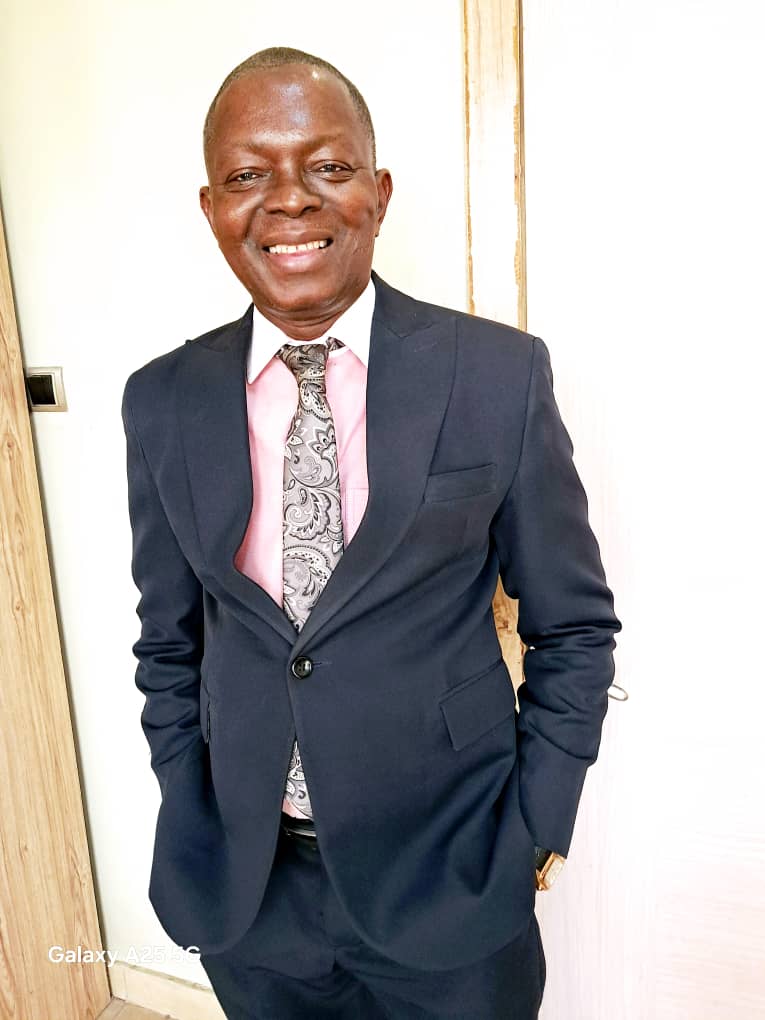
About the author of this article: Clement Adefulire
The author is a Chartered Accountant and an experienced Public Policy Analyst who resides in Lagos,
Nigeria. With a strong background in finance and governance, he brings a wealth of expertise in both the
private and public sectors. In addition to his professional roles, he serves as the National Coordinator of
the BAT-KSM Progressives Support Group, a political support group that campaigned for President Bola
Ahmed Tinubu and Senator Kashim Shetima during the 2023 Presidential election.
He is committed to promoting progressive leadership and national development. Through his work, he
actively contributes to shaping public discourse, supporting policy reforms, and fostering civic
engagement across the country.
For further enquiries, professional engagements, or collaborative opportunities, the author welcomes
correspondence via email at cadefulire@yahoo.com. He is also available for direct communication
through his mobile line at +234-805-230-0393 or +234-703-539-5437





















You must be logged in to post a comment Login