Africa
Sermon To Be Vetted By Politicians? Make Una Fear God oooo! -By Isaac Asabor
Governor Bago may think he is solving a problem, but he is opening a Pandora’s Box. The pulpit belongs to God, not to government panels. Politicians should fix roads, build schools, provide jobs, and secure lives, not sit in judgment over sermons. The Almighty does not need a clearance form before His word goes forth.

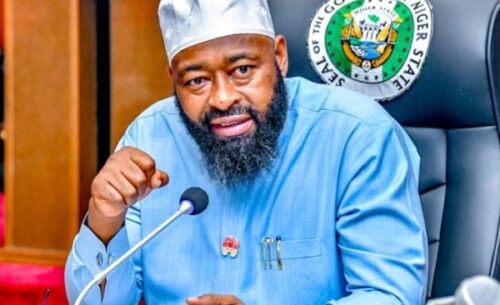
Nigeria never ceases to amaze. Just when one thinks we have seen it all, another policy surfaces that leaves the people shaking their heads in disbelief. The recent order by the Niger State Governor, Umar Bago, mandating preachers to submit their sermons for government approval before mounting the pulpit is one of those jaw-dropping policies. It is being justified as a way to curb hate preaching, indoctrination, and incitement. But the implications are far more dangerous than the problems it claims to solve.
Let us call a spade its rightful name: this is an attempt to muzzle freedom of religion and expression under the pretext of security. While insecurity is a real concern in Nigeria, terrorism, banditry, communal clashes, and religious extremism are not imaginary, the cure being prescribed here is worse than the disease.
Without a doubt, freedom of religion is sacred. The Nigerian Constitution, in Section 38(1), guarantees freedom of thought, conscience, and religion. This freedom includes the right to practice and propagate one’s faith without interference. The idea that a pastor, imam, or evangelist must first submit his sermon to a government-appointed panel is a direct assault on that freedom. Religion is not a press release to be vetted by politicians; it is a matter of conviction and belief.
More disturbing is the fact that this directive is coming from a democratic government, not a military junta. What was the struggle of 1999 about if civilian governors now want to play Big Brother in religious spaces? Are Nigerians now to be told what to believe, how to pray, and what to preach, all because politicians think so?
In as much as the practice prevails in Saudi Arabia, meaning it is a selective borrowing rrom Saudi Arabia, does not mean Nigeria should resort to practicing same.
Governor Bago, in defending his policy, cited Saudi Arabia as an example where sermons are vetted. But Nigeria is not Saudi Arabia. We claim to be a secular state with a plural society, Christians, Muslims, traditionalists, and even non-believers coexist here. Saudi Arabia is a theocratic monarchy built on Wahhabi Islamic jurisprudence, and its governance system is fundamentally different from Nigeria’s.
Our leader’s cherry-pick from foreign models to justify draconian policies, but they never pick the parts that matter. If Saudi Arabia can regulate sermons, fine. But Saudi also provides social services, stable electricity, functioning health care, and job opportunities. Why is Niger State not borrowing that aspect of Saudi life? Why only the censorship of religious speech?
The most laughable part is that politicians now want to play gatekeepers of morality. Imagine a government that cannot vet contractors properly before awarding road projects now claiming the competence to vet the word of God before it is preached. Make una fear God oooo!
Nigeria’s politicians are some of the most ethically compromised leaders in the world. Corruption, looting, election rigging, and abuse of office are the order of the day. These same people want to decide which sermon is fit for the people to hear? It is like asking a thief to be the chief security officer of a bank.
If anything, sermons are sometimes the only remaining space where truth is spoken to power. From the days of Archbishop Desmond Tutu in South Africa to Cardinal Anthony Okogie in Nigeria, the pulpit has often served as a moral compass when politicians lose their way. To censor sermons is to gag one of the last remaining voices of accountability.
Let us not deceive ourselves. Religion is already a sensitive subject in Nigeria. The idea that a government panel will sit down to approve what a pastor or imam will say is a recipe for distrust and suspicion. Who will sit on these panels? Will they be neutral? Will there be balanced between Christians and Muslims? Will they not be tools in the hands of the ruling party to silence critics under the guise of “screening”?
Today, it is Niger State. Tomorrow, it may spread to other states. Before long, politicians may be telling us what hymns to sing and what prayer points are “politically correct.” This is how authoritarianism begins, small steps justified by “security concerns” until the people wake up one day to find that their freedoms are gone.
Nobody is saying hate speech or incitement should be tolerated. We all know how toxic preaching has fueled violence in that part of Nigeria, from Boko Haram’s radical sermons to some provocative utterances from extremist clerics. But there are better ways to address this problem.
First, the government already has enough laws to punish incitement. If a preacher incites violence, arrest him. If someone uses the pulpit to declare war on the state, prosecute him. The Penal Code, the Criminal Code, and even the Terrorism Prevention Act have provisions for that. Why add another layer of bureaucracy that treats all preachers as suspects?
Second, government can engage religious bodies constructively. The Christian Association of Nigeria (CAN) and the Supreme Council for Islamic Affairs (NSCIA) exist for a reason. Why not partner with them for self-regulation, training, and moderation instead of imposing a blanket vetting policy?
Without a doubt, the move is unarguably misplaced priorities. Niger State, like many parts of Nigeria, is grappling with poverty, insecurity, poor infrastructure, and joblessness. Citizens cannot travel from Minna to Kontagora without fear of bandits. Children are out of school because parents cannot afford fees. Health centres lack drugs. Yet, the government is focusing on preachers’ sermons as though that is the most pressing problem.
This is classic Nigerian governance, leave the real problems unsolved and chase shadows. If the same energy being put into censoring sermons were invested in creating jobs and tackling banditry, the so-called “incitement” would lose its audience. Hungry people are always more vulnerable to radical preaching.
Let us also think ahead. If we accept that government can vet sermons today, what stops them tomorrow from vetting newspaper articles, social media posts, or even private conversations? This policy, if allowed, will set a dangerous precedent. It will embolden other governors to legislate censorship in the name of order. Before long, Nigeria could find itself sliding into a soft dictatorship.
The clergy, civil society, lawyers, and ordinary citizens must resist this policy. Silence is not an option. Once freedom is surrendered, it rarely comes back. The people of Niger State must insist that their pulpits and minbars remain sacred spaces, not subject to political editing.
At the same time, religious leaders must also exercise restraint and responsibility. The pulpit is not a place for reckless utterances that endanger lives. Preachers should be wise, but wisdom is not the same as being gagged.
Governor Bago may think he is solving a problem, but he is opening a Pandora’s Box. The pulpit belongs to God, not to government panels. Politicians should fix roads, build schools, provide jobs, and secure lives, not sit in judgment over sermons. The Almighty does not need a clearance form before His word goes forth.
Sermon to be vetted by politicians? Make una fear God oooo!