Africa
Shame As Nigeria, Once An Agricultural Powerhouse, Now Spends $10 Billion On Food Imports -By Isaac Asabor
Above all, policies must be consistent. Nigeria cannot afford to keep abandoning agricultural schemes midway each time there is a change in leadership. What the nation needs is a long-term, well-coordinated agricultural master plan, insulated from political cycles, and pursued with the same zeal we once applied to oil exploration.

There was a time when Nigeria commanded respect across Africa and beyond for its agricultural prowess. The world knew us for the groundnut pyramids of Kano, the vast cocoa plantations of the West, the palm oil of the East, and the cotton that fueled industries across the country. Those who grew up in that era speak proudly of how agriculture was the backbone of our economy, funding education, health, and infrastructure before crude oil became our mainstay.
Back then, agricultural production was not just about food security; it was the bedrock of Nigeria’s prosperity. In the 1960s, proceeds from cocoa exports funded landmark projects such as the Cocoa House in Ibadan, once the tallest building in West Africa. In a similar vein, groundnut pyramids were not only a sight to behold but also a global symbol of Nigeria’s agrarian strength. In the East, oil palm exports made communities thrive, while cotton and rubber supplied both domestic and foreign markets. These were the years when Nigeria proudly fed itself and contributed to feeding others.
Fast-forward to today, and the story has turned into one of national embarrassment. According to the Minister of Agriculture and Food Security, Senator Abubakar Kyari, the country spends over $10 billion annually importing food that cut across wheat, rice, sugar, fish, and even tomato paste. This is not just disappointing; it is a disgrace. How did a nation blessed with fertile land and youthful manpower become so dependent on foreign countries to feed itself?
It is even more troubling because Nigeria is not short of resources. We sit on 85 million hectares of arable land, a young and energetic population, with over 70 percent under 30, and a large portion of our workforce already engaged in farming. Agriculture contributes about 35 percent of our GDP and employs roughly the same percentage of our people. In theory, Nigeria has all it takes to not only feed itself but to feed a good
part of Africa. Yet, in reality, we are bleeding scarce foreign reserves importing food that we should produce in abundance.
This contradiction raises uncomfortable questions about government policy. President Bola Tinubu has spoken about food sovereignty and even declared a state of emergency on food security. His administration has promised to turn Nigeria into a nation that can feed itself on its own terms. But if these policies were truly effective, why are we still losing $10 billion annually to food imports?
The truth is bitter: the policies either lack coherence, are poorly implemented, or are hijacked by vested interests. Nigeria is notorious for grand agricultural programmes that collapse under the weight of corruption, lack of follow-through, or political discontinuity. We saw this with Operation Feed the Nation in the 1970s, Green Revolution in the 1980s, and more recently, the Anchor Borrowers’ Programme under the Central Bank of Nigeria, which disbursed billions but left little to show for it. In many cases, loans meant for real farmers were cornered by political cronies.
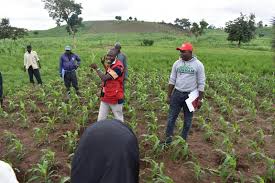
The core problems are well known. Farmers still struggle with access to affordable finance. Rural infrastructure remains poor, making it costly to move produce from farms to markets. Storage and processing facilities are inadequate, leading to massive post-harvest losses,in some cases, up to 40 percent of total harvests rot away before reaching consumers. Insecurity compounds the problem, as farmers are chased away from their land by bandits, kidnappers, and insurgents. Add to that inconsistent government policies, and it becomes clear why Nigeria keeps missing the mark.
Meanwhile, other countries with fewer resources have transformed their agricultural sectors into models of efficiency. Kenya earns significant foreign exchange from exporting vegetables, tea, and flowers to Europe. Ethiopia has built an entire economy around coffee exports. Ghana continues to sustain a cocoa industry that brings in billions of dollars annually. These are countries with smaller landmass and populations compared to Nigeria, yet they have managed to leverage agriculture for economic growth. Why then should Nigeria, with all its advantages, reduce itself to importing something as basic as tomato paste?
Beyond the economics, this dependency erodes our national dignity. A country that cannot feed itself is a country without sovereignty, no matter how loudly it proclaims otherwise. The COVID-19 pandemic and the Russia-Ukraine war already showed us how vulnerable food-import-dependent nations are to global disruptions. Prices skyrocketed, supply chains collapsed, and Nigerians suffered. Yet, lessons that should have been learned seem to have been ignored.
If the Tinubu administration is truly serious about changing this shameful narrative, then there must be a fundamental rethinking of agricultural policy. First, financing must be redesigned so that farmers, not middlemen or political appointees, get direct support. Transparent credit schemes, linked to performance and repayment, can work if managed without corruption.
Second, rural infrastructure must be prioritized. No farmer can succeed if he or she cannot transport produce to market or irrigate during dry seasons. Third, insecurity in farming areas must be tackled with urgency. Farmers need assurance that they can work their land without fear of death or abduction. Fourth, agriculture must be made attractive to young people. This requires investment in technology-driven farming, mechanization, and access to profitable value chains, not just the traditional hoe-and-cutlass approach that keeps productivity low.
Above all, policies must be consistent. Nigeria cannot afford to keep abandoning agricultural schemes midway each time there is a change in leadership. What the nation needs is a long-term, well-coordinated agricultural master plan, insulated from political cycles, and pursued with the same zeal we once applied to oil exploration.
In conclusion, the fact that Nigeria spends $10 billion yearly on food imports is not just an economic statistic; it is a national shame. It mocks our history, squanders our resources, and weakens our sovereignty. Nigeria once stood tall as an agricultural powerhouse. There is no reason we cannot reclaim that glory, except for lack of political will and visionary leadership. The government must wake up, rethink, and act decisively. The land is fertile, the people are ready; what is missing is the courage to lead Nigeria back to its rightful place as a food-secure nation.
Until then, our groundnut pyramids will remain a memory, our cocoa wealth a relic, and our food import bill a shameful reminder of promises not kept.