Africa
Shettima and the Burden of Misinformation -By Zaidu Zaidu
Shettima’s calm demeanor in the face of constant misrepresentation is a lesson in restraint and focus. Rather than respond to every attack, he continues to work quietly and diligently, supporting President Bola Ahmed Tinubu in steering Nigeria through turbulent waters. This stoic posture reminds us that true leadership sometimes lies in knowing when not to speak.

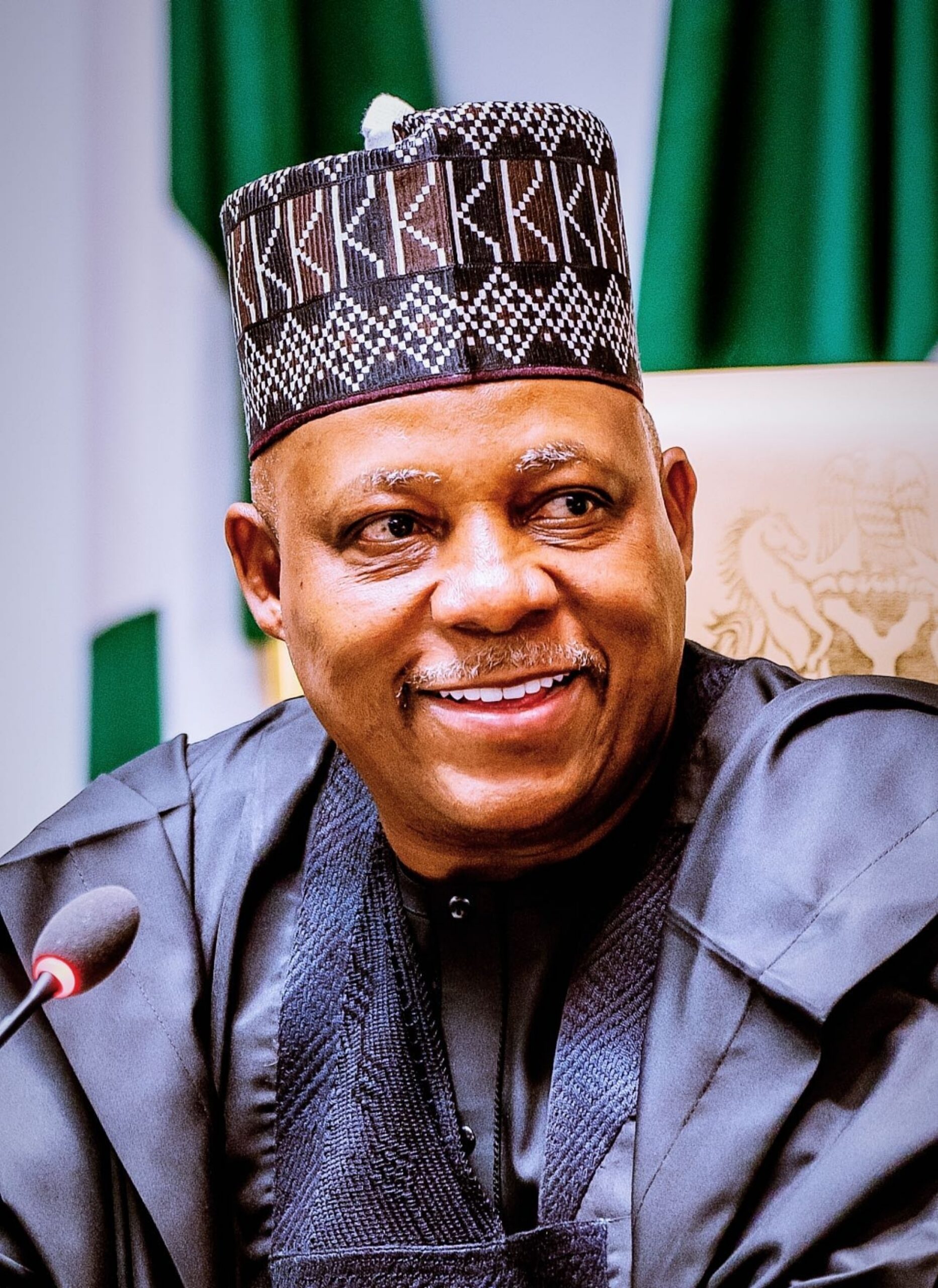
In the age of instant information, where a single tweet can shape public opinion and a manipulated video can go viral within seconds, public figures are at greater risk than ever of being misrepresented. Vice President Kashim Shettima, no stranger to controversy or scrutiny, has recently found himself the target of various misinformation and calumny campaigns.
It is astonishing how he has been made to appear irrelevant in the grand scheme of things. They have even gone as far as comparing him to former Vice President Yemi Osinbajo, GCON. The running joke on social media is how Vice President Shettima once called Osinbajo an “ice cream seller,” only for him to find himself in a similar position, becoming a ghost worker. The Vice President calling former Vice President Yemi Osinbajo “ice cream seller” was simply a political jab. Those who know the VP very well would tell you about his great sense of humor. He is one of the few individuals who cracks jokes that make you laugh your heart out while still maintaining a poker face. That said, those who ignorantly believe the Vice President is not relevant in this government are mistaken, unless they want him to start challenging his boss in a supremacy battle like we witnessed under a previous administration. For the record, the office of the Vice President is clearly defined by the constitution, with well-established roles. The Vice President cannot act in isolation and must remain loyal to his boss at all times.
In fact, the Vice President oversees several critical agencies such as the National Hajj Commission, the Niger Delta Power Holding Commission, and the Bureau of Public Enterprises. He has done an excellent job managing these agencies, ensuring they carry out their duties according to the constitution. If you noticed recently, he even warned the Head of the National Hajj Commission not to act like a sole administrator. Is this the man you say is nowhere to be found in the scheme of things? Funny, if the President had allowed him to be going to the market sharing “Trader Money,” his critics would have still complained. After all, these same people mocked former Vice President Yemi Osinbajo, GCFR, for doing just that, sharing money with traders, claiming Buhari had reduced the Vice President to an errand boy. Today, they mock Shettima for not doing what they mocked his predecessor for. What exactly do these people want, a Vice President who is always in conflict with his Principal? They even came up with the story that he was barred from the presidential villa. Even when the presidency debunked the allegation, they still claimed it was just a face-saving move. These episodes not only attempt to tarnish his character but also expose a deeper societal issue: our collective vulnerability to false narratives.
Misinformation is not new to Nigeria’s political landscape. What has changed is its speed, reach, and potency. Shettima, a man whose journey from Borno State Governor to Nigeria’s Vice President is both remarkable and instructive, continues to be targeted by coordinated campaigns that twist his words, misquote his statements, or attribute to him sentiments he never expressed.
One of the most recent and damaging examples includes the viral clip that took Shettima’s words out of context, painting him as insensitive to national issues. But anyone who has followed Shettima’s public life knows that he is eloquent, knowledgeable, and deeply invested in Nigeria’s future. He speaks not just with the confidence of a statesman, but with the passion of a man who cares deeply about the country’s progress.
It is important to highlight that misinformation is not just a political weapon; it’s a threat to democracy itself. When lies are dressed as facts and opinions disguised as news, public discourse suffers. Citizens, unable to distinguish truth from falsehood, make decisions based on flawed premises. Leaders are judged not on their actions or policies, but on fabricated stories and doctored headlines.
This is not an attempt to canonise Vice President Shettima. Like every leader, he is not above criticism. Constructive criticism is the lifeblood of democracy. But there is a difference between holding a leader accountable and orchestrating smear campaigns that distract from real issues and divide the populace.
Shettima’s calm demeanor in the face of constant misrepresentation is a lesson in restraint and focus. Rather than respond to every attack, he continues to work quietly and diligently, supporting President Bola Ahmed Tinubu in steering Nigeria through turbulent waters. This stoic posture reminds us that true leadership sometimes lies in knowing when not to speak.
As citizens, we must resist the temptation to forward unverified content. The ease of sharing falsehoods does not absolve us of responsibility. In a nation as diverse and fragile as Nigeria, the consequences of misinformation can be catastrophic, igniting ethnic tensions, stoking religious divides, and undermining national unity.
The media also carries a significant burden in this age of misinformation. In the race for clicks and sensational headlines, accuracy must never be sacrificed. Media houses must return to the ethics of balanced reporting and invest in fact-checking mechanisms.
Ultimately, the story of Shettima and the burden of misinformation is not just about him. It is about all of us, our susceptibility to deception, our role in spreading falsehoods, and our power to either fuel division or promote understanding. In choosing the latter, we not only preserve the truth but also the soul of our nation.
Zaidu Zaidu is a Public Affairs Analyst