
Opinion
South Africa Lacks Energy Power in Emerging Multipolar World, By Kestér Kenn Klomegâh
China has contemplated support for South African energy crisis since 2011 it joined BRICS. The latest development was in August 2023 during the 15th BRICS summit held in Johannesburg, South Africa signed a raft of deals with China to help it overhaul its creaky energy sector including upgrading its nuclear power plant as the government seeks to ease a severe energy crisis hobbling the economy.

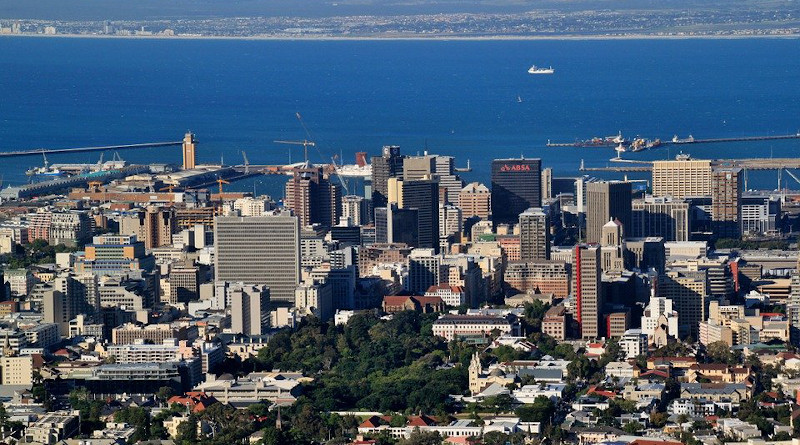
South Africa undoubtedly boasts its power and integrity on global stage. South Africa is known as the first economic power in Africa and as a staunch member of many international organizations. It maintains significant regional influence and is a member of the African Union, the Commonwealth of Nations, the BRICS and the G20. With an estimated 62 million (as of 2023) people of diverse cultural origin, South Africa’s economy is sustained by both local and foreign businesses. Today, it has to struggle with power outrages, unsuccessful in meeting both domestic and industrial power requirements in the country.
Unlike most of the African countries, South Africa’s economy is the most industrialized and technologically advanced, the second largest economy in Africa, after Egypt and Nigeria. South Africa has a very large energy sector and is currently the only country on the African continent that possesses a nuclear power plant. The country’s primary electricity generator is Eskom, the utility is the largest producer of electricity in Africa.
Eskom’s latest energy availability factor (EAF) data reveals that mismanagement, corruption, poor maintenance, and sabotage caused power station breakdowns. Due to severe mismanagement and corruption at Eskom, the company is $22 billion in debt and unable to meet the demands of the South African power grid. It has resulted in load shedding to prevent a failure of the entire system when the demand for electricity strains the capacity of Eskom’s power generating system.
China’s Factor in South African Energy Crisis
China has contemplated support for South African energy crisis since 2011 it joined BRICS. The latest development was in August 2023 during the 15th BRICS summit held in Johannesburg, South Africa signed a raft of deals with China to help it overhaul its creaky energy sector including upgrading its nuclear power plant as the government seeks to ease a severe energy crisis hobbling the economy.
The agreements, signed with Chinese power companies on the sidelines of the BRICS summit, includes upgrades to the electricity transmission and distribution network. “We are moving at the speed of the fastest, we are not going to move at the speed of the slowest,” Electricity Minister Kgosientsho Ramokgopa after signing the deals. China’s power transmission grid network, generation capacity and renewable energy plants are the largest in the world and were set up in a short time and it is this expertise South Africa wanted to learn from, Ramokgopa said.
South Africa’s state utility Eskom has a power supply shortfall of around 4,000 megawatts (MW), accounting for a tenth of its installed capacity and resulting in record power cuts. Its transmission capacity is highly constrained, preventing any alternative power sources to come online. The bulk of its distribution infrastructure – an array of thousands of transformers and substations supplying power to households – often burn out leading to long hours without power.
China will help to extend the life of Eskom’s coal-fired power plants, offer technology to cut emissions at a lower cost than available elsewhere globally and China might also set up transformer and solar PV panel manufacturing facilities in the country, Ramokgopa said. It will also help South Africa upgrade its nuclear power plant, he added.
President Cyril Ramaphosa noted that China, its biggest trading partner, would supply emergency power equipment worth 167 million rand ($8.9 million) and a grant of around 500 million rand for the power sector, without giving timelines.
According to a April 2024 report from Boston University’s Global Development Policy Center and the African Economic Research Consortium, China has a unique opportunity to drive forward an energy revolution in Africa, but it must first reverse nearly two decades of neglect of green power investments there. Beijing has emerged as the continent’s biggest bilateral trading partner since the start of the century and has financed billions of dollars worth of large-scale infrastructure projects.
In 2021, China’s President Xi Jinping said the country would not build new coal-fired power projects abroad, pledging to deal with climate change by supporting the development of green and low-carbon energy. Although Africa’s green energy potential is one of the highest in the world, Chinese lending and investment has so far provided relatively little support for the continent’s energy transition.
Lending for renewables, such as solar and wind, from China’s two main development finance institutions constituted just 2% of their $52 billion of energy loans from 2000 to 2022, while more than 50% is allocated to fossil fuels. “Given current economic challenges and future energy opportunities, China can play a role in contributing to Africa’s energy access and transition through trade, finance and FDI (foreign direct investment),” the report said.
Chinese development finance institutions have been focused on investing in the extraction and export of commodities to China and in electrification projects. Chinese lending has targeted many of the same sectors that produce the oil and minerals that flow back to China. At least eight hydropower projects financed by the Export-Import Bank of China (CHEXIM), which represent 26% of all hydropower lending, are intended to support the extraction of various metals.
“Although this track has led to export revenues for African economies, African countries are not yet receiving the full benefits of renewable energy technologies,” the report said. In 2022, fossil fuels accounted for around 75% of total electricity generation in Africa and about 90% of energy consumption, the report said.
South Africa and across the rest of Africa, energy has become crucial. Without sustainable energy flow, industrialization is impossible. At the BRICS-Africa Outreach and BRICS Plus Dialogue, China’s leader Xi Jinping made concrete proposals which included: China to launch the Initiative on Supporting Africa’s Industrialization. China plans to harness resources for cooperation with Africa and support Africa in its manufacturing sector, industrialization and economic diversification. China plans to channel more resources in investment and finance industrialization.
Russia’s Renewable Energy Pledges
South Africa and Russia have excellent relations. The nuclear energy deal between South Africa and Russia has dominated official discussions over these years. Under Jacob Zuma, Russian President Vladimir Putin signed a deal estimated at $76 billion to build Russian-run nuclear energy plants. Until today, that deal remains unrealizable and worse still mentioned in speeches as part of bilateral agreement. But in the latest developments, South Africa from explicit indications unreservedly supports Russia’s ‘special military operation’ in Ukraine. During the Johannesburg’s 15th BRICS summit held in August 2023, nuclear power pledges, with high enthusiasm, were renewed.
Russian Ambassador to South Africa Ilya Rogachev renewed the official pledge that Russia would help South Africa solve the problem of energy shortages. “The Russian Federation is a world leader in the field of nuclear technology. If we talk about cooperation between Russia and South Africa in this area, joint work on expanding nuclear generation in the country can play a key role in solving the problem of electricity shortages in South Africa and can lay the foundation for the energy independence and technological sovereignty of the Republic of South Africa,” the diplomat told the local Russian media.
According to him, Russian companies work with advanced technologies and are ready, for their part, to offer expertise and competencies within the framework of appropriate tender procedures. Russia is ready to cooperate in the supply of fuel for nuclear power plants, the construction of new large and small nuclear capacities, the development of floating plants, the construction of a new research reactor, the development of nuclear medicine and so forth. Russia has the desire to strengthen South Africa’s energy security, and in particular, ready to exchange useful key practices in the field energy production, distribution and utilization.
European Union and South Africa’s Energy Cooperation
At least in 2021, the European Union has supported its concern over South Africa’s energy difficulties. Even far earlier European Union members have contributed financially. The governments of South Africa, France, Germany, the United Kingdom and the United States of America, along with the European Union, have in November 2021 announced a new ambitious, long-term ‘Just Energy Transition Partnership’ to support South Africa.
According to European Commission President, Ursula von der Leyen, the European Union kick-started the Just Energy Transition Partnership with South Africa, a first of its kind global initiative for accelerating a just energy transition, and would also outline measures undertaken by the government of South Africa for long-term energy transition. EU is working with a concrete programme at the full cost of $8.5 billion, in addition to what the World Bank Board approved for the Eskom, the South Africa Energy Sector.
The President of the United States of America, Joseph R. Biden, said: “The United States is proud to partner with the Government of South Africa and the members of the International Partners Group to support South Africa’s just transition to a cleaner energy future. We welcome the comprehensive JET Investment Plan, and fully support South Africa’s economy-wide energy transformation. Our support for South Africa’s clean energy and infrastructure priorities, which include efforts to provide coal miners and affected communities the assistance that they need in this transition, will help South Africa’s clean energy economy thrive.”
BRICS New Development Bank
Much praised BRICS (Brazil, Russia, India, China and South Africa) New Development Bank was established in 2015 in an effort to compete with other multilateral development banks such the World Bank and IMF. As a multilateral development bank with the purpose of mobilizing resources for infrastructure and sustainable development projects in emerging markets and developing countries, it has so far limited scope of operations. It dreams of supporting developing countries, but it cannot under the circumstances and far behind the status of the IMF and World Bank. While IMF has offices across Africa, the NDB has only a skeleton staff in Russia and South Africa.
Despite the fact that Bangladesh, Egypt, Uruguay and United Arab Emirates also joined as members, the NDB still cannot simply compete with the already established multilateral financial institutions. In 2018, the Board of Directors of the New Development Bank approved two infrastructure and sustainable development projects in South Africa and China, with both loans aggregating $600 million. In addition, the NDB offered financial assistance during the coronavirus pandemic. With energy difficulties, there has been any report indicating loans to support South Africa’s energy sector. In future, developing countries craving to become members of BRICS should not expect any development finances from the BRICS (Brazil, Russia, India, China and South Africa) New Development Bank.
World Bank’s Contribution to South Africa’s Energy Sector
Last October 2023, the World Bank approved $1 billion loan to support South Africa’s energy sector currently experiencing worse conditions including inadequate funds for overhauling, renovation and upgrading. That the World Bank’s loan, at least, would pull South Africa out of its persistent energy crisis that has adversely hit industrial production.
“The loan endorses a significant and strategic response to South Africa’s ongoing energy crisis and the country’s goal of transitioning to a just and low carbon economy,” the World Bank said in its report. But the South African government has often said it needs nearly $80 billion over the next five years to fund its transition to greener energy sources. Energy experts have consistently suggested that South Africa undergo some necessary reforms in its energy sector in order to address and consequently overcome regular power cuts that have curbed economic growth and industrial production.
South Africa is not the only country experiencing energy shortage and crisis. In fact, energy poverty is pounding a number of Southern African countries. Nearly all African countries are suffering from acute power deficits. Appreciably China, Russia and other external countries, at least, have shown their uttermost unique contributions to consolidate relations and save South Africa, whose diverse internal problems turn complicated but highly boasts its image as an Africa’s economic power on international stage. With an extreme prestige the United States, Europe, BRICS and the G20 consistently chuckle at the African National Congress (ANC), President Cyril Ramaphosa and entire population of South Africa.




















You must be logged in to post a comment Login