Africa
South Africa’s Valdai Conference Reviews Russia’s Current Relations With Africa -By Kestér Kenn Klomegâh
As well known, Africa is largely focusing on building infrastructure, and consistently looking for foreign investment in employment-generating sectors such agriculture and industry, and taking steps to improve the living standards for the impoverished population. What are Valdai conference participants’ position on these questions, that’s Russia’s engagement with Africa?

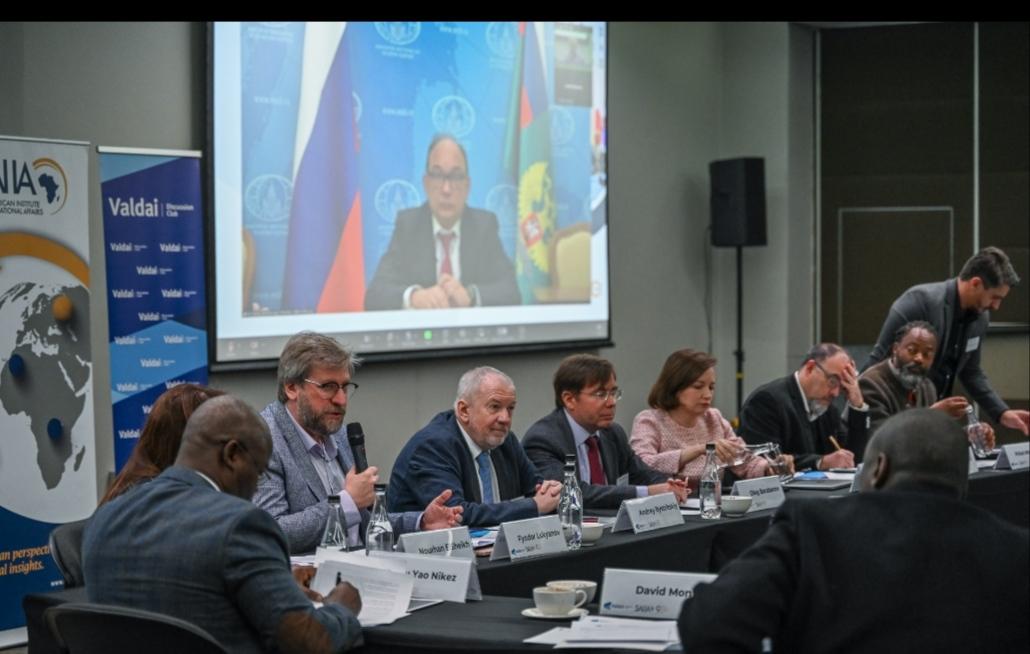
On July 28, the Valdai Discussion Club in partnership with the South African Institute of International Affairs (SAIIA) held the 3rd Russian-African Conference titled: “Realpolitik in a Divided World: Rethinking Russia-South Africa Ties in a Global and African Context” in Pretoria, South Africa.
In this insightful interview, Fyodor Lukyanov, Chairman of the Council on Foreign and Defense Policy, Research Director at the Valdai Discussion Club, and Editor-in-Chief of Russia in Global Affairs journal, assesses the evolving geopolitical dynamics and its impact on Russia’s policy with Africa. Lukyanov also discusses some of the expert views from the 3rd Russian-African Conference and how these are currently shaping multifaceted Russia-Africa relations. Here are the interview excerpts:
– Do you think today’s volatile geopolitical landscape is pushing Russia to consolidate its multifaceted relations with Africa? And what’s your critical assessment of the current Russia-African economic cooperation from Valdai’s conference?
– Of course, the international situation in general and the political situation in which Russia finds itself stimulate the search for partners outside the usual circle. Previously, it primarily consisted of Western countries; now, relations with them are practically non-existent. But this is not the only reason, I would even dare to say, not the main one. Even before the crisis in relations between Russia and the West began, Moscow had begun making efforts to restore and expand relations with Africa. Africa is a huge consumer market that needs to be developed. The potential is almost impossible to overestimate.
At the Valdai Club conference in Pretoria, everyone agreed that the potential for cooperation between Russia and African countries is being used only to a small extent. The legacy of previous decades is quite favorable, mutual relations are free of prejudices. But knowledge of the capabilities of the parties is much lower than it was in the past. Russia’s knowledge of modern Africa and Africa’s knowledge of modern Russia is what needs to be expanded quickly first and foremost. We still have too many distorted ideas.
– Russia has had two symbolic summits, and several documents containing agreements were signed. Valdai, still serving as a policy springboard, it would be in place to mention concrete achievements, at least, since the two symbolic summits? Any concrete development projects completed and handed over in Africa?
– Let’s be honest, practical cooperation in the economic sphere lags behind the development of political relations. This is obvious to everyone. There are objective constraints related to the West’s economic war against Russia. But there is also a fairly long process of reorganizing the entire international system of relations. The principles of competition are changing, and the participants in this process will also be different, much more multiple. There is no doubt that competition is becoming more intense. For African countries, this opens up opportunities, although the price of mistakes in choosing is also increasing. For Russia, the same is true on the supply side. The Russian state is adapting to new conditions, and so are Russian private companies. Companies are sometimes more flexible than the state, but the state has more different opportunities. In conclusion, it can be said that Russia is now accumulating experience and opportunities to work in the new Africa. I would like this process to happen faster, but the current pace inspires hope.
– As well known, Africa is largely focusing on building infrastructure, and consistently looking for foreign investment in employment-generating sectors such agriculture and industry, and taking steps to improve the living standards for the impoverished population. What are Valdai conference participants’ position on these questions, that’s Russia’s engagement with Africa?
– There are several things that form the basis for any development and in the creation of which Russia can be useful to Africa. Firstly, it is security in a broad sense. From the purely military dimension to cyber issues, which are now becoming key. The second thing that is absolutely necessary is food availability and food security. From reliable supplies of fertilizers and essential food products to modern agricultural technologies. Russia is one of the world leaders here. And, of course, the third most important area is digitalization. Russia has very serious successes in it, which are little known in Africa. For example, the experience of the largest Russian cities, which, thanks to digitalization, have significantly improved the quality of life. All those areas have been extensively discussed during the conference in Pretoria. As well as cooperation in the field of education which is traditionally a big deal in Russia – Africa interaction.
– Would you also agree that African leaders, elite politicians and entrepreneurial community, most probably, have to adopt their popular slogan “African Problems, African Solutions” as a step towards attaining economic sovereignty?
– I would say in a more general sense. In the modern world, the principle of “one’s own solutions to one’s problems” is becoming the most important for everyone. The era of universal solutions that supposedly suit everyone and should be common is already in the past. This also applies to Africa. Against the backdrop of growing general egoism, one must be reasonably egoistic. Not even just pragmatic. Sovereignty, including economic one, is first and foremost the freedom to make one’s own decisions. Both in favor of independence and in favor of cooperation with any suitable partners, if it is beneficial.