Education
SSCE Fee Hike: Government Must Balance Cost Recovery with Access to Education -By Yekini Lukmon R. Afolabi
This is not necessarily an argument that every state government should assume responsibility for paying SSCE examination fees. Rather, it is an appeal to the Federal Ministry of Education and the relevant examination bodies to review the proposed increase with greater sensitivity to the prevailing economic realities. Alternative funding mechanisms, phased adjustments, targeted subsidies for indigent students, or other creative solutions should be explored before imposing such a steep increase.

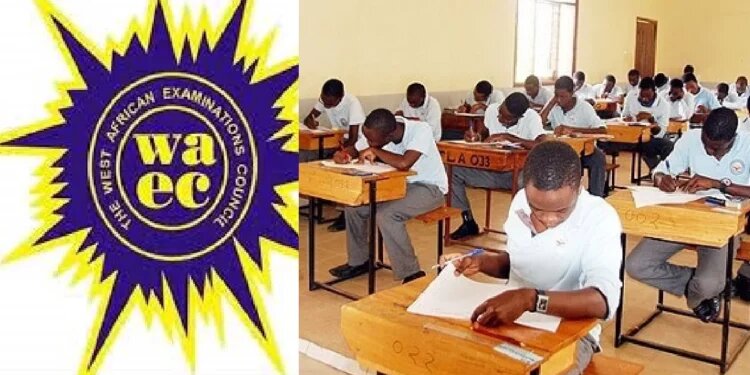
The decision by the Federal Government to approve an 82 per cent increase in the registration fees for the West African Senior School Certificate Examination (WAEC) and the National Examinations Council (NECO), raising the uniform fee from ₦27,500 to ₦50,000 with effect from March 2027, deserves careful reconsideration. While the rationale behind the adjustment may be understandable, its economic and social implications cannot be ignored.
No one disputes the need for periodic reviews of examination fees. The cost of conducting credible public examinations has risen significantly due to inflation, higher logistics expenses, enhanced security requirements, technological innovations, the rising cost of printing materials, and improved remuneration for permanent and ad hoc personnel. These realities are genuine and cannot simply be wished away.
However, public policy should not be formulated in isolation from the prevailing realities confronting citizens. Today, millions of Nigerian households are battling severe economic hardship. Food inflation remains high, transportation costs continue to rise, and the purchasing power of the average family has been severely eroded. For many parents, providing three meals a day has become a struggle. Introducing an 82 per cent increase in examination fees under these circumstances risks placing an unbearable burden on families already stretched beyond their limits.
Nigeria is home to far more struggling parents than affluent ones. A visit to public secondary schools across the country is enough to appreciate the financial realities confronting ordinary families. For many students, the inability to pay examination fees could mean delayed graduation or outright withdrawal from school. Such an outcome would be a setback for a nation that urgently needs an educated and skilled workforce to drive economic growth.
This issue should not be reduced to partisan politics or sensational criticism. Rather, it calls for constructive engagement between government, education stakeholders, parents, and the examination bodies. While the reasons advanced for the increase are legitimate, there is still room for a balanced solution that protects the financial sustainability of WAEC and NECO without denying deserving students access to education.
Education remains one of the strongest instruments for national development. It builds human capital, reduces poverty, promotes social mobility, and strengthens national productivity. Any policy that inadvertently erects financial barriers to secondary education ultimately undermines the country’s long-term development objectives. Equal educational opportunities should not become the exclusive preserve of children from wealthy homes.
Lagos State offers a practical example worthy of consideration. Since 1999, successive administrations have sustained a policy of paying WAEC registration fees for eligible public secondary school students. Initiated during the administration of President Bola Ahmed Tinubu as Governor of Lagos State, the programme has eased the financial burden on parents and enabled thousands of students to complete their secondary education. Many beneficiaries of that intervention are today making meaningful contributions to Nigeria’s economy and society. I proudly count myself among them.
This is not necessarily an argument that every state government should assume responsibility for paying SSCE examination fees. Rather, it is an appeal to the Federal Ministry of Education and the relevant examination bodies to review the proposed increase with greater sensitivity to the prevailing economic realities. Alternative funding mechanisms, phased adjustments, targeted subsidies for indigent students, or other creative solutions should be explored before imposing such a steep increase.
Education should never become a privilege reserved for those who can afford it. As Nigeria grapples with the challenge of building a prosperous and inclusive society, policies that expand access to education must take precedence over those that inadvertently shut the door on the children of ordinary citizens. Government must therefore strike a careful balance between recovering operational costs and preserving every Nigerian child’s right to quality education.
Let’s leave no child behind.
The decision by the Federal Government to approve an 82 per cent increase in the registration fees for the West African Senior School Certificate Examination (WAEC) and the National Examinations Council (NECO), raising the uniform fee from ₦27,500 to ₦50,000 with effect from March 2027, deserves careful reconsideration. While the rationale behind the adjustment may be understandable, its economic and social implications cannot be ignored.
No one disputes the need for periodic reviews of examination fees. The cost of conducting credible public examinations has risen significantly due to inflation, higher logistics expenses, enhanced security requirements, technological innovations, the rising cost of printing materials, and improved remuneration for permanent and ad hoc personnel. These realities are genuine and cannot simply be wished away.
However, public policy should not be formulated in isolation from the prevailing realities confronting citizens. Today, millions of Nigerian households are battling severe economic hardship. Food inflation remains high, transportation costs continue to rise, and the purchasing power of the average family has been severely eroded. For many parents, providing three meals a day has become a struggle. Introducing an 82 per cent increase in examination fees under these circumstances risks placing an unbearable burden on families already stretched beyond their limits.
Nigeria is home to far more struggling parents than affluent ones. A visit to public secondary schools across the country is enough to appreciate the financial realities confronting ordinary families. For many students, the inability to pay examination fees could mean delayed graduation or outright withdrawal from school. Such an outcome would be a setback for a nation that urgently needs an educated and skilled workforce to drive economic growth.
This issue should not be reduced to partisan politics or sensational criticism. Rather, it calls for constructive engagement between government, education stakeholders, parents, and the examination bodies. While the reasons advanced for the increase are legitimate, there is still room for a balanced solution that protects the financial sustainability of WAEC and NECO without denying deserving students access to education.
Education remains one of the strongest instruments for national development. It builds human capital, reduces poverty, promotes social mobility, and strengthens national productivity. Any policy that inadvertently erects financial barriers to secondary education ultimately undermines the country’s long-term development objectives. Equal educational opportunities should not become the exclusive preserve of children from wealthy homes.
Lagos State offers a practical example worthy of consideration. Since 1999, successive administrations have sustained a policy of paying WAEC registration fees for eligible public secondary school students. Initiated during the administration of President Bola Ahmed Tinubu as Governor of Lagos State, the programme has eased the financial burden on parents and enabled thousands of students to complete their secondary education. Many beneficiaries of that intervention are today making meaningful contributions to Nigeria’s economy and society. I proudly count myself among them.
This is not necessarily an argument that every state government should assume responsibility for paying SSCE examination fees. Rather, it is an appeal to the Federal Ministry of Education and the relevant examination bodies to review the proposed increase with greater sensitivity to the prevailing economic realities. Alternative funding mechanisms, phased adjustments, targeted subsidies for indigent students, or other creative solutions should be explored before imposing such a steep increase.
Education should never become a privilege reserved for those who can afford it. As Nigeria grapples with the challenge of building a prosperous and inclusive society, policies that expand access to education must take precedence over those that inadvertently shut the door on the children of ordinary citizens. Government must therefore strike a careful balance between recovering operational costs and preserving every Nigerian child’s right to quality education.
Let’s leave no child behind.