Forgotten Dairies
Subsidy Regime: Why Tinubu Is Right -By Sani Danaudi Mohammed
Nigeria does not need leaders who merely understand what citizens want to hear; it needs leaders who can explain what is economically possible and how it will be achieved. The painful experience surrounding subsidy removal should therefore become an opportunity to demand better governance, stronger institutions and more productive use of public revenue. The answer to the difficulties created by reform should be better management of the reforms not necessarily a return to the system that made reform necessary. That is the conversation Nigerians should take into the 2027 elections.

History provides several examples of leaders whose most consequential decisions were not necessarily the ones that made them universally popular while they were in office. China’s Zhu Rongji pursued difficult economic restructuring, including reforms to the banking system, taxation and state-owned enterprises, despite enormous social costs; his legacy remains associated with reforms that helped prepare China for its subsequent economic transformation and entry into the World Trade Organization. In Britain, Margaret Thatcher introduced sweeping economic reforms that remain deeply controversial, but many of the institutional and market changes associated with her government continued to influence British economic policy long after she left office.
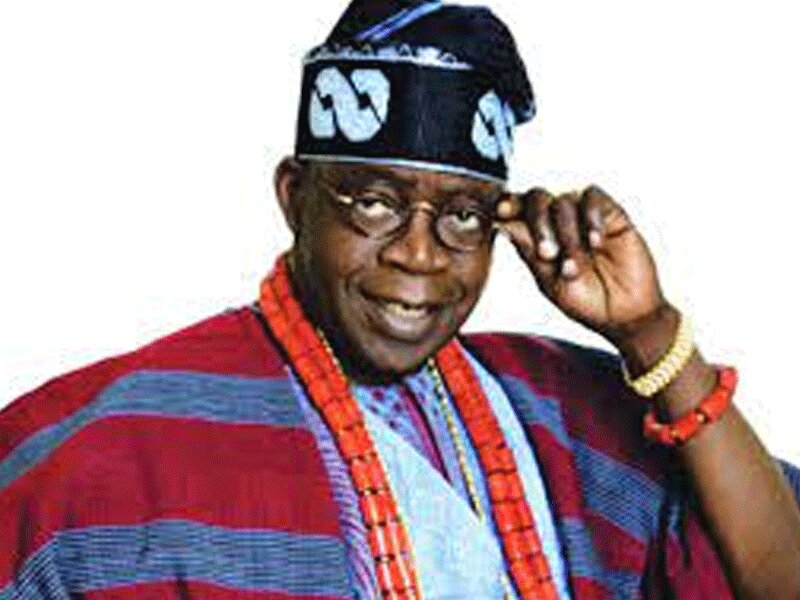
President Bola Ahmed Tinubu’s economic decisions should also be viewed through the difficult lens of leadership that is willing to prioritise the long-term survival of the Nigerian economy over immediate political comfort. Removing the petrol subsidy and undertaking major foreign-exchange reforms were politically dangerous decisions because their immediate consequences were bound to be unpopular. The reforms have undeniably imposed hardship, but recent assessments indicate that they have also helped stabilise public finances, strengthen foreign reserves and improve investor confidence.
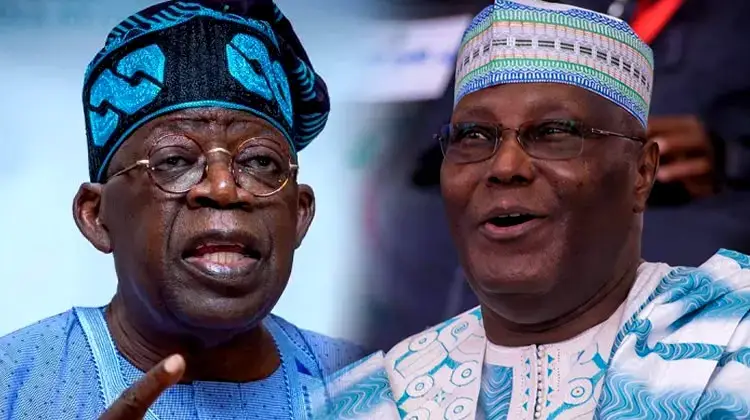
It is important to remind Nigerians that during the build-up to the 2023 presidential election, Atiku Abubakar acknowledged that fuel subsidy removal was inevitable. In a 2022 interview, he said, “It is inevitable that it will happen,” while discussing the need for reform of the subsidy regime. Yet, as the country moves toward the 2027 election, Atiku has now taken a different position, promising that he would restore the petrol subsidy if elected. His latest position therefore raises a legitimate question about whether this is a genuine change in economic thinking or a political response to the hardship Nigerians have experienced since the reform.
The contradiction deserves serious public scrutiny. At a time when difficult economic decisions require consistency and long-term thinking, Nigerians should ask whether policies should be designed around the sustainability of the economy or around the immediate demands of an election cycle. Atiku now argues that subsidy should return because the government has not adequately accounted for the savings, while the Tinubu administration maintains that the reform has created additional resources for government. The real debate, therefore, should not simply be about what sounds attractive before an election, but about which policy can protect Nigeria’s finances, reduce waste and create a sustainable economic future for generations to come.
Nigeria’s Finance Minister said in August 2026 that the reforms helped avert a potential economic collapse, while acknowledging that ordinary Nigerians have continued to feel significant cost-of-living pressures. The important point, therefore, is that a government can make a difficult economic decision without pretending that the transition is painless. Tinubu’s willingness to confront problems that previous administrations struggled to resolve can be interpreted as an attempt to address structural weaknesses rather than simply preserve popularity.
A leader whose primary calculation is the next election may be tempted to postpone painful decisions, continue borrowing, maintain expensive subsidies and leave the consequences for whoever comes after him. A leader thinking about the next generation may instead accept today’s political cost in order to prevent tomorrow’s economic crisis. That distinction matters. Nigerians should demand that the administration accompany these reforms with stronger social protection, lower production costs, better infrastructure, employment opportunities and transparent use of public revenue, because difficult reform must ultimately produce tangible benefits for citizens.
It is that national leadership sometimes requires making decisions whose full benefits cannot be measured within one electoral cycle. If Tinubu is prepared to accept the possibility of losing political popularity rather than preserving unsustainable economic arrangements simply to secure votes, then Nigerians should judge that choice by its results, transparency and long-term consequences. Elections should determine who governs, but they should not force every government to sacrifice the economic future of the country merely to win the next election. The real test is whether today’s difficult decisions leave Nigeria stronger, more productive and more financially sustainable for the generation that will inherit it.
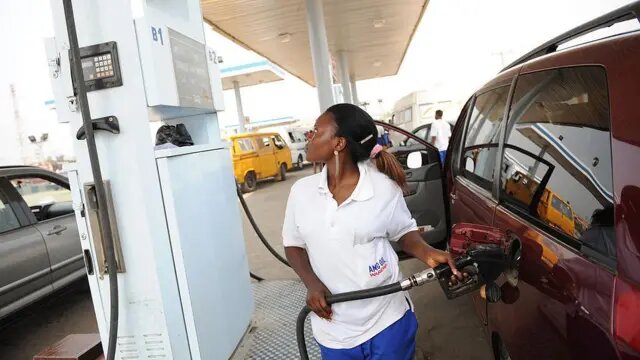
The debate over petrol subsidy ahead of the 2027 elections should be approached with facts rather than sentiment. There is no doubt that subsidy removal placed a heavy burden on Nigerian households, businesses and transport users, with petrol prices rising sharply and the cost of living coming under pressure. But acknowledging those difficulties should not lead Nigerians to conclude that the reform itself was necessarily wrong. For decades, government resources were committed to keeping petrol prices artificially low, even as the country struggled with limited revenue, mounting public expenditure and a petroleum system vulnerable to inefficiencies.
The removal of the fuel subsidy has been accompanied by a number of interventions aimed at reducing its immediate impact on Nigerians. Key measures include the Presidential CNG initiative and deployment of CNG buses to provide cheaper transportation, cash-transfer programmes for vulnerable households, support for small and medium-sized businesses, food-security and agricultural interventions, and efforts to improve workers’ purchasing power through wage adjustments. The administration has also introduced consumer-credit initiatives designed to make essential goods and services more accessible to ordinary Nigerians.
Beyond immediate relief, the interventions are also intended to redirect government resources toward areas that can produce longer-term economic benefits. Investment in infrastructure, transportation, education financing through the student-loan scheme, support for local production and MSMEs, and programmes aimed at strengthening food security are part of this broader approach. The central argument is that rather than continuing to spend enormous public resources sustaining a subsidy system that was increasingly difficult to maintain, government is seeking to channel those resources into targeted support, productive investment and reforms capable of creating a more sustainable economy.
The more important question today is whether Nigeria can afford to return permanently to a system that consumes enormous public resources without adequately addressing the structural weaknesses that created the problem in the first place. Nigerians should therefore distinguish between the pain caused by reform and the economic necessity that made reform unavoidable. A responsible political discussion should ask how the gains from reform can be protected and converted into better living conditions rather than simply promising a return to the old arrangement.
The experience of subsidy removal has demonstrated one important economic reality: when government spends a substantial portion of its scarce resources subsidising consumption, those resources cannot simultaneously be deployed elsewhere. The World Bank has previously described Nigeria’s petrol subsidy as costly and opaque, estimating that subsidy expenditure reached billions of dollars and disproportionately benefited better-off households because wealthier Nigerians generally consume more petrol.
That does not mean ordinary Nigerians did not benefit from cheaper fuel; they clearly did. It means that the system was an inefficient way of protecting the poorest citizens. A wealthy household with several vehicles and generators could receive a larger implicit subsidy than a poor household with little or no direct petrol consumption. The better policy question is therefore how government can redirect public resources toward interventions that reach vulnerable Nigerians more effectively.
Instead of spending public money to reduce the price of every litre consumed, government can invest in mass transportation, healthcare, education, agricultural production, targeted social protection, electricity and infrastructure—areas capable of benefiting citizens whether or not they own a vehicle.
The argument for retaining the reform becomes stronger when the issue of public revenue is considered. Since the removal of subsidy, the amount available for distribution among the three tiers of government has increased substantially at different periods.
Federation Account allocations have reached record levels, giving federal, state and local governments additional resources with which to respond to the economic difficulties confronting citizens. The increase in allocations does not mean that Nigerians should simply celebrate higher government revenue; it means citizens now have a stronger basis for demanding accountability. If states receive more resources, they should be able to demonstrate how those resources are being used to improve roads, schools, hospitals, water supply, agriculture, security, public transportation and employment.
The real test of subsidy reform is therefore not merely whether government saved money, but whether the resources that became available are being transformed into public value. Nigerians should judge governments by the roads they build, the hospitals they equip, the schools they improve, the farmers they support and the jobs they facilitate—not merely by speeches announcing how much money has been received.
This is where the argument for subsidy reform must move beyond Abuja. Increased federal revenue should translate into stronger interventions across the states. State governments have an enormous role to play because citizens experience government most directly through local infrastructure and services. If a state receives increased FAAC revenue, citizens should ask what proportion is being devoted to capital development and what measurable outcomes have been achieved. Governments can use additional fiscal space to expand public transportation schemes, support farmers with inputs and mechanisation, improve primary healthcare, strengthen education, provide water projects and create an environment where small and medium-sized businesses can survive.
The federal government, meanwhile, should continue strengthening social-protection programmes and targeted interventions designed to cushion vulnerable households. Such measures are more economically defensible than simply restoring a universal petrol subsidy because they can direct assistance toward people who actually need it while allowing public resources to support productive sectors of the economy.
This is also why the proposal to restore subsidy should not be accepted merely because it is politically attractive.
Atiku Abubakar is an experienced politician and former Vice President who served during the Olusegun Obasanjo administration, a period in which Nigeria undertook significant economic reforms and privatisation initiatives. His experience gives him a legitimate platform to challenge the present government, but it also gives Nigerians a reason to demand a detailed explanation of how his proposed policies would work. If he believes subsidy should return, Nigerians should ask him to provide the complete fiscal calculation: how much would the programme cost annually, where would the money come from, who would benefit, how would fraud be prevented and what safeguards would stop the system from again becoming a major drain on public resources? These questions are not accusations against Atiku.
They are reasonable questions for any presidential candidate proposing a policy that could involve trillions of naira in public expenditure. Political experience should make a candidate more prepared to answer such questions, not less accountable to them. Nigerians should also recognise that subsidy removal was only one part of a much larger economic adjustment. The country needs to reduce its dependence on imported petroleum products, increase domestic refining, expand agricultural production, improve electricity supply, strengthen manufacturing and create an economy capable of generating sufficient employment and tax revenue.
The emergence of more domestic refining capacity is particularly important because a country that produces crude oil but depends heavily on imported refined petroleum products exposes itself to enormous economic vulnerabilities. As domestic refining expands, Nigeria can retain more value within its economy, reduce pressure on foreign exchange and improve energy security. The ultimate objective should therefore not be to maintain permanently cheap petrol through government expenditure, but to create an efficient energy system in which domestic production and refining help make petroleum products more affordable without requiring an unsustainable subsidy burden on the treasury.
There is also a lesson for Nigerians themselves. Elections should not be reduced to choosing the politician who offers the cheapest immediate relief. A candidate promising lower petrol prices may sound attractive to a struggling family, but citizens should ask what happens to government revenue after the promise is implemented. Will the government borrow to finance the subsidy? Will it reduce spending on healthcare or education? Will it increase taxes elsewhere? Will the subsidy be sustainable if international oil prices rise or crude production falls? These are the questions voters must ask before believing campaign promises.
Equally, governments defending subsidy removal must accept responsibility for the consequences of the reform and demonstrate clearly how citizens will benefit from the fiscal space created. Reform cannot be an excuse for poor governance. If government has more resources because subsidy expenditure has declined, citizens are entitled to demand visible improvements in their lives.
Nigeria does not need leaders who merely understand what citizens want to hear; it needs leaders who can explain what is economically possible and how it will be achieved. The painful experience surrounding subsidy removal should therefore become an opportunity to demand better governance, stronger institutions and more productive use of public revenue. The answer to the difficulties created by reform should be better management of the reforms not necessarily a return to the system that made reform necessary. That is the conversation Nigerians should take into the 2027 elections.
Danaudi, Writes From Bauchi Via danaudicomrade@gmail.com