
Africa
Talking of Marabouts, Prophets, and Prophecy in Nigeria -By Ariwoola Samuel Akinwale
The media and civic organizations must embark on public campaign on the need for scientific approach to governance as against reliance on religion. Religious associations must have regulatory guidelines for members against “national prophecy,” most importantly as related to the political economy, elections, and governance.

The seer slept
In empty trance.
“Behold, bountiful are the harvests
From the land.”, he foresaw.
Yet, came the season,
Scorched were the harvests.
His words came to nought,
On the ground they fell.
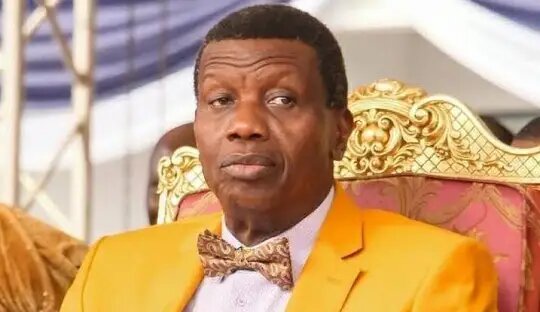
These lines reflect the failure of Nigerian seers in light of the current happenings in the land. In 2024, Prophet Joshua Iginla predicted that President Bola Tinubu would face major medical emergencies and health failure. He also predicted that Plateau State Governor Caleb Mutfwang’s seat would be “occupied by another person,” implying his removal. Those prophecies fell flat.
This year witnessed the deaths of titans across the length and breadth of Nigeria and the vacuum of prophecy predicting these occurrences: of deaths, former president Muhammadu Buhari, Oba Sikiru Adetona (the Awujale of Ijebu), Oba Owolabi Olakunlehin (Olubadan of Ibadan), Chiefs Ayo Adebanjo, and Edwin Clark. Interestingly, the first three were mourned a few days apart, and the last two were mourned separately, in this year 2025. But of predictions, no prophecy came from any Nigerian prophets or marabouts.
Are there no prophets in the land? I took this reflection from the observation made by Simon Kolawole, a renowned columnist, in a sarcastic tone in one of his columns where he quipped why none of our prophets saw this at the beginning of the year.
In this essay, I reflect on our collective phantasm and fetishism with prophecy and their consequence on our socio-political trajectory, signalling a disconnection with modernity. This includes our cultural fixation with foretelling as a precursor against the general insecurity of existence, avoidance of the rigor of intellection in problem-solving, and the implication for the nation.
Curiously, one asks: why do we love prophecy? Man’s innate disposition is to reduce the risk of uncertainty in living. Humanities’ quest and history are ridden with trickery, invention, and arts aimed at risk management. In that quest, humankind relied on trial and error until the development of science laid to rest some of these practices.
Mankind has experimented with social security systems, insurance, and contemporary predictive models and analytics used in meteorology, environmental disaster, risk management, and actuarial sciences.
Historically, traditional societies are steeped in divinations; these practices still survive to date in many places. Among Africans, the Kongo people call their seers and diviners “nganga,” “laibon” among the Masai, “mugwe” among the Meru. Hausas refer to them as “boka,” the Yoruba, Igbo, and Benin people call them “babalawo,” “dibia,” and “ohen” respectively.
Among Asians, “wu” are known as traditional shamans or spirit mediums in ancient Chinese religion. Kannushi are known among the Japanese. Koreans refer to them as Mudang. Europeans have their share of seers too from history. Michel de Nostredame (Nostradamus) was a French astrologer, physician, and apothecary of Jewish descent in the 16th century whose supporters credit him with predicting events of our time.
Today, prophetic declarations resonate with many Nigerians across different divides, even the highly educated class. Max Siollun’s book titled “Oil, Politics and Violence: Nigeria’s Military Coup Culture (1966-1976)” expressed such practice within Nigerian military leadership during the civil war where a military officer was disposed to taking advice from a marabout as against military science of decision-making. Ebenezer Obadare’s work on “the Nigerian state and Pentecostalism” revealed the affinity of Nigerian leadership with notable clerics for political legitimacy and guidance.
Consequently, scientific warnings are often ignored while prophetic declarations and utterances from marabouts and seers are keenly noted for confirmation or refutation. Arguably, the clergy have their place. The socio-cultural role of clergy in the well-being of the individual is a significant one.
A few examples of such confusion and probable disaster are important areas for research cited here. In 2019, Bishop Wale Olagunju predicted that Muhammadu Buhari would lose the presidential election to Atiku Abubakar. During the COVID-19 lockdown, a controversial Nigerian prophet told the nation coronavirus would disappear by the end of March 2020. In 2024, Apostle Johnson Suleman predicted that Vice President Kamala Harris would win the U.S. presidential election and become the first female president. None of these came to fruition.
Aside from the non-fulfilment of these prophecies, in many cases the declarations were vague and open to different interpretations. Meanwhile, preparation for the 2027 election is around the corner, and the prophets are at it again, adding to the noisome and confusing media atmosphere.
The media and civic organizations must embark on public campaign on the need for scientific approach to governance as against reliance on religion. Religious associations must have regulatory guidelines for members against “national prophecy,” most importantly as related to the political economy, elections, and governance.
Ariwoola Samuel Akinwale wrote this piece from Lagos.
08059120749
ariwoolaakinwale@gmail.com

















You must be logged in to post a comment Login