Africa
The Comparative Political Power Of Northern Nigeria -By Abdullahi Abubakar Ladan
As Martin Luther King Jr. said, “There comes a time when one must take a position that is neither safe, nor politic, nor popular, but he must take it because conscience tells him it is right.” Northern Nigeria holds the key to Nigeria’s leadership, and by wielding the PVC responsibly, Northerners can unite the country and build a future that benefits all.

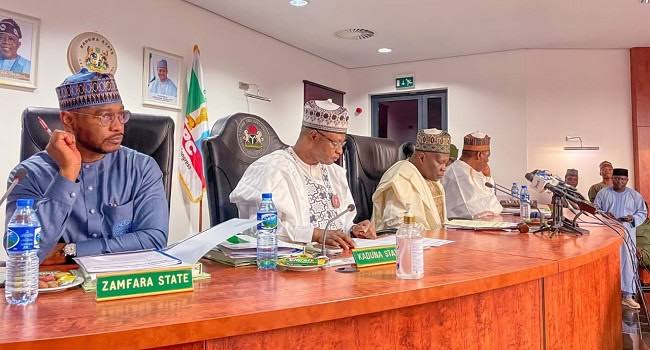
Northern Nigeria’s electoral influence has been evident since Nigeria’s independence in 1960, with the region consistently playing a key role in presidential elections. The North’s significant population, approximately 60% of Nigeria’s now 227 million people translates into a substantial share of registered voters. In 2019, of the 84.42 million registered voters, 44.79 million were from the North (11.28 million North East, 20.15 million North West, and 13.36 million North Central), compared to 39.18 million from the South. Recent Continuous Voter Registration (CVR) data from 2021-2022 shows 6.5 million new registrations, with 3.2 million from the North and 3.3 million from the South, indicating a slight decline in the North’s registration lead.
The electoral history of Nigeria, reflects the significant influence of Northern Nigeria in determining the country’s leadership since the First Republic in 1979. In the 1979 presidential election, marking the beginning of the First Republic, Shehu Shagari of the National Party of Nigeria (NPN) emerged victorious with 5.6 million votes, predominantly from the North, out of 16.8 million valid votes casted by 48.6 million registered voters. His main rival, Obafemi Awolowo of the Unity Party of Nigeria (UPN), secured 4.9 million votes, with the North’s substantial voter base proving decisive in Shagari’s win. This election set the tone for the North’s electoral dominance, leveraging its population advantage.
In 1983, during the Second Republic, Shagari faced Awolowo again and won with 12 million votes out of 25.4 million valid votes. The North again provided the majority of Shagari’s support. However, the Second Republic ended abruptly with a military coup on December 31, 1983, led by General Muhammadu Buhari, who cited misuse of power, human rights violations, and economic failures as reasons for overthrowing Shagari’s government. Buhari’s regime was short-lived, as General Ibrahim Babangida ousted him in 1985.
The 1993 election, intended as a transition to the Third Republic, saw Moshood Abiola of the Social Democratic Party (SDP) likely defeating Bashir Tofa of the National Republican Convention (NRC), with significant Northern backing. However, General Babangida annulled the results before they were officially declared, leading to political turmoil. Babangida resigned, handing over to an interim government under Ernest Shonekan, which was soon overthrown by General Sani Abacha in a bloodless coup. Abacha ruled until his death in 1998, after which General Abdulsalami Abubakar facilitated the return to civilian rule in 1999.
The Fourth Republic began with the 1999 election, where Olusegun Obasanjo of the People’s Democratic Party (PDP) won with 18.7 million votes, 10.1 million from the North, despite a merger between the All People’s Party (APP) and the Alliance for Democracy (AD) to challenge him. In 2003, Obasanjo secured re-election with 24.1 million votes, defeating Muhammadu Buhari of the All Nigeria People’s Party (ANPP) and Odumegwu Ojukwu of the All Progressive Grand Alliance (APGA). Of the 39 million votes cast, 30.8 million accredited voters were from the North, highlighting its electoral weight.
In 2007, Umaru Yar’adua (PDP) won with 24.8 million votes, primarily from the North, defeating Buhari (ANPP) and Atiku Abubakar (Action Congress). The 2011 election saw Goodluck Jonathan (PDP) triumph with 24.6 million votes, bolstered by Northern states like Plateau and Borno, against Buhari of the Congress for Progressive Change (CPC). In 2015, amidst Boko Haram insurgency, Buhari (APC) won with 15.4 million votes, 10.2 million from the North, defeating Jonathan (PDP). In 2019, Buhari secured re-election against Atiku Abubakar (PDP) with 15.2 million votes, over 90% from the North, winning 18 of 19 Northern states.
The 2023 election further underscored Northern influence, with Bola Tinubu (APC) winning with 8.7 million votes (36.61%) against Atiku Abubakar (PDP, 6.9 million votes) and Peter Obi (LP, 6.1 million votes). Tinubu’s victory relied heavily on the North West and North East, with high voter registration and a 93.3% PVC collection rate among 87.2 million registered voters. Despite controversies over INEC’s result transmission and low turnout (25.7%), the North’s votes were decisive, affirming its
The North’s electoral power is a double-edged sword. While it has consistently determined Nigeria’s presidency, Northern politicians and representatives often exploit this advantage for personal gain, neglecting regional and national development. Issues like insecurity, poverty, and infrastructure deficits persist in the North, despite its political influence. The 2023 election, with a turnout of only 25.7%, the lowest since 1999, highlights a troubling apathy that politicians capitalize on to manipulate outcomes.
Northerners must leverage their PVCs to hold leaders accountable and strengthen national unity. The North’s demographic advantage, with a projected Nigeria’s population growth to 400 million by 2050, amplifies this responsibility. Northerners should continue to actively participate in voter registration and elections, and demand leaders to prioritize education, healthcare, and economic development, bridging the gap between the North and South. The simplified CVR process, now available at ward-level collation centers, makes registration more accessible. INEC’s 2025 CVR, starting 18th August 2025 for online pre-registration and 25th August 2025 for in-person registration, offers another opportunity to boost voter numbers.
As Martin Luther King Jr. said, “There comes a time when one must take a position that is neither safe, nor politic, nor popular, but he must take it because conscience tells him it is right.” Northern Nigeria holds the key to Nigeria’s leadership, and by wielding the PVC responsibly, Northerners can unite the country and build a future that benefits all.