Connect with us

Africa

The Man Finally Died -By Zayd Ibn Isah

Yet, perhaps that is not entirely the fault of government alone. There is blame to share. Our institutions must do more to communicate, to build trust, and to remain accessible. At the same time, we, the people, must learn to ask better questions, demand evidence, and resist the temptation to hold onto convenient lies. As citizens, we cannot expect accountability from our leaders if we ourselves do not seek the truth and insist on it.

Published

on

Buhari

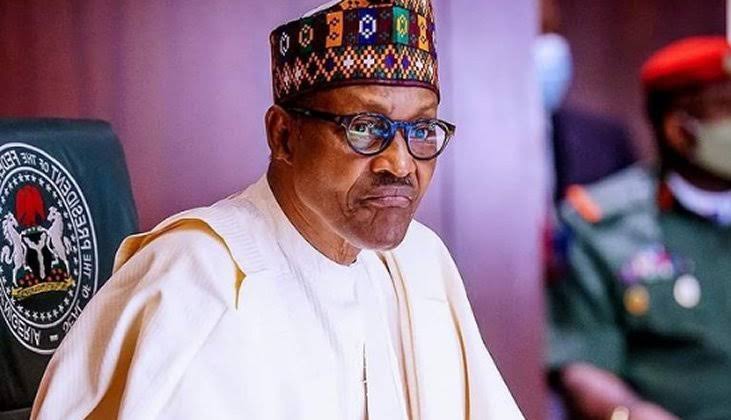
Mixed reactions have continued to trail the death of former President Muhammadu Buhari. For some, his passing marks the end of an era defined by promises unfulfilled, silence where there should have been words, and inaction where decisive steps were needed. For others, it is an opportunity to reflect on the complexities of leadership in a nation as restless and demanding as Nigeria.

While many remember him as the no-nonsense general who rode into power on the wings of hope and the mantra of change, others recall with bitterness the years they believe were lost to indecision and a seeming detachment from the people’s daily struggles. To his loyalists, he was an incorruptible leader who meant well but was betrayed by a system too broken to fix. To his critics, he was an absentee figurehead – a man whose second coming promised much but delivered little.

However, the kernel of this article is not to state who is wrong and who is right among his loyalists, critics, or even his traducers, as everyone is entitled to their opinions. There is no need to remind his Muslim critics of the Hadith of the Prophet Muhammad (SAW) that you shouldn’t speak ill of the dead, or his Christian critics about Bible verses that discourage speaking ill of anyone, whether dead or alive. They know this but choose to vent their spleens in the exercise of their fundamental human rights.

Advertisement

Nigeria is a nation of two moralities. We are a people with crush orientations (apologies to Gimba Kakanda). What a particular section of society sees as right is what others see as wrong, and vice versa. Even religious leaders are sometimes caught up in the fire when emotions run high. This is the case with those who feel he committed unpardonable sins or believe his existence was an anathema to the country and have taken to the streets to celebrate his death. The irony is that among those celebrating are the same people who believed he had died long ago. Their mumu no too much?

Buhari, as a democratically elected President, suffered and survived numerous conspiracy theories — one of the most famous being the “Jubril of Sudan” saga. He was in and out of hospitals during his first term, and during one of his medical check-ups abroad, he spent over ninety days away. It was during this period that conspiracy theorists went to the market and sold Nigerians the lie that “Buhari is dead and has been replaced by a certain Jubril from Sudan.”

Many Nigerians believed this fictitious story. I lost count of how many times my friends would call me and ask me to tell them the truth about whether the man in Aso Rock was the real Buhari. And I always said yes – that it is not possible for our President to be cloned. I backed up my explanation with the example of the late President Umaru Musa Yar’adua, who died in office and was buried. If he was not replaced by an impostor, why should Buhari’s case be different? While some of them believed me, others did not. I wasn’t surprised, anyway. The people who believed India scored Nigeria 99 goals in a football match can believe anything. Even when his spokesman, Garba Shehu, finally announced his death, those who doubted him before – when he said the President was alive and responding well to treatment, are still saying that the real Buhari died long ago and that the man whose death was just announced was actually Jubril. It is difficult to dispel lies in this country because we are too gullible.

This capacity to believe the most outlandish stories says a lot about us as a people, not just about our appetite for conspiracy theories, but also about the deep wells of distrust that have taken root over time. In a country where leaders sometimes appear distant and governance feels abstract to the average citizen, rumours find fertile ground. When trust is low and understanding is weak, gossip and myths, however far-fetched, become an outlet for both frustration and imagination.

Advertisement

Yet, perhaps that is not entirely the fault of government alone. There is blame to share. Our institutions must do more to communicate, to build trust, and to remain accessible. At the same time, we, the people, must learn to ask better questions, demand evidence, and resist the temptation to hold onto convenient lies. As citizens, we cannot expect accountability from our leaders if we ourselves do not seek the truth and insist on it.

So, the man finally died, and with him, perhaps, some of the myths we held so tightly. In his passing, we are reminded that no leader, no matter how powerful, is immune to the judgment of time and history. Buhari’s life and death offer us a mirror to see not only what went wrong but also what we, as citizens, must do better. For a nation to move forward, its people must be willing to question, to remember, and to hold themselves accountable too. In the end, it is not just about the man who finally died, but about a country that must keep living, learning, and striving for the ideals we all desire.

Zayd Ibn Isah can be reached at lawcadet1@gmail.com

Continue Reading
Advertisement
Click to comment

Leave a Reply

Your email address will not be published. Required fields are marked *

Trending Contents

Topical Issues

Osun-Decides Osun-Decides
Forgotten Dairies18 hours ago

As Osun Decides This August -By Kola Odepeju

However, the APC must not be lured into a false sense of security by its current popularity. This election will...

Belarus-Ghana Business Talks in Minsk, April 9, 2026. Belarus-Ghana Business Talks in Minsk, April 9, 2026.
Africa22 hours ago

Belarus, Ghana Exchange Views on Bilateral Economic Cooperation -By Kestér Kenn Klomegâh

Belarus and Ghana aim for a transparent and mutually beneficial partnership. If the current dynamics are maintained, Belarusian products may...

Gadaka Gadaka
Politics22 hours ago

From Ogbuluafor’s PDP’s 60 Years To Gadaka’s APC’s 100 Years: Man Proposes, God Disposes -By Isaac Asabor

In the end, the contrast between the 60-year projection of the past and the 100-year vision of the present serves...

Igbo Igbo
National Issues23 hours ago

Policing Igbo Identity While Cheerleading for Tinubu: Ohanaeze’s Moral Collapse -By Vitus Ozoke, PhD

The Igbo are not a people easily governed by decree, least of all by an unelected cultural organization seeking to...

Peter Obi, Atiku and Tinubu Peter Obi, Atiku and Tinubu
Forgotten Dairies24 hours ago

₦5 Billion to Run for President? The Dangerous Misconception Nigerians Must Reject -By Daniel Nduka Okonkwo

A Nigerian who is not a billionaire can still contest for the presidency. The law allows it. Democracy demands it....

Fulani-herdsmen-bandits-kidnappers-terrorists Fulani-herdsmen-bandits-kidnappers-terrorists
Forgotten Dairies1 day ago

Rising Insurgency In Borno: A War Far From Over -By Ochim Angela Odije

As the conflict continues, the people of Borno remain caught in a cycle of violence and uncertainty. Their plight underscores...

Abba Kabir Yusuf Abba Kabir Yusuf
Politics1 day ago

Open Memo to Governor Abba Kabir Yusuf -By Abba Dukawa

You need to adopt political rewards, whether tangible or symbolic, help sustain loyalty, reinforce party structures, and encourage participation. When...

Iran-Gaza-Hamas-Israel-missile-attack Iran-Gaza-Hamas-Israel-missile-attack
Forgotten Dairies1 day ago

A World on Fire, A World Paying: War, Inflation, and the Systemic Betrayal of Global Justice -By Fransiscus Nanga Roka

The world is now on fire, but alas not everyone bears such a heavy cost. Some are setting the blaze...

Lake Chad-climate-change Lake Chad-climate-change
Global Issues1 day ago

Climate Collapse Is Not a Natural Disaster: It Is a Humanitarian Failure of International Law -By Fransiscus Nanga Roka

The world treating breakdown of the climate as a natural disaster is a world that refuses to look at itself....

EFCC EFCC
Breaking News1 day ago

31 Arrested as EFCC Uncovers Alleged ‘Yahoo Academy’ in Abuja

EFCC dismantles alleged cybercrime academy in Abuja, arresting 31 suspects and seizing electronic devices used for fraud training.