Connect with us

Africa

The Man Finally Died -By Zayd Ibn Isah

Yet, perhaps that is not entirely the fault of government alone. There is blame to share. Our institutions must do more to communicate, to build trust, and to remain accessible. At the same time, we, the people, must learn to ask better questions, demand evidence, and resist the temptation to hold onto convenient lies. As citizens, we cannot expect accountability from our leaders if we ourselves do not seek the truth and insist on it.

Published

on

Buhari

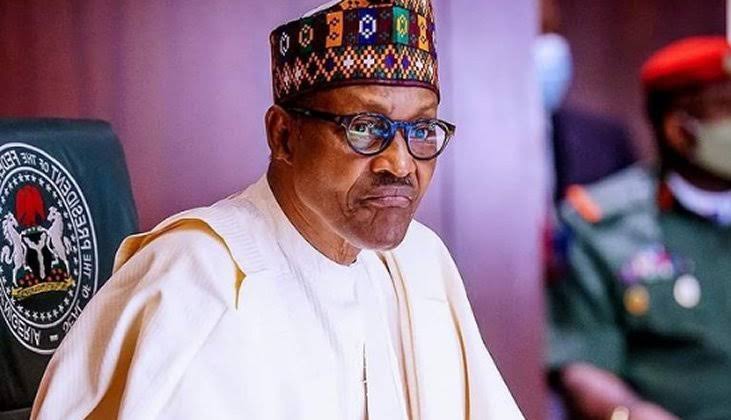
Mixed reactions have continued to trail the death of former President Muhammadu Buhari. For some, his passing marks the end of an era defined by promises unfulfilled, silence where there should have been words, and inaction where decisive steps were needed. For others, it is an opportunity to reflect on the complexities of leadership in a nation as restless and demanding as Nigeria.

While many remember him as the no-nonsense general who rode into power on the wings of hope and the mantra of change, others recall with bitterness the years they believe were lost to indecision and a seeming detachment from the people’s daily struggles. To his loyalists, he was an incorruptible leader who meant well but was betrayed by a system too broken to fix. To his critics, he was an absentee figurehead – a man whose second coming promised much but delivered little.

However, the kernel of this article is not to state who is wrong and who is right among his loyalists, critics, or even his traducers, as everyone is entitled to their opinions. There is no need to remind his Muslim critics of the Hadith of the Prophet Muhammad (SAW) that you shouldn’t speak ill of the dead, or his Christian critics about Bible verses that discourage speaking ill of anyone, whether dead or alive. They know this but choose to vent their spleens in the exercise of their fundamental human rights.

Advertisement

Nigeria is a nation of two moralities. We are a people with crush orientations (apologies to Gimba Kakanda). What a particular section of society sees as right is what others see as wrong, and vice versa. Even religious leaders are sometimes caught up in the fire when emotions run high. This is the case with those who feel he committed unpardonable sins or believe his existence was an anathema to the country and have taken to the streets to celebrate his death. The irony is that among those celebrating are the same people who believed he had died long ago. Their mumu no too much?

Buhari, as a democratically elected President, suffered and survived numerous conspiracy theories — one of the most famous being the “Jubril of Sudan” saga. He was in and out of hospitals during his first term, and during one of his medical check-ups abroad, he spent over ninety days away. It was during this period that conspiracy theorists went to the market and sold Nigerians the lie that “Buhari is dead and has been replaced by a certain Jubril from Sudan.”

Many Nigerians believed this fictitious story. I lost count of how many times my friends would call me and ask me to tell them the truth about whether the man in Aso Rock was the real Buhari. And I always said yes – that it is not possible for our President to be cloned. I backed up my explanation with the example of the late President Umaru Musa Yar’adua, who died in office and was buried. If he was not replaced by an impostor, why should Buhari’s case be different? While some of them believed me, others did not. I wasn’t surprised, anyway. The people who believed India scored Nigeria 99 goals in a football match can believe anything. Even when his spokesman, Garba Shehu, finally announced his death, those who doubted him before – when he said the President was alive and responding well to treatment, are still saying that the real Buhari died long ago and that the man whose death was just announced was actually Jubril. It is difficult to dispel lies in this country because we are too gullible.

This capacity to believe the most outlandish stories says a lot about us as a people, not just about our appetite for conspiracy theories, but also about the deep wells of distrust that have taken root over time. In a country where leaders sometimes appear distant and governance feels abstract to the average citizen, rumours find fertile ground. When trust is low and understanding is weak, gossip and myths, however far-fetched, become an outlet for both frustration and imagination.

Advertisement

Yet, perhaps that is not entirely the fault of government alone. There is blame to share. Our institutions must do more to communicate, to build trust, and to remain accessible. At the same time, we, the people, must learn to ask better questions, demand evidence, and resist the temptation to hold onto convenient lies. As citizens, we cannot expect accountability from our leaders if we ourselves do not seek the truth and insist on it.

So, the man finally died, and with him, perhaps, some of the myths we held so tightly. In his passing, we are reminded that no leader, no matter how powerful, is immune to the judgment of time and history. Buhari’s life and death offer us a mirror to see not only what went wrong but also what we, as citizens, must do better. For a nation to move forward, its people must be willing to question, to remember, and to hold themselves accountable too. In the end, it is not just about the man who finally died, but about a country that must keep living, learning, and striving for the ideals we all desire.

Zayd Ibn Isah can be reached at lawcadet1@gmail.com

Continue Reading
Advertisement
Click to comment

You must be logged in to post a comment Login

Leave a Reply

Trending Contents

Topical Issues

CNG CNG
Forgotten Dairies5 hours ago

CNG: The Transport Revolution In Nigeria Must Get Right, by Yekini Lukmon

Now is the time to turn Nigeria’s abundant natural gas resources into affordable mobility, stronger commerce and better economic opportunities...

Crypto transaction bitcoin finance tech Crypto transaction bitcoin finance tech
Global Issues5 hours ago

Stable Money, Arbitrary Power: Tether’s Accountability Test, by Fransiscus Nanga Roka

An effective digital-dollar system needs to buy-off prevention from financial crime and unwarranted deprivation. Otherwise, the token price is described...

Aliko Dangote Aliko Dangote
National Issues5 hours ago

How Do We Explain to Our Children How Nigeria Spent Up to $25 Billion on Broken Refineries but Struck Gold with a $1 Billion Dangote Stake?, by Daniel Nduka Okonkwo

Our children should not inherit another cycle of promises, rehabilitation ceremonies, and abandoned industrial capacity. They should inherit institutions capable...

NYSC NYSC
Forgotten Dairies6 hours ago

How Do I Repay the N6 Million I Borrowed?, by Abdulkadir Salaudeen

The Tinubu government is now being advised to make a provision of trillions of naira in its annual budget as...

Breaking News8 hours ago

NYSC Abduction: Families Reveal N3m–N6m Ransom Payments as Imo Police Deny Knowledge

Families reveal how they raised millions in ransom to free 20 abducted NYSC members in Imo State as police deny...

NNPCL - fuel NNPCL - fuel
Breaking News9 hours ago

Opposition Parties Slam FG’s N1,350 Petrol Offer, Ask What Happens After 30 Days

FG plans to sell petrol at N1,350 per litre for 30 days, but Atiku Abubakar, ADC and NDC question the...

Hajia-Hadiza-Mohammed Hajia-Hadiza-Mohammed
National Issues19 hours ago

The Niger State Cash Distribution Stampede, Mass Impoverishment And Hunger In The Land, by Hajia Hadiza Mohammed

These events are unfortunate and tragic. They occur because people and hungry, impoverished by wrong economic policies of the government...

Job Joseph Job Joseph
Opinion20 hours ago

An Examination Of The Legal Framework For The Protection Of Indigenous Knowledge And Cultural Expressions Under Nigerian Law, by Jobs Joseph

For Nigeria, the adoption of a sui generis legal framework deserves serious consideration. Such a system could recognise communal ownership,...

Daniel Bwala and Tinubu Daniel Bwala and Tinubu
Politics20 hours ago

Bwala, No, Tinubu Cannot Govern From Anywhere!, by Isaac Asabor

Instead of Nigerians arguing over whether a President can govern from Paris, the government should tell Nigerians precisely what constitutional...

Daniel-Bwala Daniel-Bwala
Forgotten Dairies21 hours ago

When Bwala Reels Out Statistics In The Face Of Hunger In The Land To Keep His Job, by Isaac Asabor

There is something increasingly disturbing about the way the Nigerian government and its officials discuss the state of the economy....