Africa
The Unwritten Rule: Why Nigeria’s Political System Excludes the Igbo -By Jeff Okoroafor
Nigeria stands at a critical juncture where it must choose between genuine inclusivity or continued instability. The unwritten rule excluding the Igbo from real political power is unsustainable in a country that claims to be a federation. If Nigeria is to survive as a nation, it must confront this systemic injustice head-on. The alternative is continued resentment, worsening instability, and the potential unraveling of the federation itself.


Nigeria’s political landscape operates under an unspoken but powerful consensus: the Igbo, one of the country’s three largest ethnic groups, must never be allowed to occupy the presidency or wield significant federal power. This systemic exclusion, though rarely stated openly, has shaped Nigeria’s governance since the end of the Biafran War in 1970. While the nation’s political elite pays lip service to unity and federal character, the reality is a carefully maintained power structure designed to keep the Igbo on the margins of national leadership.
The origins of this unwritten rule trace back to Nigeria’s post-colonial power struggles and the devastating civil war (1967-1970), in which the Igbo-led Republic of Biafra sought independence. The war’s end did not bring reconciliation but instead entrenched a political order where the Igbo were systematically sidelined. Since then, Nigeria has rotated power almost exclusively between the Hausa-Fulani North and the Yoruba Southwest, with the Igbo Southeast treated as a perpetual outsider.
No Igbo has held Nigeria’s presidency since Nnamdi Azikiwe in the First Republic (1963-1966). In contrast, the North has produced nine heads of state (military and civilian), while the Southwest has had three (Obasanjo, Shonekan, and currently Tinubu). Even when the presidency was zoned to the South in 1999, the Igbo were bypassed in favor of Olusegun Obasanjo, a Yoruba man and former military ruler.
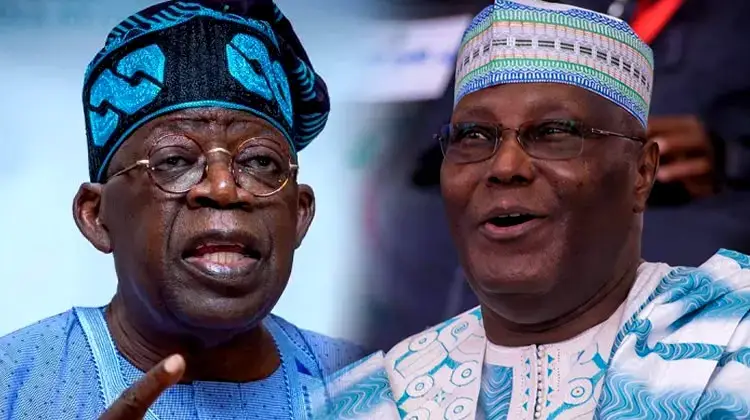
Nigeria’s political architecture reinforces Igbo exclusion through several mechanisms. The unofficial but powerful presidential zoning arrangement, meant to rotate power between North and South, has been carefully manipulated to ensure that even when the presidency goes to the South, it rarely goes to the Southeast. The 2023 election was a clear example—despite Peter Obi’s historic grassroots campaign, the establishment parties (APC and PDP) ensured that the contest remained between a Northern candidate (Atiku) and a Southwest candidate (Tinubu).
The Igbo also hold disproportionately few leadership positions in Nigeria’s security and economic power centers. No Igbo has been Chief of Army Staff since 1966. The Central Bank, NNPC, and other strategic institutions have similarly been dominated by Northern and Yoruba appointees. This exclusion extends to infrastructure development, where the Southeast remains Nigeria’s least federally developed zone. Critical projects like the Enugu-Onitsha Expressway and the Second Niger Bridge were delayed for decades, while Lagos and Abuja receive disproportionate federal investment.
The numbers tell a stark story of systematic marginalization. In the 53 years since Nnamdi Azikiwe’s presidency, no Igbo has led Nigeria, despite the region’s significant economic and intellectual contributions to the nation. In the security sector, only one Igbo officer (Gen. Azubuike Ihejirika, 2010-2014) has served as Army Chief since 1975, compared to over 15 Hausa-Fulani appointees during the same period.
The 2023 elections provided the most recent evidence of this exclusionary system. Peter Obi won in 11 states including Lagos, breaking traditional voting patterns, yet was denied victory through disputed electoral processes. The Supreme Court’s swift dismissal of his case without thorough scrutiny only reinforced perceptions of systemic bias against Igbo political aspirations.
The Nigerian establishment’s resistance to Igbo leadership stems from deep-seated fears. There is concern that an Igbo president might revisit the injustices of the civil war era, including the controversial abandoned property laws and ongoing economic marginalization. The Igbo, as Nigeria’s most entrepreneurial ethnic group controlling much of the private economy, represent a potential disruption to the rentier system that benefits the political class. Their ascendance could shift power away from the bureaucratic elite that profits from state capture.
Perhaps most significantly, Igbo political empowerment poses a direct challenge to Northern hegemony. The North, which has dominated governance since independence, views Igbo leadership as an existential threat to its political control. This explains why even Southern presidencies are carefully curated to favor Yoruba candidates over Igbo ones.
The Consequences of Exclusion
Nigeria’s refusal to fully integrate the Igbo into its power structure has had dangerous consequences. It has fueled the rise of separatist movements like IPOB and deepened regional distrust to dangerous levels. The country’s continued stability depends on its ability to confront and dismantle this systemic discrimination. When a major ethnic group representing nearly 20% of the population feels permanently excluded from national leadership, it creates fissures that no amount of forced unity rhetoric can paper over.
Nigeria stands at a critical juncture where it must choose between genuine inclusivity or continued instability. The unwritten rule excluding the Igbo from real political power is unsustainable in a country that claims to be a federation. If Nigeria is to survive as a nation, it must confront this systemic injustice head-on. The alternative is continued resentment, worsening instability, and the potential unraveling of the federation itself.
The Igbo have waited too long for justice in a country they helped build. Nigeria’s future now depends on whether its rulers will finally embrace true inclusivity or cling to a failing status quo that benefits only a narrow elite. The time for pretense is over—either Nigeria becomes a true federation where every group has a fair chance at leadership, or it risks becoming another failed experiment in forced unity.
Jeff Okoroafor is a social accountability advocate and a political commentator focused on governance, accountability, and social justice in West Africa.