Africa
Tinubu, Zingman, and the Burden the People Must Carry -By Psychologist John Egbeazien Oshodi
So did Tinubu and Zingman attend the same school? The answer, with all evidence considered, is no. But the bigger question is not about schools. It is about conscience. It is about how long a people can continue absorbing contradictions that deform their sense of truth. And it is about whether Nigeria’s leaders will ever again treat the truth not as an inconvenience—but as a sacred bond with the governed. We wish Tinubu and Zingman clarity. But we wish Nigerians something more: the end of pain masquerading as governance. Because power always moves on. But the people must stay behind, carrying the weight of what truth leaves undone: doubt, hurt, and silence.

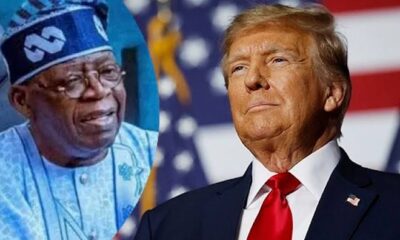
In emotionally healthy societies, leadership is not just a matter of power, position, or speech-making; it is an emotionally bonded relationship between rulers and the ruled, built on a foundation of truth, humility, and accountability. But in today’s Nigeria, that bond has been broken. Leaders speak freely, misstate facts, manipulate narratives, and move on, untouched by consequences. On June 24, 2025, during the launch of the Renewed Hope Mechanisation Programme in Abuja, President Bola Ahmed Tinubu made an offhand claim that Alexander Zingman—a Belarusian businessman with a checkered past—was his “schoolmate” and “very good neighbour” at Chicago State University (CSU). The words may have been casual, but the implications were not. That simple statement triggered a wave of national discomfort, confusion, and disbelief. For a country already deeply wounded by chronic contradictions in governance, it reopened emotional wounds and confirmed what so many citizens feel but dare not always say: “They will say anything. And nothing will happen.”
The Zingman Timeline: A Contradiction Made Public
Alexander Zingman’s story, on its surface, doesn’t intersect with Tinubu’s in any verifiable way. Born in 1966 in Minsk, Belarus, Zingman studied robotics in the 1980s, served in the Soviet Army, and eventually moved to the United States in the early 1990s. He reportedly attended the University of Illinois at Chicago (UIC), not Chicago State University, and received degrees between 1991 and 1995—well over a decade after Tinubu graduated from CSU in 1979. In fact, during the years Tinubu was supposedly at CSU, Zingman was still a Soviet teenager. And yet, there he was in Abuja, embraced in full public view as an old friend from university days, his presence legitimized not by documented truth but by political theatre. The Nigerian public—long accustomed to staged appearances and blurred realities—was asked once again to nod, pretend, and absorb the contradiction. Had this been a political skit, Nigerians might have laughed. But coming from the highest office in the land, it only deepened the national ache.
Elastic Truth and Institutional Silence
In psychological terms, public misstatements of this magnitude are rarely accidental. In clinical practice, we recognize that when individuals repeatedly say things that conflict with documented reality, it reflects a deeper relationship with truth—one shaped by detachment, performance, or power. Tinubu’s statement was not merely a harmless slip; it revealed a dangerous elasticity with facts, and an even more dangerous assumption: that the people would not question it, and that even if they did, it would change nothing. There was no public correction. No clarification. No soft retraction from the presidential office. Even if we grant the president the benefit of the doubt—perhaps it was forgetfulness, or a confused memory from decades past—why was there no effort to clarify? Why did no voice from the Presidency come forward to say, “The President was reminiscing, and may have blended timelines or memories”? Instead, the silence was deafening. And the people were left, once again, to watch, shake their heads, and swallow another institutional distortion of truth.
What If This Happened in a Healthy Democracy?
In emotionally responsive democracies, a moment like this would have played out very differently. A public statement would have been issued within hours: “The President and Mr. Zingman both lived in Chicago but did not attend the same university.” Political opponents would raise questions, not to score cheap points but to safeguard national memory. Journalists would investigate, not out of hostility but in service of public knowledge. The leader himself might even laugh, admit the mistake, and move on—restoring trust, rather than eroding it. But in Nigeria, none of that occurred. Not because it was impossible. But because it was never deemed necessary. This is what national emotional disconnection looks like: a president can say something demonstrably false, and no one in government feels moved to correct it. Because in their eyes, the people do not matter enough to deserve the truth.
A Government That Moves On—A People That Cannot
What followed was even more tragic. While citizens tried to verify dates, compare timelines, and reconcile a claim that defied all logic, Tinubu moved on without pause. He signed new tax bills, launched new policies, and smiled through fresh photo-ops. The pace of power continued, immune to the emotional ripple effect that had unsettled millions. In therapeutic terms, this kind of dynamic is known as invalidation. It tells the emotionally wounded: Your questions are irrelevant. Your clarity is inconvenient. Your pain does not matter. The country, in effect, becomes a space where trauma is never named, never addressed—only endured.
The Deafening Silence of Institutions
Even the institutions that could have spoken remained eerily quiet. CableCheck reached out to UIC for verification of Zingman’s academic history. No response. Chicago State University, worn down by years of controversy over Tinubu’s records, offered none either. But the true silence came from within Nigeria. Not a word from the National Assembly. Not a line from the President’s aides. Not even a whisper from revered elders or public intellectuals. And Nigerians understood the message perfectly: to speak too loudly is to risk. To probe too deeply is to provoke. This is not a theoretical warning—it is collective memory. People learn to survive by shrinking. By whispering. By muting their disbelief. They do not protest the contradictions; they internalize them.
Mourning Truth in the Midst of Survival
The psychological toll of this environment is immense. It produces a form of national trauma where the people are not simply confused—they are mourning. Mourning the erosion of truth. Mourning the vanishing expectation of public accountability. Mourning the slow death of shared reality. And yet, somehow, they continue. They rise early. They navigate food scarcity, rising costs, joblessness, and insecurity. They teach their children values their leaders no longer practice. They live with grief and call it normal. They adjust to pain as if it were policy.
What the People Deserve
In this moment, what Nigerians deserve is not perfection, but emotional honesty. They do not expect leaders to be without fault—but they long for leaders who reflect their reality, who acknowledge error, who show the human decency to say, “I was mistaken.” It is not weak to admit missteps. It is not unpresidential to be corrected. What is weak is silence. What is shameful is pretending the people do not see what they see. When leadership cannot model emotional accountability, it sends the people a cruel message: You are alone in your reality.
Conclusion: The Pain Is Real, and the Silence Is Loud
So did Tinubu and Zingman attend the same school? The answer, with all evidence considered, is no. But the bigger question is not about schools. It is about conscience. It is about how long a people can continue absorbing contradictions that deform their sense of truth. And it is about whether Nigeria’s leaders will ever again treat the truth not as an inconvenience—but as a sacred bond with the governed. We wish Tinubu and Zingman clarity. But we wish Nigerians something more: the end of pain masquerading as governance. Because power always moves on. But the people must stay behind, carrying the weight of what truth leaves undone: doubt, hurt, and silence.
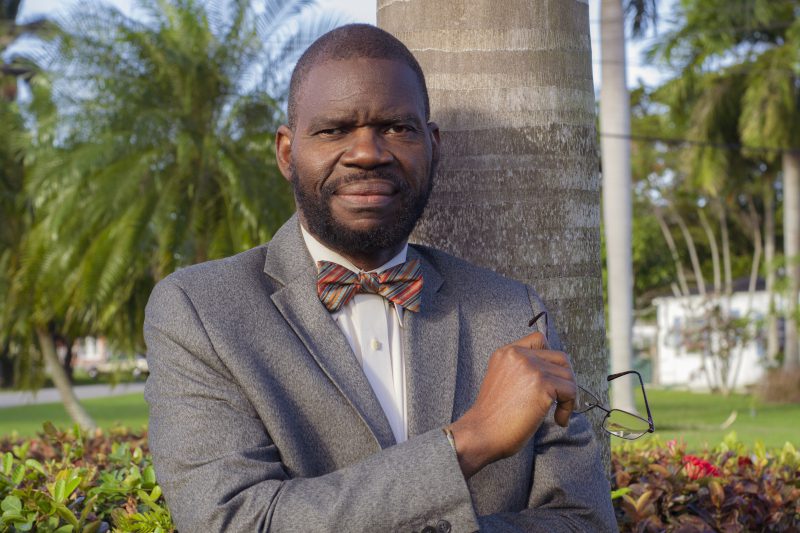
Professor John Egbeazien Oshodi is an American psychologist, educator, and author specializing in forensic, legal, and clinical psychology, cross-cultural psychology, police and prison sciences, and community justice. Born in Uromi, Edo State, Nigeria, he is the son of a 37-year veteran of the Nigeria Police Force—an experience that shaped his enduring commitment to justice, security, and psychological reform.
A pioneer in the field, he introduced state-of-the-art forensic psychology to Nigeria in 2011 through the National Universities Commission and Nasarawa State University, where he served as Associate Professor in the Department of Psychology. His contributions extend beyond academia through the Oshodi Foundation and the Center for Psychological and Forensic Services, advancing mental health, behavioral reform, and institutional transformation.
Professor Oshodi has held faculty positions at Florida Memorial University, Florida International University, Broward College, where he also served as Assistant Professor and Interim Associate Dean, Nova Southeastern University, and Lynn University. He is currently a contributing faculty member at Walden University and a virtual professor with Weldios University and ISCOM University.
In the United States, he serves as a government consultant in forensic-clinical psychology, offering expertise in mental health, behavioral analysis, and institutional evaluation. He is also the founder of Psychoafricalysis, a theoretical framework that integrates African sociocultural dynamics into modern psychology.
A proud Black Republican, Professor Oshodi advocates for individual empowerment, ethical leadership, and institutional integrity. His work focuses on promoting functional governance and sustainable development across Africa.