
Opinion
Understanding Russia’s Multipolar World With Africa -By Kestér Kenn Klomegâh
Early September 2023, local Russian media abuzzed with latest information emerging from the Russian Ministry of Foreign Affairs that Russia plans ‘visa-free regime’ with all African countries, referring to the fact that it was within the framework of Russia and Africa’s action plan adopted at the second summit in St. Petersburg.

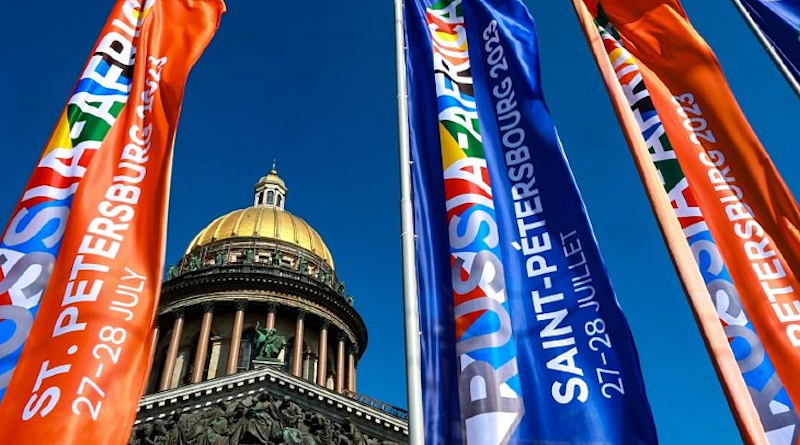
With the emerging multipolar world, Russia has to ditch its decades-long peripheral engagement with Africa. In practical terms, the first Russia-Africa summit was to raise relations unto a more quantitative level, especially promoting frequent interaction and boosting presence in economic spheres. Winning Africa’s sympathy to support its own geopolitical interest through hyperbolic pledges and promises, tonnes of bilateral agreements most of which have largely remained unfulfilled, would not be enough in this competitive geopolitical era. Beyond Sochi and St. Petersburg summits, however, policy proposals until now lack effective visible actions. Critics say Russia, most probably, needs to show some degree of assertiveness with what it plans to achieve in Africa.
At least, Russia’s geopolitical influence has already been heard on the global stage. It claims to be pursuing an integrative multipolar relations with friendly countries around the world, including those in Africa. But it has to be admitted that Russia is still not a popular holiday destination for Africa’s political elite, corporate business leaders and middle-class. The politicians and corporate business leaders highly prefer to spend their vacation in the United States and Europe, some Asian destinations are increasingly becoming their preferential choice. That trend is unlikely to change, it will remain as such for the next decades.
After the first symbolic Russia-Africa summit in the Black Sea city of Sochi in October 2019, both Russia and Africa adopted a joint declaration – in fact a comprehensive document which outlines various expertly well-phrased parameters for uplifting cooperation into a new qualitative stage.
In order to boost effective economic interests and to foster cooperation, frequent interaction is therefore necessary. The frequency of interaction should not only be established during summits, but some basic strategic steps and measures are necessary to encourage simple holiday travels to both regions. These are significantly missing in the current relations between Russia and Africa. Critics often say Russia is contributing enormously to its own so-termed isolation or better still marginalisation (a segregated world), it closes its doors for interaction and business especially when there are huge opportunities to develop first-class tourism.
With the current rapidly changing situation, Africa’s middle-class estimated at 380 million (twice Russia’s population and almost that of United States) still have other suitable alternative holiday destinations. Moscow, St. Petersburg and Sochi beach or Crimea are not their desired priority for spending ‘simple’ vacations. Russian tour operators acknowledge that there is nothing such as African tourism to Russia. On the opposite side, Morocco, Egypt, Seychelles, South Africa and Zanzibar are the few African destinations popular among Russian vacationers.
The second summit declaration on 28 July 2023 in Saint Petersburg, points to building on the historical and time-tested friendly ties between the Russian Federation and African States. Here Russian authorities only dream of official state visit by heads of African states and ministers as an essential pillar of their version of multipolar world.
Since the first symbolic Sochi summit held 2019, very little has happened on the tourism, social and cultural sides. Russia and Africa have been discussing how best to explore untapped resources, the possibilities of promoting cooperation in the field of tourism, dissemination of information on tourism opportunities of the Russian Federation and African States.
In addtion to above, Russia and Africa have also agreed to promote exchanges of delegations, athletes, teams, coaches and other specialists in the field of sports training. And further down, take steps toward ensuring respect for the rights of journalists and promoting the development of media outlets. While reiterating professional training programmes, academic and student exchanges et cetera, all these have, in practical terms, remained largely as official documents stacked in computerized files and would later be pushed into electronic historical archives.
For the past few years since Sochi, the first declaration remains tacitly as a declaration. The basic question often asked is for what purposes are the summit declarations. Worse, series of speeches full of western confrontation and juicy-coated remarks are seemingly for linguistic colouration. “Russia is ready to build multifaceted relations with Africa. If Russia Wins, Africa Wins!” remarked by the Current Chairman of the African Union, Comoros President Azali Assoumani during the late July St. Petersburg summit.
Early September 2023, local Russian media abuzzed with latest information emerging from the Russian Ministry of Foreign Affairs that Russia plans ‘visa-free regime’ with all African countries, referring to the fact that it was within the framework of Russia and Africa’s action plan adopted at the second summit in St. Petersburg.
Our investigations and research indicate that Russia has visa-free agreements with six African countries. And visa-free regime only applied to African countries that signed agreements with Foreign Ministry. Within the agreements, only holders of diplomatic passports are permitted under this consular agreement. Moreover, the point on developing or facilitating work, easing contacts with African countries, between ordinary citizens of Russia and Africa still need visas to travel both ways.
According to sources monitored, agreements have to be signed after successful negotiation with Russian authorities. One source confirmed in an interview with me that Russia has an agreement on visa-free travel for holders of diplomatic service passports with 32 countries on the continent, and yet refused to make it public and to the media the official list of approved African countries.
Russian President Vladimir Putin and the African leaders adopted the final declaration of the second Russia-Africa summit. An action plan of the Russia-Africa Partnership Forum for the period 2023-2026 and a number of other documents were also adopted.
In addition, several agreements, contracts and other documents related to various areas of cooperation between Russia and Africa were approved on the sidelines of the forum and the summit.
“We highly appreciate the results of our joint work at the summit. I am confident that the results achieved will form a good basis for further deepening the Russian-African partnership in the interests of prosperity and well-being of our peoples,” Putin said in a speech posted to official Kremlin website.
Putin was pleased with the results of the summit, which was held in a “constructive and very friendly atmosphere.” Russia and the Africa have confirmed their position on the formation of a multipolar world order.
After the first Russia-Africa summit held in Sochi (2019), and within the framework of the joint declaration that was adopted, the Ministry of Foreign Affairs of the Russian Federation created a Secretariat of the Russia-Africa Partnership Forum. With hopes for a comprehensive and enduring collaboration on long-term programs, Secretariat of the Russia-Africa Partnership Forum has since then been networking for potential Russian, African and international organisations with the aim of effectively promoting Russia’s economic interests in Africa and to foster mutually beneficial cooperation with African countries.
According to the stipulated rules and regulations, the Russia-Africa summit will be held every three years. In the period between the Russia-Africa summits, the mechanism of dialogue partnership will operate, regular political consultations will continue through the Ministries of Foreign Affairs of Russia, African countries and the leadership of the African Union.




















You must be logged in to post a comment Login