Africa
Upholding Democracy: Fubara’s Bold Stand Against Federal Overreach and the Local Government Election That Dark Forces Could Not Stifle, by John Egbeazien Oshodi


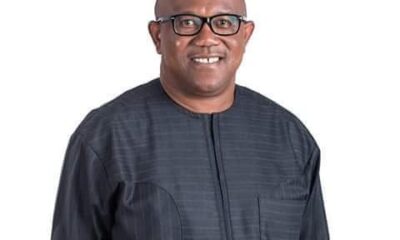
The local elections in Rivers State have concluded, and Governor Siminalayi Fubarahas emerged not just as a victor but as a resolute champion of democratic ideals in an environment riddled with intimidation and political subversion. Against a backdrop of relentless efforts from dark forces intent on destabilizing his administration, Fubara has exhibited a profound understanding of the law and the unwavering mandate of the Supreme Court. The Court has decisively ruled that states must dismantle caretaker committees and replace them with legitimate, elected local governments. With this judicial backing, Fubara embarked on a mission to fulfill this constitutional obligation, even as the Independent National Electoral Commission (INEC) turned its back on him, and the judiciary—those supposed bastions of justice—remained conspicuously silent.
As the tumult unfolded, President Tinubu, currently ensconced in London, appeared to be merely a distant observer, watching the political theater from afar while his administration blatantly ignored the constitutional crisis brewing in Rivers State. Yet, Fubara, undeterred by adversity and the looming specter of federal might, displayed remarkable tenacity and integrity. He successfully conducted the elections, defying the sabotage orchestrated by Wike—the notorious political manipulator of Rivers State—who sought to leverage federal resources to maintain his grasp on power.
While the local elections were fraught with their fair share of challenges, Fubara’s relentless determination culminated in a triumph that transcends the mere mechanics of voting. His victory resonates as a powerful signal to the police, security agencies, INEC, and the federal judiciary—particularly the so-called Abuja judges known for their politicized rulings—who have consistently underestimated the iron will of a governor armed with both knowledge of his rights and an unyielding resolve to assert them.
Fubara’s approach can be aptly characterized as a “respectful yet firm democratic way.” This philosophy encapsulates his unique method of governance, which deftly balances assertiveness with a profound respect for democratic processes and institutions. His manner of engagement exemplifies a leader who is not merely about wielding power but about fostering dialogue and building consensus even in the face of overwhelming opposition. In his interactions with political opponents and security forces, Fubara has demonstrated an unwavering commitment to uphold the democratic ideals enshrined in the Constitution. His demeanor conveys an understanding that true leadership is rooted in engagement and dialogue, rather than coercion and intimidation.
His respectful yet firm approach to governance is not merely a personal characteristic; it is a strategic choice that reflects a deep understanding of the fragile nature of democracy in Nigeria. Fubara recognizes that in an environment where political machinations often threaten to erode the rule of law, the preservation of democratic norms must be prioritized. His willingness to engage in respectful discourse, while simultaneously standing resolute against federal encroachments on state authority, positions him as a transformative figure in the political landscape.
As Fubara embarks on the task of building a new political structure, it is highly probable that he will cultivate closer ties with the President as the next election cycle approaches. Such an alliance has the potential to reshape the political dynamics in Rivers State, creating a formidable force that could fundamentally alter the trajectory of governance in the region. However, lurking in the shadows of this political resurgence are the specters of IGP Egbetokun and Wike, whose political influence in Rivers has waned, their old structures dismantled. The President, an astute political strategist, will inevitably recognize the necessity of aligning himself with the emerging power dynamics embodied by Fubara, acknowledging that the winds of political fortune have shifted.
The Nigerian Constitution unequivocally establishes that each state governor is the chief security officer of their respective state. Governor Fubara’s understanding of this principle is not merely theoretical; he has actively demonstrated his commitment to upholding this mandate in the public arena. His audacious stance against federal overreach signifies a deep comprehension of his constitutional role and a willingness to defend it against external encroachments. Even the President cannot overlook the magnitude of this achievement.
Fubara’s actions serve as an enduring democratic lesson, echoing through the corridors of power, a clarion call to all governors—both present and future—as well as the heads of police and security agencies who might be tempted to ignore the rightful authority of state leaders. His steadfastness embodies the struggle for the autonomy and integrity of state governance in a nation where the political landscape is often marred by manipulation and overreach.
In a broader context, Fubara’s defiance symbolizes a national struggle for democratic integrity, urging all stakeholders in Nigeria’s political process to rise, defend their rights, and hold accountable those who would seek to entrench tyranny under the guise of authority. His journey is not merely a localized battle; it is emblematic of a larger national fight against the forces that threaten to undermine democracy for the sake of political expediency.
In embracing his “respectful yet firm democratic ways,” Fubara establishes a new paradigm for leadership—one that not only demands respect but earns it through principled action and unwavering commitment to the rule of law. His approach is a clarion call for a renewed dedication to democracy in Nigeria, reinforcing the notion that respect for constitutional mandates and the voices of the people must remain at the forefront of governance.
In conclusion, Fubara’s stand against federal overreach and his embodiment of respectful yet firm democratic ways serve as a beacon of hope for all Nigerians. His resolute commitment to upholding the rights of the people and the principles of democracy sets a new standard for leadership in Nigeria. As Nigeria grapples with its complex political realities, Fubara’s actions remind us that the fight for democracy is a collective endeavor, one that requires courage, integrity, and an unyielding belief in the power of the people.
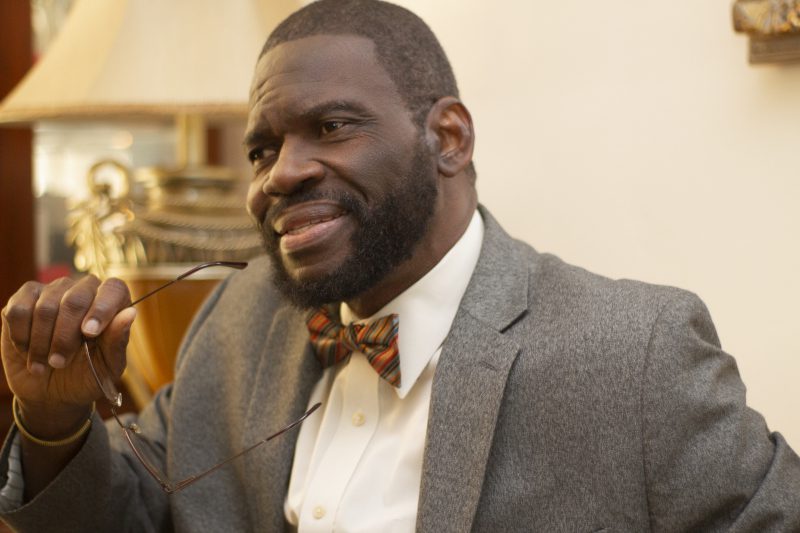
Professor John Egbeazien Oshodi, born in Uromi, Edo State, Nigeria, is an American-based police and prison scientist, forensic psychologist, public policy psychologist, and legal psychologist. He’s a government advisor on forensic-clinical psychological services in the USA and the founder of the Dr. John Egbeazien Oshodi Foundation for Psychological Health. With a significant role in introducing forensic psychology to Nigeria through N.U.C. and Nasarawa State University, he’s also a former Secretary-General of the Nigeria Psychological Association. He’s taught at esteemed institutions like Florida Memorial University, Florida International University, Nova Southeastern University, and more, and is currently an online faculty member at Weldios University, Nexus International University, and Walden University.