Africa
Was Oshiomhole Right All Along? Reflecting On His Opposition To The CBN Governor’s Appointment, by Isaac Asabor

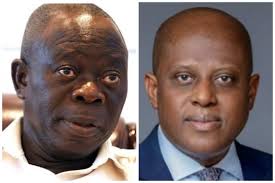
During the screening of the current Central Bank of Nigeria (CBN) Governor, one lawmaker stood apart from the crowd, raising concerns that few were willing to echo at the time. That lawmaker was Adams Oshiomhole, the former Governor of Edo State and a senator who has never shied away from expressing his candid views. Oshiomhole’s opposition to the appointment of the CBN Governor appeared bold, even confrontational, amidst the widespread support from his colleagues. But now, with Nigeria’s economy in turmoil and public confidence in the CBN dwindling, a critical question looms: was Oshiomhole right all along?
During the screening process in Nigeria’s Senate, Oshiomhole raised strong objections to the CBN Governor’s nomination, taking a position many viewed as politically inconvenient. He questioned the nominee’s track record, citing a lack of strong financial oversight credentials and expressing doubt about his ability to navigate the highly complex monetary and fiscal challenges facing Nigeria.
For Oshiomhole, it was not merely about credentials on paper. He understood that the Central Bank Governor must not only manage monetary policies effectively but must also have the courage to stand up to political pressures and external influences. Oshiomhole feared that the nominee might be too closely aligned with political interests and could compromise the independence of the apex bank, which should remain insulated from political interference.
But, instead of engaging in a substantive debate over the concerns raised, the majority of his colleagues in the Senate brushed off his criticisms, some labeling them as “unnecessary opposition.” They expressed confidence in the nominee’s ability to continue in the long tradition of capable financial leadership that had characterized the CBN’s history.
The outcome was predictable. Despite Oshiomhole’s protests, the Senate overwhelmingly confirmed the CBN Governor, with Oshiomhole standing as one of the few dissenting voices. He was, however, unrelenting, stating at the time that “Nigerians will one day see the consequences of these hasty confirmations.”
Fast forward to today, and the picture of Nigeria’s economy tells a different story. The value of the naira has plummeted, inflation has soared, and the purchasing power of the average Nigerian has diminished. Nigeria, a nation that once had a robust currency and stable financial markets, now struggles with runaway inflation, rising unemployment, and an economy trapped in a cycle of debt and uncertainty.
The CBN’s much-publicized decision to float the naira, a move designed to stabilize the currency, backfired, leading to further depreciation, stoking inflation, and causing significant panic in the financial markets. In the absence of clear and coherent policies, businesses are grappling with an unstable exchange rate, while ordinary Nigerians are left to bear the brunt of higher costs of goods and services.
The financial sector has been rife with confusion, and the CBN’s response to these challenges has been criticized as inconsistent and short-sighted. The Bank’s attempts to balance the foreign exchange market, combined with measures such as cash withdrawal limits, have met with criticism from economists who argue that these policies have been either too radical or poorly executed.
The current economic hardship raises the question: “Would Nigeria be in this position if Oshiomhole’s warnings had been heeded?” His reservations about the CBN Governor’s ability to effectively manage monetary policy and stave off political pressure seem eerily prophetic in light of Nigeria’s deteriorating financial situation.
One of Oshiomhole’s main objections during the CBN Governor’s screening process was the risk of political interference in the operations of the Central Bank. The former Edo State governor made a compelling argument that the apex bank must be led by someone who could make tough decisions for the country’s economic stability, free from political influence.
Looking at the current economic situation, there are growing concerns about the independence of the CBN. Critics have accused the Bank of making decisions that seem more politically expedient than economically sound. Some have even suggested that the CBN is under pressure from certain political actors who are prioritizing short-term political gains over long-term economic stability.
This was precisely what Oshiomhole warned about. He envisioned a scenario where the Central Bank, instead of acting independently to safeguard the economy, would become a tool for political maneuvering. Today, these concerns have materialized, as the CBN struggles to assert its independence in the face of rising economic pressure and political expectations.
Oshiomhole’s vocal opposition during the screening process underscores a broader problem in Nigerian politics: the tendency to silence or ignore dissenting voices, especially when they go against popular sentiment. In many cases, warnings from opposition figures are viewed as mere political antics, rather than serious concerns deserving of debate.
The collapse of Nigeria’s financial stability and the confusion surrounding CBN policies should prompt a reassessment of how critical decisions, such as key appointments, are made. “If Oshiomhole’s voice had been taken seriously, would Nigeria’s economic situation be different today?” “Could a more rigorous vetting process for the CBN Governor have produced a leader better equipped to manage the economy through these turbulent times?”
The CBN’s mishandling of currency devaluation, inflation control, and financial regulations has had a devastating effect on businesses and households. Major industries are struggling to stay afloat, with many companies scaling back operations due to the skyrocketing cost of imports and raw materials. Small businesses, which form the backbone of the economy, have been hit the hardest, with many shutting down or downsizing due to high production costs.
In the agriculture sector, the lack of access to affordable credit and fluctuating exchange rates has crippled farmers’ ability to invest in mechanization and improve productivity. This, in turn, has led to reduced food supply, exacerbating food insecurity across the country.
Households are also bearing the brunt of poor monetary policies. With inflation eroding the value of wages, families are struggling to afford basic necessities, and the poverty rate continues to climb. The promise of economic recovery and stability now feels like a distant dream for millions of Nigerians.
With the economy sinking deeper into crisis, many Nigerians are now beginning to revisit the concerns Oshiomhole raised during the CBN Governor’s screening. While his lone opposition may have been dismissed at the time, the current economic realities suggest that he may have been onto something important.
It is too early to say definitively whether Oshiomhole’s warnings were completely justified, but the early signs of economic distress under the current CBN leadership suggest that his concerns were not unfounded. If the situation continues to worsen, his opposition may be seen as a prescient act of political courage, a move to safeguard Nigeria’s future, even when it was unpopular.
In governance, particularly in a democracy, dissenting voices are crucial to ensuring that decisions are scrutinized and debated before being implemented. Oshiomhole’s lone stand against the CBN Governor’s appointment serves as a reminder that opposition, when based on genuine concerns, should not be dismissed lightly.
As Nigeria grapples with the consequences of its economic policies, Oshiomhole’s opposition now seems less like an outlier and more like a warning that the nation should have heeded. Whether or not his stance will be fully vindicated, one thing is clear: Nigeria’s leadership must learn to take critical voices seriously, especially when the stakes are as high as they are today.