
Africa
What if Mr. Tinubu Loses the Election? -By Prince Charles Dickson Ph.D
Nigerian politics has, for too long, been draped in the garments of messianism. Every four years, we are seduced into believing a single figure carries the magic wand. From Obasanjo to Yar’Adua, Jonathan to Buhari, and now Tinubu, the chorus has been the same: “He will fix it.” But time and again, the realities of corruption, ethnic rivalry, weak institutions, and insecurity expose the myth.

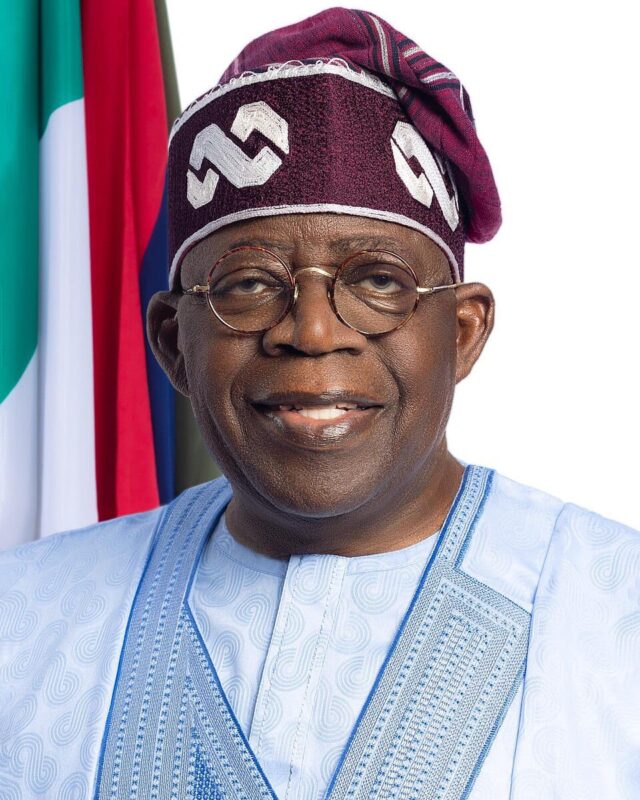
In the sprawling political theater called Nigeria, elections are not just contests of numbers; they are storms of emotion, tribal loyalty, religious undertones, and elite chess moves. Bola Ahmed Tinubu, the “Jagaban,” has loomed over this stage for decades. His ascension to the presidency was both a coronation and a controversy—proof that political cunning, persistence, and networks matter more than mere manifestos. But pause for a moment. Strip away the inevitability cloak. Ask the unsettling question: what if Tinubu loses the election?
Would the heavens fall? Would Nigeria grind to a halt as if the country’s destiny was hinged on one man’s shoulders? Or would we discover that Nigeria’s politics is less about individuals and more about a broken structure?
This is not just an exercise in imagination; it is a probe into our political psyche.
Nigerian politics has, for too long, been draped in the garments of messianism. Every four years, we are seduced into believing a single figure carries the magic wand. From Obasanjo to Yar’Adua, Jonathan to Buhari, and now Tinubu, the chorus has been the same: “He will fix it.” But time and again, the realities of corruption, ethnic rivalry, weak institutions, and insecurity expose the myth.
So, if Tinubu were to lose, the larger question would not be about his personal fate but about ours: are we so restricted that we cannot imagine Nigeria without a single political titan steering the ship?
An Igbo proverb whispers: “When a single tree stands alone in the savannah, the storm is already waiting to uproot it.” Our democracy is brittle because it leans on personalities, not institutions.
A Tinubu loss could jolt the nation into asking whether governance should be about structures and policies, not about the political godfather of Lagos exporting his empire to Aso Rock. It might force parties to reimagine leadership beyond age-long “old horses.” Can it and would it, or it would be more of the same?
Tinubu’s political narrative is one of inevitability: he built Lagos, installed governors, outwitted rivals, funded campaigns, and finally ascended to power. If he were to lose, it would prove that no political colossus is immune to the people’s rejection. That alone could embolden a new generation.
The absence of Tinubu could nudge open the door—however slightly—for younger, more technocratic leaders. Nigeria’s under-35s, who make up the majority of voters, may finally see space for their own voices rather than recycled political elders. The sad reality is that it may take the old horses to remove old horses.
Let’s be real. Tinubu is not just an individual; he is a network, an institution of patronage. His loss could trigger an elite backlash. Old alliances could fracture violently, and governance could become paralyzed as the “system” tries to re-stabilize itself.
A Tinubu defeat might not mean reform. Instead, the vacuum would likely be filled by the same old players—those “ancestors” of Nigerian politics who never retire. Nigerians might wake up only to find that their choices are between Coke and Pepsi: the same sugar, different branding.
Every administration enters with promises—some sincere, many hollow. A Tinubu exit could mean those policies (good or bad) would be aborted midstream. Infrastructure projects, reforms, or even party realignments could collapse into uncertainty.
When you line up Nigeria’s political class—Obasanjo, Atiku, Tinubu, Buhari, Jonathan—the differences blur. They bring varied accents, hometowns, and campaign slogans, but what do they really bring to governance?
Like old horses, they know the tracks well, but they also know where the shortcuts and loopholes lie. They ride for self-preservation first.
An old Hausa saying captures it best: “The elder who says he is going to fetch water for the children must not hide a calabash for himself.” Too often, the Nigerian elite fetch water only to drink it first, leaving the children with a dry gourd.
So, are they to the same difference? Yes. The perfume bottle may change, but the fragrance—stale and choking—remains.
This is where our mosquito friend buzzes in.
A male mosquito tells his wife: “Darling, I will hunt a lion for you.” “Ok fine,” she replies, “now go to sleep.” “I will bite an elephant and bring his blood for you.” “Sure love, now go to sleep.” “I will drive you around Paris in a Mercedes.” “Hmmm… ok, go to sleep.” “You don’t trust me? I will get you a 100gramms Gold chain.” “You idiot, go to sleep.” “Honey, I’ll do anything for you.” “You silly dude… how many times have I told you not to come home after biting a politician?”.
This tale is not just a joke—it’s a mirror. Nigerian politics thrives on promises as extravagant as a mosquito vowing to bring home lion meat. From pledges of stable electricity in six months to ending insecurity in “a blink,” our leaders excel in mosquito talk. The female mosquito’s retort—“stop coming home after biting a politician”—is the citizen’s exhaustion with empty rhetoric.
Whether Tinubu stays or goes, Nigerians are still swarmed with promises fattened on thin air.
Supporters would argue that Tinubu is the continuity candidate. He is the master strategist who understands the economy, who turned Lagos into Nigeria’s commercial nerve center, who knows where the levers of power are. In a land where politics is about survival, such mastery is gold.
Critics counter that continuity is the problem. Lagos, for all its shine, is also the city of sprawling slums, unbearable traffic, and chronic inequality. If that model is exported nationally, what future do we expect?
Both sides miss something. The problem is not Tinubu alone. The problem is a political system that recycles elites, worships moneybags, and sidelines competence. Tinubu’s loss would not fix this. His victory would not fix it either. Only a radical overhaul of institutions, values, and leadership culture will.
A Yoruba proverb says: “The child who says the mother will not sleep will also not sleep.” Nigeria’s political elite may think they are deceiving the people, but in the end, they too are trapped in the sleeplessness of insecurity, poor health systems, and decaying infrastructure.
An Igbo adage adds: “He who fetches ant-infested firewood invites the lizards for a feast.” For decades, Nigeria has fetched corrupt politicians as leaders, and now we are surprised when corruption multiplies like lizards in a compound.
So, whether Tinubu loses or wins, the real question is: when will Nigerians stop fetching ant-infested firewood?
Permit one sting of humor: Nigerians often say politics here is like suya. Everyone smells the delicious aroma, but only a few chew the juicy meat. The rest of us get smoke in our eyes. If Tinubu loses, perhaps the meat stays with another cabal. If he wins, well, the meat is still unlikely to reach the masses. Smoke everywhere, tears in our eyes.
The intense debate over Tinubu’s victory or loss is in itself proof of our national fixation. We must break free. Nations do not rise because of one man; they rise because of systems, laws, and values that outlast individuals.
If Tinubu loses, let it be a wake-up call. If he wins, let it be a reminder that the work is not about him but about us. Nigeria is not restricted to one man, unless we choose to be.
The future lies not in the mosquito promises of old political warhorses but in demanding accountability, building institutions, and refusing to be mesmerized by lions and elephants that never appear. Until then, whether Jagaban or another ancestor of politics reigns, Nigerians must remember: the throne may change sitters, but the stool itself is rotten. May Nigeria win!
—
Prince Charles Dickson PhD
Team Lead
The Tattaaunawa Roundtable Initiative (TRICentre)
Development & Media Practitioner|
Researcher|Policy Analyst|Public Intellect|Teacher
234 803 331 1301, 234 805 715 2301
Alternate Mail: pcdbooks@yahoo.com
Skype ID: princecharlesdickson



















You must be logged in to post a comment Login