Africa
When Honor Falls Short: The Public Pitfalls Of “Do You Know Who I Am?”, by Isaac Asabor

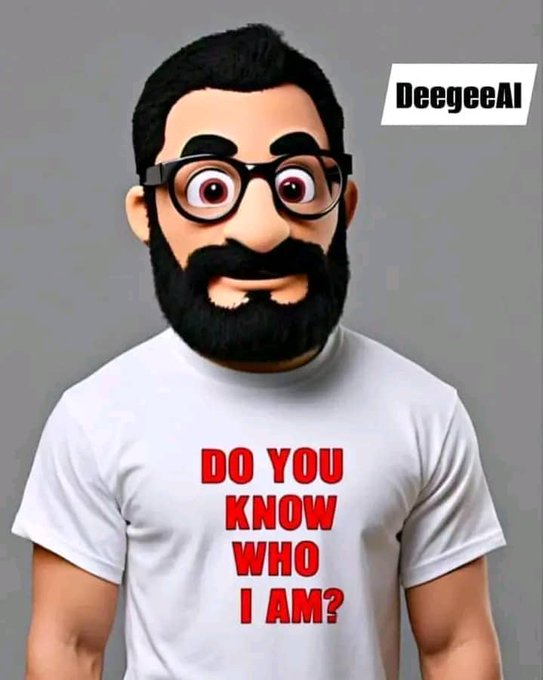
In cultures around the world, respect and reputation often act as pillars of social life, influencing how individuals are perceived and how they interact with each other. In settings that prioritize hierarchy and deference to titles, phrases like “Do you know who I am?” have surfaced as social leverage, an assertion meant to reinforce superiority or claim respect. Yet, while it may be spoken in the name of “honor,” the very phrase reveals the cracks in such values, inviting ridicule and exposing an unsettling paradox. The widespread use of this phrase highlights not honor but insecurity, revealing how the expectation of special treatment frequently leads to public pitfalls that compromise respect, dignity, and leadership.
The question is more than just a sentence; it is a symbol of how some individuals expect the weight of their position to speak louder than their actions or their words. It is used in various settings, from private conflicts to public altercations, often with a connotation of entitlement and superiority. When public officials, celebrities, or well-known figures in society assert “Do you know who I am?” they are, consciously or not, attempting to wield their status as a shield against consequences or as a weapon to assert their importance over others.
This phenomenon is not unique to a single culture; it has a place in societies from Western democracies to African, Asian, and Middle Eastern communities, where social structures are shaped by reputation and hierarchical respect. However, in the globalized, highly interconnected world we live in, the “Do you know who I am?” trope has become universally recognized, and often, universally frowned upon.
For many, titles come with certain privileges, responsibilities, and respect. But the misuse of one’s title to command respect regardless of merit points to a gap between title and true honor. Honor, by design, is meant to be earned through good actions, ethical behavior, and genuine leadership. When it is automatically ascribed to a title or position, honor can easily be misused, becoming an empty promise rather than a mark of integrity.
Some public figures rely on their titles as crutches, allowing the notion of “honor” to replace the need to behave honorably. The result is an exaggerated self-importance that blinds individuals to the fundamental expectations of respect and integrity within their roles. Using one’s status as leverage rather than earning respect through actions diminishes the very honor one claims to defend. In contrast, true leaders earn their honor through sacrifice, humility, and a willingness to treat everyone with respect regardless of rank.
Recent history offers plenty of examples where the “Do you know who I am?” phrase has backfired. Public officials, corporate leaders, and celebrities who have wielded this line have frequently found themselves on the receiving end of public scrutiny and ridicule, with instances going viral online and prompting widespread discussions on privilege and entitlement.

Take the example of a high-ranking official who attempted to use his position to sidestep legal processes at an airport. When confronted by security, his first response was to assert his identity, expecting the recognition to exempt him from scrutiny. However, his outburst was recorded and shared widely, resulting not only in public embarrassment but also disciplinary measures from his workplace. Instead of inspiring respect, his behavior eroded trust and cast doubt on his suitability as a leader.
In another instance, a well-known celebrity faced backlash after demanding special treatment in a public establishment. When employees stood firm on their policies, the celebrity’s attempt to leverage her fame to demand deference led to widespread criticism. Such scenarios repeatedly demonstrate how entitlement alienates individuals from the public, making them seem out of touch and highlighting a double standard that further erodes societal trust in institutions.
With the rise of social media, any event, no matter how minor, has the potential to go viral. The powerful or well-known who attempt to invoke their status in public are now more likely to face swift backlash, with incidents quickly spreading across the internet. This added layer of accountability has shifted the balance of power, making it harder to escape the consequences of entitled behavior. Every individual, regardless of title, is subject to public scrutiny, and actions that might have once been brushed under the rug are now potential flashpoints for discussions on equality, respect, and justice.
Social media has made it clear that respect cannot be commanded; it must be earned. And as public awareness around privilege grows, it becomes increasingly clear that the concept of respect by title alone is no longer accepted. If anything, social media amplifies the consequences of entitlement, with the “Do you know who I am?” approach viewed as a relic of outdated hierarchies that have no place in a modern, merit-based world.

The pitfalls of demanding respect based on status underscore a critical need for public figures to re-evaluate the true meaning of honor. Accountability, empathy, and service to others should replace entitlement, as these qualities better serve both individuals and society. When public figures display humility, understanding, and a genuine commitment to the common good, they build a foundation of honor that requires no external validation. True leadership entails respecting others, irrespective of their social standing, and fulfilling one’s role with integrity.
Societies in which leadership is rooted in service, rather than power, foster genuine respect among citizens. When leaders are willing to acknowledge mistakes, accept criticism, and place the needs of others above their own, they embody the kind of honor that is beyond reproach. In these cases, individuals do not need to demand respect; their actions naturally command it.
The misuse of authority often underscores a need for broader societal change. If society places excessive emphasis on titles rather than actions, it breeds a culture where entitlement is expected rather than earned. To create a culture of genuine respect and honor, the next generation must be taught that leadership is a privilege, not a weapon. Integrity, humility, and empathy should be nurtured from a young age so that titles become symbols of responsibility rather than badges of superiority.
Public figures and private citizens alike should be encouraged to build reputations on actions, not titles. By fostering environments where individuals are recognized for their contributions, society can shift away from the toxic expectation of automatic respect and move toward a more egalitarian, meritocratic culture. The key lies in valuing people for their character rather than their status, ensuring that honor is conferred based on actions rather than words or titles.
In fact, the phrase “Do you know who I am?” reveals more than the speaker may intend. Rather than signaling honor, it often exposes insecurity, an unwillingness to meet the expectations of one’s role, and a failure to earn respect. True honor is not declared but demonstrated through actions, respect for others, and a commitment to service. In a world increasingly connected and increasingly vocal, the demand for respect will no longer suffice; individuals must earn it by leading with humility and integrity.
To build a culture of honor, society must look beyond titles and demand authenticity and accountability. In doing so, we can pave the way for leaders who, by virtue of their character rather than their status, naturally inspire the respect they seek and fulfill the roles they have been entrusted with.