Africa
When Opinion Writers Don’t Know What To Write Again -By Isaac Asabor
What is clear is that Nigeria cannot afford the silence of its writers. Fela, despite his lament, never stopped singing. Achebe never stopped writing. Dele Giwa never stopped until death silenced him. And so, we too must never stop, even if, sometimes, we do not know what to write again.

There comes a time in the life of every creative soul when exhaustion sets in, not because the mind is bankrupt of ideas, but because the environment stubbornly resists change. For FelaAnikulapo-Kuti, the Afrobeat legend and uncompromising social crusader, that moment came when he lamented in one of his songs that he no longer knew what to sing about. He had sung about corruption, tyranny, police brutality, oppression, poverty, foreign exploitation, and homegrown greed. Yet, nothing changed. Instead, the oppressors grew bolder, more ruthless, and deafer to the cries of the people.
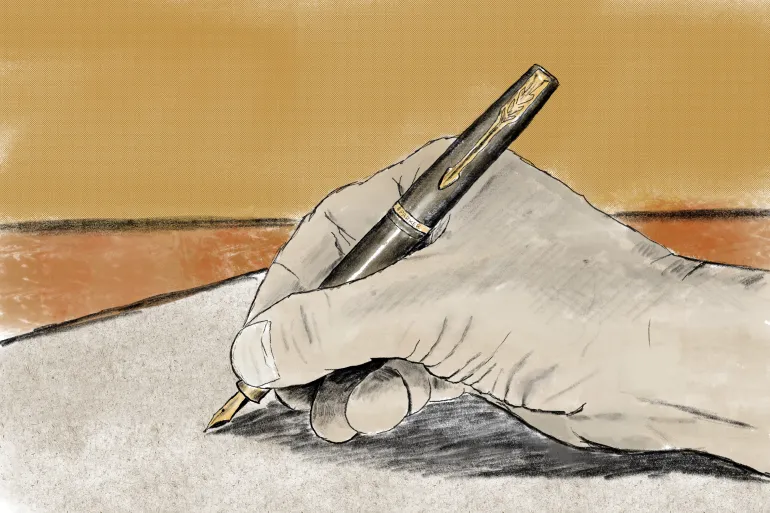
Today, opinion writers in Nigeria are in a similar quandary. We pick up our pens, our own instruments of resistance, week after week, year after year, to dissect the Nigerian condition. We expose corruption. We highlight maladministration. We call out hypocrisy. We prescribe solutions. We urge accountability. Yet, the system remains the same. In fact, the problems seem to multiply, as if mocking the very act of writing. And so, we find ourselves, like Fela, wondering: what else is left to say?
Unfortunately, across the world, opinion writing is not a frivolous exercise. It is a cornerstone of democracy, a means by which citizens and intellectuals engage with power, critique policies, and influence governance. Opinion is the bridge between raw public sentiment and structured political action. It gives shape to discontent, focus to agitation, and voice to the voiceless.
In functioning democracies, opinion columns have altered the course of history. In the United States, relentless opinion pieces in newspapers like The New York Times and The Washington Post during the Vietnam War in the 1960s helped galvanize public outrage and forced the government to rethink its policies. During the Watergate scandal of the 1970s, opinion writers and investigative journalists kept the issue alive until President Richard Nixon was forced to resign.
In South Africa, during the dark days of apartheid, opinion pieces in underground publications and international media became critical weapons against the racist regime. Writers risked imprisonment and death to publish essays that kept the world’s attention on the brutality of apartheid. Those words, sharpened by truth, contributed to the eventual dismantling of the system.
In Europe, opinion writing remains a tool for rousing citizens and leaders alike. From Brexit debates in the UK to the climate change discourse in Germany, columnists and public intellectuals help frame national conversations, sometimes steering leaders toward more humane and rational policies. The point is simple: opinion writing works. It pricks consciences, stirs debate, and pressures leaders into action.
At this juncture, it is not out of place to ask, “Why does it seem not to work in Nigeria?” The reason for the foregoing question cannot be farfetched as Nigeria, unfortunately, seems to be an exception to this global trend. For decades, Nigerian opinion writers have poured their hearts into articles, editorials, and essays. They have diagnosed Nigeria’s ailments with surgical precision. They have offered prescriptions that, if taken, could rescue the country from collapse. But Nigeria’s leaders remain stubbornly indifferent.
In fact.the culture of impunity in Nigeria is so entrenched that leaders develop a thick skin against criticism. Opinion pieces that should inspire shame or provoke reflection are dismissed as “mere noise.” Many leaders do not even bother to read them. Those who read often view them as irritants, not instruments of accountability.
This indifference breeds frustration. Writers wonder if their words are seeds cast on stony ground. After decades of writing about the same issues, corruption, insecurity, unemployment, poverty, infrastructural decay, and irresponsible governance, one begins to feel like a broken record.
The Nigerian ruling class has mastered the art of ignoring the written word. Unlike in countries where opinion shapes policy, here, opinion is often treated as an irritant to be swatted away. And so, like Fela, we reach that point of lament: what else is there to write?
This frustration is not new. Nigerian opinion writers have wrestled with the country’s stubborn leadership for decades.
Chinua Achebe, Africa’s foremost novelist and essayist of blessed memory, diagnosed Nigeria’s core problem in his famous 1983 pamphlet, “The Trouble with Nigeria”. He wrote, without hesitation, that “the trouble with Nigeria is simply and squarely a failure of leadership.” His essay was not just an artistic exercise but a bold opinion meant to jolt the conscience of the ruling class. Four decades later, Achebe’s words remain painfully relevant. The same failures persist.
Dele Giwa of blessed memory, the fiery journalist and founding editor of Newswatch, used his pen to hold Nigeria’s military regimes accountable in the 1980s. His columns were sharp, fearless, and unrelenting. He paid the ultimate price when a parcel bomb snuffed out his life in 1986. His death was proof of how threatened Nigerian leaders are by critical opinion. Yet, despite his sacrifice, the rot he wrote about has only worsened.
Reuben Abatiwas one of Nigeria’s most consistent opinion voices in The Guardian, and presently the owner of a news website, and also a notable voice on Arise TV. Not only that, he regularly contributes to some notable news platforms. His essays dissected governance failures with academic brilliance and biting wit. Nigerians devoured his weekly pieces, nodding in agreement at his bold truths. But even his years of writing could not stop the downward spiral.
Other columnists like Olatunji Dare, SonalaOlumhense, ChidoOnumah, and SegunAdeniyi have all, in their unique ways, tried to use the pen to prick the conscience of Nigeria’s rulers. Yet, the leaders remain largely unmoved, like granite against the wind.
So, where does this leave the Nigerian opinion writer? Do we stop writing? Do we surrender to silence?
Silence, of course, is not an option. Silence in the face of bad governance is complicity. To stop writing would be to abandon the Nigerian people to their fate. It would mean handing the country entirely to the wolves in power. And so, even when it feels repetitive, even when it feels pointless, we must continue to write.
Yet, the frustration is real. The sense of futility gnaws at the conscience of the writer. We wonder if we are merely chronicling Nigeria’s slow-motion collapse for the sake of posterity. Perhaps, like Achebe’s essays or Fela’s songs, our words will someday serve as a historical record, a testament that some of us did not keep quiet while the country burned.
But writing is supposed to be more than record-keeping. It is supposed to be a catalyst for change. That is why we cannot stop asking: why does it seem not to work here?
One reason is that Nigeria’s leaders often operate outside the boundaries of democratic accountability. In mature democracies, leaders must respond to public opinion because they fear losing elections or legitimacy. In Nigeria, elections are frequently rigged, manipulated, or bought with money and violence. Leaders therefore feel no compulsion to listen to opinion writers or public intellectuals.
Another reason is the general culture of cynicism among Nigerians. Years of unfulfilled promises have bred apathy. Citizens themselves often read opinion pieces, nod in agreement, and move on with their lives without translating outrage into collective action. Without mass pressure, opinion writing risks becoming an echo chamber.
Finally, the monetization of Nigerian journalism has also diluted the impact of opinion writing. Too many media houses are compromised, beholden to politicians, or driven solely by profit motives. Genuine, fearless opinion is often drowned out by paid propaganda.
At this juncture, it is expedient to ask, “What next for Nigerian opinion writers?” If we accept that opinion writing alone may not shake Nigeria’s leaders, then we must ask: what next? Some argue that writers must evolve into activists, bridging the gap between the pen and the protest ground. Others suggest that writers must focus more on mobilizing citizens than on trying to prick the consciences of hardened leaders. Still, others say writers should continue, even if only for the sake of historical record, because someday, the words may find fertile ground.
What is clear is that Nigeria cannot afford the silence of its writers. Fela, despite his lament, never stopped singing. Achebe never stopped writing. Dele Giwa never stopped until death silenced him. And so, we too must never stop, even if, sometimes, we do not know what to write again.
Because silence would be the final surrender. And Nigeria, with all its potential and promise, is too important to be surrendered.