
Africa
Let us Save Africa’s Vultures from Extinction -By Fadzai Matsvimbo
Lastly, there is a real need for cooperation and concerted action at national, regional, and continental levels to ensure that we save Africa’s vultures from extinction. As we mark International Vulture Awareness Day, no effort should be spared to stop the loss of sovereigns of the African skies.

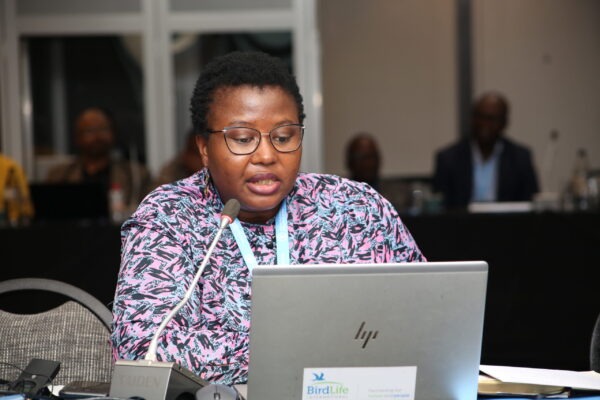
On the first Saturday of September every year, the world celebrates the International Vulture Awareness Day (IVAD) to raise awareness about the plight of vultures. A less oft highlighted decline, perhaps Africa’s best-kept biodiversity loss secret is the catastrophic decline of the continent’s vulture populations over the last 50 years. With declines of up to 97% in some species, African vultures are faced with the same predicament as the dodo 400 years ago – extinction, despite the vital role that they play in the environment.
These majestic birds act as nature’s clean-up crew, removing rotten carcasses from our environment thanks to their unique scavenging capabilities. Nature abhors a vacuum and the deficit of these important scavengers in the ecosystem, destabilizes the ecological equilibrium, with serious social and economic impacts. This was witnessed in Asia in the 1990s where vulture populations crashed by up to 99% after feeding on cattle carcasses containing diclofenac – a veterinary drug toxic to vultures. Consequently, other scavengers including rats and dogs increased in number, leading to increased disease transmission from carcasses to animals and humans, particularly an increase in the number of cases of humans infected with rabies were reported.
Poisoning is the leading cause of vulture deaths on the continent, accounting for more than 60% of vulture mortalities. Poisoning comes in two forms – intentional poisoning whereby poachers deliberately kill vultures that signal their illegal activities and unintentional poisoning. In other instances, vultures fall victim to retaliatory poisoning by livestock owners trying to kill predators preying on their livestock, taking a toll on the continent’s vulture populations. Belief-based use is another threat facing vultures on the continent. Vultures’ parts are used in traditional medicine to cure ailments or imbue partakers with magical powers or bring good luck. Other threats include collisions or electrocutions with energy infrastructure, being developed on the content and habitat degradation among others.
BirdLife International, the world’s largest partnership is working with its network of partners across the continent to stem this decline. At the heart of this work is collaboration with local communities to deliver cross-cutting and impactful conservation interventions In Eastern Africa, BirdLife and partners have engaged communities and other stakeholders in the Mara- Serengeti landscape to reduce poisoning and belief-based use. In Kenya, predator proof bomas have been constructed to reduce livestock loss in the bomas from predation, thus reducing retaliatory poisoning incidences. To tackle belief-based use in Tanzania, traditional healers have been engaged to substitute vulture parts for plant-based alternatives.
Working with landowners and local communities, BirdLife and partners have established more than more than 1,000,000 hectares of Vulture Safe Zones (VSZs) in Southern Africa in Zambia, Zimbabwe, Botswana, and South Africa where vultures can feed and breed without the risk of poisoning. In West Africa, a coalition of organisations including BirdLife, and the Convention on the Conservation of Migratory Species of Wild Animals (CMS) launched the West Africa Vulture Conservation Action Plan in April 2024 to address key threats faced by vultures in West Africa . The Plan targets actions to be carried out in 16 countries in the region, with a vision of ensuring that vulture populations achieve sustainable levels and are protected by effective legal frameworks by 2043.
In addition to conservation interventions, BirdLife partners are carrying out awareness campaigns on the plight of these endangered birds, in addition to ongoing research and contribution to vulture friendly policies. An example of this is a groundbreaking report by BirdLife earlier this year which shows that vultures provide ecosystems services worth about US$ 1.8 billion per year in Southern Africa, underlining the need to conserve them.
Lastly, there is a real need for cooperation and concerted action at national, regional, and continental levels to ensure that we save Africa’s vultures from extinction. As we mark International Vulture Awareness Day, no effort should be spared to stop the loss of sovereigns of the African skies.
The writer is the Preventing Extinctions Programme Coordinator for Africa at BirdLife International and can be reached via fadzai.matsvimbo@birdlife.org and @fmatsvimbo on X
























You must be logged in to post a comment Login