
Africa
When the Economy Breaks: The Untold Burden on Ordinary Nigerians -By Abdulazeez Toheeb Olawale
Nigeria’s story is one of resilience, but also one of betrayal. Its people are strong, but strength alone cannot feed the hungry or employ the jobless. Until justice, accountability, and true leadership return, the economy will remain broken, and the tears of its people will continue to fall silently into the dust of the streets.

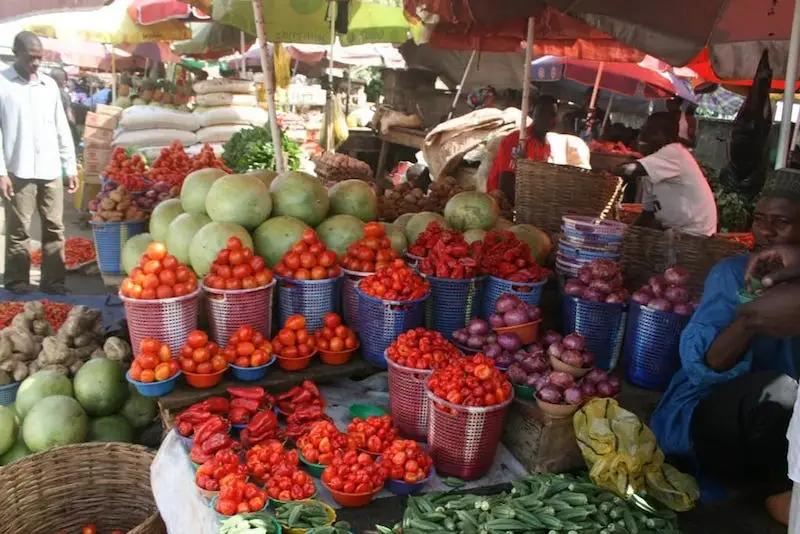
In every corner of Nigeria—from the bustling markets of Lagos to the quiet farmlands of Benue—the signs of a broken economy are impossible to ignore. Prices soar daily, wages remain stagnant, and the struggle for survival has become a national language. Beneath the statistics lies a deeper tragedy: the silent suffering of millions who wake each morning unsure of their next meal, yet still whisper “e go better” with a weary kind of faith. Their stories—of hunger, resilience, and lost dreams—paint a portrait of a nation bleeding quietly under the weight of its own promise.
Chiaka sits by the roadside, staring at his once-busy mechanic workshop. Customers barely come anymore. Spare parts are too expensive; most of his clients now park their cars indefinitely, unable to fix them. He remembers when he could feed his wife and three children with ease. Now, even bread—the simplest food—has become gold. His youngest daughter often asks, “Daddy, why don’t we eat rice every Sunday like before?” He forces a smile and tells her, “Next week, my dear.” But deep inside, he knows next week might be worse.
In Kano, Aminah wakes before sunrise to fry akara by the junction. She used to buy a bag of beans at a price she could manage, but today the cost has tripled. Customers still come, but they complain about her smaller portions. “Why are your akara balls so tiny now?” they ask. She doesn’t answer. How does she explain that if she sells the same size as before, she will run at a loss? How does she tell them that sometimes, her children go to bed with nothing but water in their stomachs?
Meanwhile, Babalola, a recent graduate in Osun, wanders the streets with his CV tucked under his arm. He has knocked on every company’s door, begged every relative for a connection, but jobs remain a distant dream. Every day, he watches his mother,once a proud trader lose her dignity as her small shop crumbles under inflation. Tomatoes, pepper, even onions are no longer affordable for ordinary families. Babalola wonders why he went to school at all, if all it would bring him is hopelessness and endless rejection.
The story is the same everywhere. In the villages, farmers sweat under the scorching sun, only for their harvests to rot on the farm because of bad roads and insecurity. In the cities, young boys roam the streets chasing crumbs, while girls are forced into early marriages or exploitative jobs just to survive. The middle class, once the pride of the nation, has almost disappeared, swallowed by poverty. Those who can, run abroad in search of greener pastures. Those who cannot, stay behind and battle depression, hunger, and despair.
Yet, amid all the suffering, there is resilience. Nigerians wake up each day and still fight to survive. They joke, they laugh, they hustle, even when tears are hiding in their hearts. Mothers find creative ways to stretch one meal into two. Fathers swallow their pride and take menial jobs just to keep their families alive. Youths, tired of waiting for government jobs, create small businesses from nothing—barbing, tailoring, blogging, coding, riding okada—anything that can put food on the table.
But deep down, everyone knows that survival is not enough. A nation blessed with oil, fertile land, and brilliant minds should not live this way. The bad economy has stolen more than money—it has stolen dreams, dignity, and hope. It has made people question their worth, their future, even their very identity as Nigerians.
One night, Chiaka lies awake listening to his children’s soft breathing. He whispers a prayer: “Oh God, let this country rise again. Let our leaders see our pain. Let the economy heal, so that the next generation will not inherit this suffering.”
His prayer echoes in the hearts of millions across Nigeria—Aminah frying akara in the dark, Babalola knocking on doors that never open, farmers watching their crops waste, mothers struggling to feed their children.
Nigeria’s story is one of resilience, but also one of betrayal. Its people are strong, but strength alone cannot feed the hungry or employ the jobless. Until justice, accountability, and true leadership return, the economy will remain broken, and the tears of its people will continue to fall silently into the dust of the streets.
And yet, despite it all, Nigerians wake each morning, whispering to themselves the same fragile hope: “E go better.”



















You must be logged in to post a comment Login