
Africa
Why Borno’s Flood-prone Communities Deserve Urgent Government Intervention -By Salaudeen Soliu Olamide
I urge this national newspaper and other media outlets to keep this conversation alive. Let’s not treat flood disasters as temporary headlines. Let us treat them as the long-term threats to human dignity and survival that they truly are. We owe it to the children growing up in Gwange Gangare. We owe it to the mothers of Galtimari. We owe it to the elders of Shokari. We owe it to every Nigerian living in fear of the next downpour.

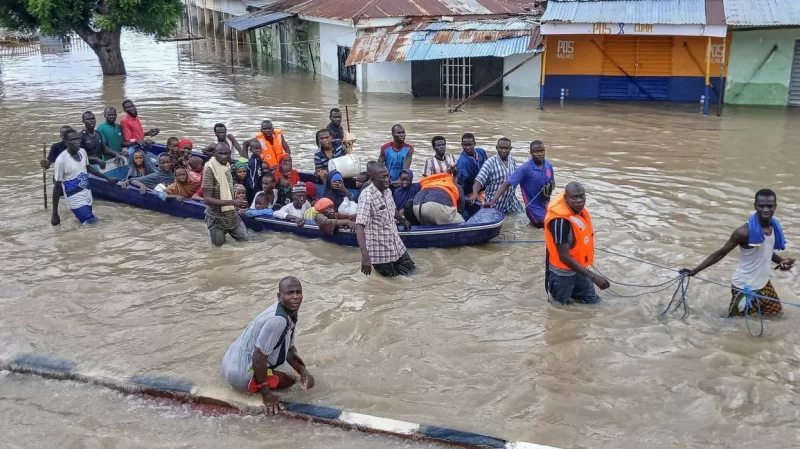
I write with deep concern and a strong sense of responsibility as a citizen of Borno State to bring to the attention of the public and, most importantly, the Borno State Government, the alarming and worsening situation of residents who live in communities located dangerously close to the Gada Bull River and other natural waterways in Maiduguri. Communities such as Gwange Gangare, Galtimari, Shokari, and Bulaburin are annually subjected to the agony of flooding, yet very little has changed to provide permanent solutions for the people who live there. These are not mere neighborhoods — they are homes, schools, and places of worship where lives and dreams unfold daily, now under constant threat from seasonal floods.
Each rainy season, families in these communities live in fear, unable to sleep in peace or leave their children unattended. They are not worried about crime or insecurity, but about the rushing water that could enter their homes any night and wash away all they’ve ever worked for. For many, that fear becomes a cruel reality year after year.
In Gwange Gangare, the story is one of daily struggle and anxiety. As soon as the rainy season begins, many residents move their furniture onto elevated blocks, ready for the first heavy downpour. They stock sandbags and makeshift wooden planks to divert the water, but these measures are far from effective. They are only the desperate responses of people who have been abandoned. The Gada Bull River, which cuts through these communities, is not inherently dangerous. Its threat lies in how poorly its flow has been managed, how indiscriminately people have built around it, and how neglectful authorities have been in enforcing environmental and urban planning regulations. The river has become a symbol of abandonment for those who live near it.
In Galtimari, the river’s banks are cluttered with makeshift structures and unplanned housing. When the rain comes, it overwhelms the river, forcing the water into people’s homes. It is not uncommon to see entire compounds submerged. The residents often sleep standing or sitting up because their mattresses are soaked or floating. Children in these areas are some of the worst affected. Many of them fall ill from playing in or wading through floodwaters contaminated with sewage and garbage. Parents have to choose between keeping their children home or sending them through ankle-deep water to school. This is no way for a child to grow up.
Shokari, another community along the river, acts as a basin for overflow. Rainwater from higher areas channels down to Shokari and settles there. Houses get surrounded by stagnant water that takes days — sometimes weeks — to dry up. In that time, mosquitoes breed rapidly, and malaria becomes widespread. Bulaburin shares similar stories. It is a flood-prone area where residents have suffered silently for years. Floods have destroyed not just homes, but also small businesses, school materials, farming tools, and personal belongings. For residents here, rebuilding after each rainy season is a routine that comes with pain and hopelessness.
What makes this situation even more painful is that it is entirely avoidable. Urban planners and environmental experts have long warned against building near waterways without proper flood management systems. Sadly, those warnings have not been taken seriously in Maiduguri. We must also recognize that these people are not living in these areas because they want to. Many were forced there by economic hardship, rising rents in safer parts of the city, and the lack of affordable housing alternatives. Their choice was not between safe and unsafe — it was between unsafe and homeless.
The government has a moral obligation to protect all its citizens, especially the most vulnerable. Ignoring these communities simply because they live on the margins is not only unjust — it is dangerous. Natural disasters do not discriminate, and the neglect of flood-prone areas could one day become a broader public emergency. The Borno State Government must begin by acknowledging that this is not just a seasonal issue. This is a structural problem that needs a long-term and well-funded solution. Emergency relief after the floods will never be enough — what we need is a strategy to prevent the floods from happening in the first place.
One of the first steps should be the mapping and risk assessment of all communities along Gada Bull and other rivers. This must be done with technical precision and community involvement so that no one is left behind or unfairly targeted. The second step is relocation. The government must begin the gradual resettlement of residents in the highest-risk areas. But this must be done humanely — with adequate compensation, proper housing alternatives, and involvement of the affected people in the decision-making process. The third step Is massive investment in urban drainage infrastructure, especially in the areas identified as vulnerable. This includes expanding and dredging the river channels, constructing embankments, and building drainage paths that can redirect excess water away from homes. Fourth, the government must enforce environmental and urban planning laws. Illegal constructions along waterways must be stopped, and developers must be held accountable for violating city plans. There is no reason why homes should continue to spring up in areas clearly marked as flood zones.
The government must also invest in early warning systems and public sensitization. Communities should receive timely information about weather patterns, expected rainfall volumes, and evacuation protocols. Public education is key to ensuring that people understand the risks and how to respond to them.
In addition, health interventions should be increased during the rainy season. Mobile clinics, mosquito nets, and sanitation materials should be distributed in these areas to reduce the impact of flood-related health issues. It is unacceptable that people are left to suffer and die from diseases that could have been prevented. I call on civil society organizations, journalists, community leaders, and all well-meaning Nigerians to raise their voices for these communities. The suffering of Gwange Gangare, Galtimari, Shokari, and Bulaburin should not continue in silence. We must demand that our government does better. Let us also recognize that this is not just a Maiduguri problem. Across Nigeria, many cities face similar challenges due to poor planning, rapid urbanization, and climate change. What happens in Borno should be a lesson to other states as well.
We are in an era where climate-related disasters are increasing in frequency and intensity. This means that the time to act is now. Delay will only lead to greater suffering, higher costs, and the possible loss of lives. This is a crisis that demands proactive leadership, not reactionary politics. To His Excellency, Governor Babagana Umara Zulum, I say: Your administration has made commendable strides in rebuilding Borno. Now, let us rebuild the riverside communities. Let it be recorded in history that under your leadership, no citizen was left behind in the fight against preventable disasters. To our lawmakers, local government officials, and town planning boards: this is a call to duty. You were elected to protect the people — now is the time to do so. Tour these communities, listen to the residents, and act with urgency and empathy. To fellow citizens and youth: let us not be silent. Let us speak for those who have no voice in government, no social media reach, and no political influence. Their lives matter too.
I urge this national newspaper and other media outlets to keep this conversation alive. Let’s not treat flood disasters as temporary headlines. Let us treat them as the long-term threats to human dignity and survival that they truly are. We owe it to the children growing up in Gwange Gangare. We owe it to the mothers of Galtimari. We owe it to the elders of Shokari. We owe it to every Nigerian living in fear of the next downpour.
SALAUDEEN SOLIU OLAMIDE A 300 LEVEL STUDENTS FROM THE DEPARTMENT OF MASS COMMUNICATION UNIVERSITY OF MAIDUGURI, MAIDUGURI BORNO STATE.























You must be logged in to post a comment Login