Africa
Why Nigeria Cannot Survive Without State Police: A Psychological, Governance, and Security Analysis in a Nation Under Strain -By Psychologist John Egbeazien Oshodi
Nigeria is emotionally exhausted. Communities are traumatized. The President is overwhelmed. Security institutions are stretched thin. The centralized system is collapsing under the weight of a crisis bigger than itself.

My Long Struggle for State Police: A Reform Nigeria Ignored Until Reality Forced Its Hand
For years, I have warned—through articles, lectures, psychological commentaries, and national conversations—that Nigeria would eventually reach a breaking point if it continued to operate a single federal policing structure in a country of more than 220 million people. I argued, again and again, that no modern federation, especially one as vast and diverse as Nigeria, can depend on a single command system headquartered in Abuja to secure thousands of communities, forests, waterways, borders, and rural settlements.
I wrote consistently that centralized policing was not only outdated but psychologically mismatched to the realities of a heterogeneous nation struggling with terrorism, banditry, kidnapping, communal violence, and rural decay. I warned that the country would face:
a collapse of trust
a collapse of intelligence-sharing
a collapse of rapid response
a collapse of community cooperation
a collapse of officer morale
and ultimately, a collapse of security
For years, these warnings were dismissed. Nigeria moved on, delaying reform while insecurity worsened. Today, the crisis has finally made the truth unavoidable. And as President Bola Tinubu expresses readiness to support state policing, I consider it not a political shift, but a moment of long-delayed national awakening.
The Illusion of Centralized Control in a Collapsing Security Landscape
Nigeria is witnessing insecurity on a scale that exposes the fatal limits of centralized policing. Mass kidnappings in Niger, Kebbi, and Kwara occur almost weekly. Children are taken in hundreds. Churches are invaded. Highways become danger zones. Rural communities fall to bandits while urban centers slip into criminal unpredictability.
With each crisis, one truth becomes undeniable: Abuja cannot control everything.
A single federal command cannot secure a nation of over 220 million people. Federal officers, air assets, and patrol teams cannot cover thousands of communities spread across forests, rivers, borders, deserts, and sprawling towns. The Inspector General of Police cannot monitor every district or detect every emerging threat from the center. Geography alone makes this impossible.
This is why resistance to state police—especially from those who benefit from centralized authority—is troubling. The current Inspector General of Police has openly and indirectly opposed the idea of state police, arguing from fear and control. But he forgets a basic democratic reality: he is one appointee, one citizen, not the voice of the millions who desperately want localized policing that reflects their daily realities.
Centralized policing has failed to prevent mass kidnappings, protect rural communities, contain banditry, or provide timely intelligence. The model is overstretched, outdated, and unable to operate effectively in a nation this large and diverse.
To insist on keeping all power in Abuja is to defend a system that is visibly collapsing.
Centralized control is an illusion, and Nigeria is paying for that illusion with blood, trauma, and growing national exhaustion.
State police is no longer a proposal. It is a survival requirement.
The Psychology of Distance: Why Abuja Cannot Understand Local Realities
Security is not only about guns, uniforms, or patrol vehicles. It is deeply psychological. Effective policing grows from emotional closeness, cultural understanding, local familiarity, and symbolic trust.
Federal officers often lack:
dialect understanding
community history awareness
local conflict knowledge
terrain mastery
traditional authority engagement
informal intelligence networks
emotional integration into community psychology
This distance creates mistrust, resistance, and low intelligence flow. A community will not freely share information with an officer who cannot understand its language, its history, its fears, or its sensitivities.
State police solve this gap. Officers drawn from the community understand:
who is who
which families are feuding
which routes criminals use
which forests hide thieves
which disputes may escalate
which movements feel unusual
This is psychological intelligence at its highest form.
The VIP Capture of Federal Police: The Hidden Tragedy That Weakened the Nation
For decades, the greatest sabotage to federal policing has not been lack of training or lack of equipment. It has been the VIP capture of officers. Thousands of police personnel who should be patrolling communities are instead: opening gates escorting politicians carrying handbags guarding private estates following convoys protecting billionaires attending non-essential functions
This has crippled Nigeria’s ability to respond to crises. It has diluted manpower. It has deprived communities of officers. It has reduced visibility. It has weakened presence. It has hollowed out public trust.
The President’s directive to withdraw police from VIPs was necessary, but shifting those duties to Civil Defence is not reform—only substitution. Substitution cannot save a collapsing system.
Civil Defence Cannot Replace State Police
Civil Defence officers are not built for: high-intensity policing investigative operations urban response kidnapping incidents violent crime complex intelligence work
Stretching them into VIP protection only weakens their core mandate. Nigeria needs a structural correction, not an institutional stretch.
The Dark Reality: Infiltration and Insider Leaks
Nigeria’s security troubles are worsened by infiltration at multiple levels. Recent revelations that Boko Haram suspects appeared on army and police recruitment lists confirm what many have whispered for years: the centralized structure has been quietly penetrated.
Compromised officers leak: troop movements raiding plans deployment schedules investigation details negotiation strategies
Centralization becomes a national risk. A single breach can compromise the whole system. Decentralization—state police, community structures, local intelligence—creates multiple layers of safety.
The Fear of Abuse: Why Nigeria Must Evolve Beyond Suspicion and Embrace State Police with Safeguards
Yes, there is widespread suspicion that some governors may abuse state police. Nigerians fear political intimidation, ethnic favoritism, and selective arrests. These concerns are not imaginary. But the truth is uncomfortable: powerful figures already misuse the current federal police structure in ways that have damaged public trust for decades. The Nigerian Police Force often answers more to political influence than to professional command. Those who fear the future ignore that the present system is already deeply compromised.
State police will not be perfect on day one. They will grow through trial and error, as all institutions do. What matters is building constitutional, legislative, and oversight safeguards from the beginning. Each state assembly must serve as a monitoring authority over its police service, ensuring that recruitment, promotions, discipline, and deployment follow clear, transparent rules. No governor should have absolute control. Disciplinary boards, independent commissions, and public safety committees must form the backbone of accountability.
It is equally important that the Nigerian Police Force leadership must not control or interfere with any newly formed state police. In the United States, local police departments do not report to federal police agencies. They work independently but cooperate through joint task forces, information-sharing networks, and multi-agency operations. This separation of power creates balance, reduces misuse, and strengthens overall security. Nigeria must adopt a similar framework.
The federal police should be restricted to federal functions including border protection, counterterrorism, interstate crime, cybercrime, aviation and maritime operations, VIP security for top federal officials, and national-level investigations. State police must handle local safety, neighborhood patrols, emergency response, school protection, market security, and rapid intelligence gathering.
This division of labor is not only administrative. It is psychological. When citizens know who protects them, who they can call, who understands their culture, and who has authority over local threats, trust grows. And trust is the foundation of effective policing.
Private Security Reform: Nigeria Must Stop Using Civil Defence for VIP Protection
Nigeria urgently needs a modern, well-regulated, professional private security framework—one that legally empowers companies to handle VIP protection, corporate security, estate patrols, and specialized risk management.
Private guards must be linked to the police for intelligence, but not controlled by them. This model frees federal and state forces for real policing and stops the weakening of Civil Defence through misallocation.
Federal Police Must Return to Federal Duties
The Nigerian Police Force must focus on: terrorism cybercrime interstate kidnappers cross-border syndicates aviation and maritime security diplomatic protection national investigations
Local crimes must be handled locally.
Federal Policing Has Failed Rural Nigeria
Federal officers cannot cover: remote villages forest corridors ungoverned spaces border communities hard-to-reach settlements State police can. State police will.
International Precedents: Nigeria Is the Outlier
More than 175 nations use decentralized policing. The United States alone has over 18,000 local police departments.
Nigeria is the exception.
And the exception is bleeding.
A Psychological Call to Action
Nigeria is emotionally exhausted. Communities are traumatized. The President is overwhelmed. Security institutions are stretched thin. The centralized system is collapsing under the weight of a crisis bigger than itself.
State police is no longer reform.
It is recovery.
It is necessity.
It is survival.
And after years of warning, I am relieved that the Presidency is finally turning toward the model that matches Nigeria’s size, identity, and future.
About the Author
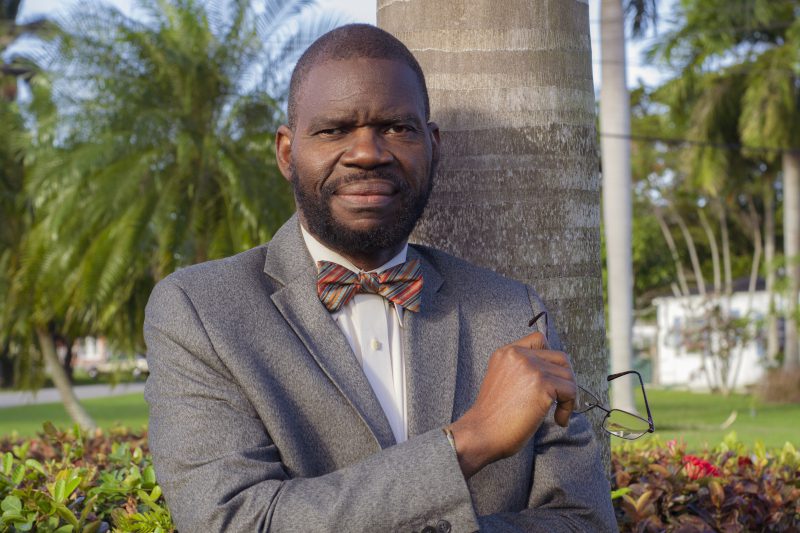
Prof. John Egbeazien Oshodi is an American psychologist and educator with expertise in forensic, legal, clinical, cross-cultural psychology, public ethical policy, police, and prison science.
A native of Uromi, Edo State, Nigeria, and son of a 37-year veteran of the Nigeria Police Force, he has dedicated his professional life to bridging psychology with justice, education, and governance. In 2011, he played a pioneering role in introducing advanced forensic psychology to Nigeria through the National Universities Commission and Nasarawa State University, where he served as Associate Professor of Psychology.
He currently serves as contributing faculty in the Doctorate in Clinical and School Psychology at Nova Southeastern University; teaches across the Doctorate Clinical Psychology, BS Psychology, and BS Tempo Criminal Justice programs at Walden University; and lectures virtually in Management and Leadership Studies at Weldios University and ISCOM University. He is also the President and Chief Psychologist at the Oshodi Foundation, Center for Psychological and Forensic Services, United States.
Prof. Oshodi is a Black Republican in the United States but aligns with no political party in Nigeria—his allegiance is to justice alone. On the matters he writes about, he speaks for no one and represents no side; his voice is guided solely by the pursuit of justice, good governance, democracy, and Africa’s advancement. He is the founder of Psychoafricalysis (Psychoafricalytic Psychology)—a culturally rooted framework that integrates African sociocultural realities, historical awareness, and future-oriented identity. A prolific thinker and writer, he has produced more than 500 articles, several books, and numerous peer-reviewed works on Africentric psychology, higher education reform, forensic and correctional psychology, African democracy, and decolonized models of clinical and community engagement.