
Africa
Sitting in Limbo: The PDP and the Burden of Redemption -By Patrick Iwelunmor
Nothing that unfolded at Wadata Plaza is irreparable. What would be truly irreparable is the refusal to learn from it. If the PDP summons the courage to restore dialogue, reaffirm discipline, and elevate collective interest over personal pride, it can recover its capacity for renewal. Failure to do so will render the warnings of Yeats and Eliot uncomfortably prescient, not only for the party but for the nation it once served.

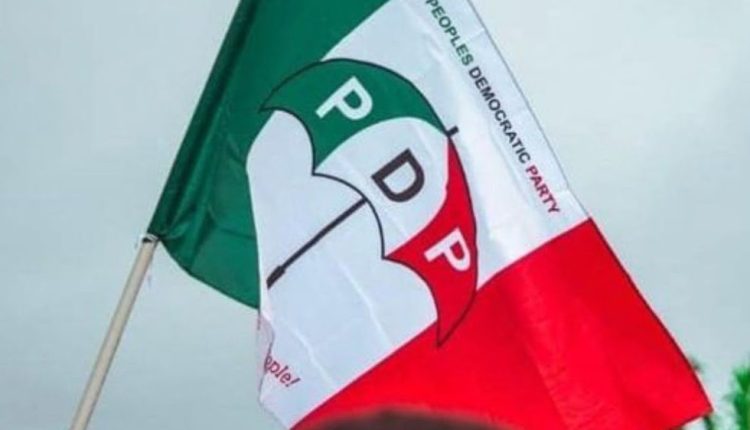
There are moments in the life of a political institution when the centre can no longer pretend to hold, when the familiar architecture of order begins to tremble under the weight of accumulated grievances. What unfolded at Wadata Plaza on Tuesday, 18 November, was not merely another quarrel within the Peoples Democratic Party but the unmasking of an ailment that has long been festering beneath the surface. A party that once prided itself on discipline and internal arbitration now appears increasingly unable to rise above its own passions and suspicions.
The PDP has a legacy that must not be forgotten. For sixteen years, it governed Nigeria, navigating the complexities of a diverse federation, managing economic and social policies, and sustaining a broad-based democratic coalition. It delivered periods of relative stability and left a record of policies that shaped institutions across sectors, from education to infrastructure. Those achievements underscore the party’s enduring capacity to lead when organisation, discipline, and principle prevail.
Two rival factions arrived at Wadata Plaza intending to hold parallel meetings, one led by the newly elected National Chairman Tanimu Turaki with the support of Governors Seyi Makinde and Bala Mohammed, and the other loyal to Senator Samuel Anyanwu and aligned with the FCT Minister Nyesom Wike. The secretariat, which should be a sanctuary of deliberation, became a theatre of confrontation. Tempers rose. Security operatives tensed. Party loyalists exchanged sharp words. For a tense moment, the party seemed poised to devour itself before the eyes of the nation.
It was a spectacle unbecoming of a party that once governed with cohesion and consistency. Institutions rarely collapse suddenly; they erode slowly through unresolved grievances, weakened trust, and an absence of accountability. One is drawn to the insight of W. B. Yeats in The Second Coming, that in moments of great unravelling “the best lack all conviction, while the worst are full of passionate intensity.” Those with the sobriety to steady the party appear hesitant. Those with the fervour to tear through its fragile fabric seem to possess limitless zeal.
Yet the PDP was once a broad national canopy, a vehicle capable of accommodating divergent voices while maintaining cohesion. That capacity now feels strained. Factionalism has replaced loyalty. The instinct for reconciliation has given way to brinkmanship. Patience has been eroded by the desire for instant advantage.
Nigeria also faces broader governance challenges under the All Progressives Congress. Rising insecurity, persistent economic pressures, and uneven policy implementation threaten national stability and public confidence. These circumstances make it all the more urgent that the PDP offers principled opposition, capable of holding government accountable and presenting credible alternatives.
In such a climate, T. S. Eliot’s warning in The Hollow Men resonates: collapse often comes “not with a bang but with a whimper.” The events at Wadata Plaza were not the end of the party, but they were a cautionary signal of what might follow if restraint and discipline are not restored.
The PDP must find its way back to the humility and organisation that once moderated its internal storms. Reconciliation requires both structure and intent. Leaders must prioritise collective good over personal ambition. Factions should establish a binding dispute-resolution committee, with deadlines for reconciliation and reporting. Internal election procedures must be standardised and monitored by independent observers to prevent parallel congresses. A strict code of conduct should be implemented, outlining sanctions for violence or obstruction. Grassroots engagement must be revitalised, ensuring that the membership feels heard and that local structures are strengthened. Clear timelines and measurable benchmarks for reform will signal seriousness and restore confidence in the party’s capacity to govern itself and Nigeria.
Nothing that unfolded at Wadata Plaza is irreparable. What would be truly irreparable is the refusal to learn from it. If the PDP summons the courage to restore dialogue, reaffirm discipline, and elevate collective interest over personal pride, it can recover its capacity for renewal. Failure to do so will render the warnings of Yeats and Eliot uncomfortably prescient, not only for the party but for the nation it once served.
The party now stands at a crossroads. It can allow division and spectacle to dictate its fate, or it can embrace the hard work of restoration, guided by principle, discipline, and conscience. Redemption is not granted; it must be earned through courage, humility, and decisive action. The eyes of the nation are upon the PDP. Its legacy, its credibility, and its role as a pillar of Nigerian democracy depend upon the choices made in this moment. History will remember whether it remained in limbo or rose to reclaim the dignity and purpose that once made it a beacon of hope.



















You must be logged in to post a comment Login