Africa
Why Okonjo-Iweala’s Call For Social Safety Nets In Nigeria Misses The Point -By Isaac Asabor
As widely known, billions of naira reportedly vanished. The Minister of Humanitarian Affairs at the time, Sadiya Umar Farouq, came under intense scrutiny for supervising what many analysts described as one of the biggest looting schemes ever disguised as welfare. Today, she is entangled in corruption allegations at the Economic and Financial Crimes Commission (EFCC). Her successor, Halima Shehu, who coordinated the NSIP, was also arrested over the alleged diversion of ₦37 billion. How can Nigerians take seriously the notion of safety nets when those entrusted with managing them treat public funds as personal treasure chests?

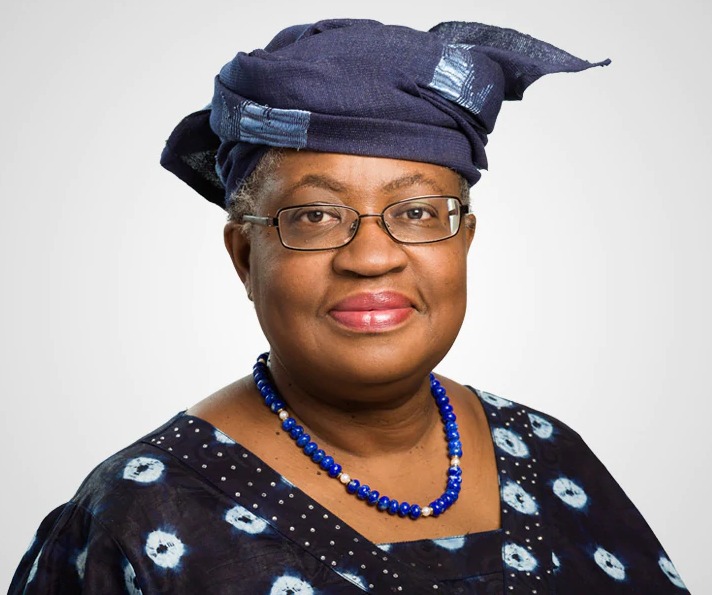
Some Nigerians recently applauded Dr. Ngozi Okonjo-Iweala, the Director-General of the World Trade Organization (WTO), when she recommended that Nigeria should strengthen social safety nets as a way of cushioning its worsening economic problems. At first glance, this appears sensible. Social safety nets, in principle, are designed to protect the poor and vulnerable from economic shocks, whether through cash transfers, food aid, subsidies, or welfare programs. But while this solution might work in countries where governance is strong, institutions are functional, and accountability is entrenched, Nigeria is a different reality altogether.
The plain truth is this: in Nigeria, social safety nets have historically failed. Instead of reducing poverty, they often end up enriching politicians, bureaucrats, and contractors. The funds hardly trickle down to the intended beneficiaries. So, as laudable as Dr. Okonjo-Iweala’s suggestion might sound in a textbook, in Nigeria it amounts to pouring water into a leaking basket.
To understand why her recommendation rings hollow, one must look at Nigeria’s history of social programs. Over and over again, these schemes have become pipelines for corruption rather than ladders out of poverty.
Take the National Social Investment Programme (NSIP) under the Buhari administration. It was touted as Nigeria’s flagship safety net, covering initiatives like N-Power (for youth employment), the Conditional Cash Transfer (CCT) scheme, and the Home-Grown School Feeding Programme. On paper, these programs were supposed to revolutionize welfare distribution. In reality, they became some of the most scandal-ridden ventures in Nigeria’s history.
As widely known, billions of naira reportedly vanished. The Minister of Humanitarian Affairs at the time, Sadiya Umar Farouq, came under intense scrutiny for supervising what many analysts described as one of the biggest looting schemes ever disguised as welfare. Today, she is entangled in corruption allegations at the Economic and Financial Crimes Commission (EFCC). Her successor, Halima Shehu, who coordinated the NSIP, was also arrested over the alleged diversion of ₦37 billion. How can Nigerians take seriously the notion of safety nets when those entrusted with managing them treat public funds as personal treasure chests?
Even the so-called Conditional Cash Transfer program, supposedly paying ₦5,000 monthly to millions of vulnerable households, was riddled with fraud. Nigerians kept asking: “Who are the beneficiaries? Where do they live?” Yet, no one could provide verifiable answers. It was as though the beneficiaries were ghost citizens created merely to justify budgetary allocations.
Without a doubt, Nigeria’s fuel subsidy regime was another textbook example of how social cushions become fraud pipelines. Introduced as a means to make petroleum products affordable for ordinary Nigerians, it turned into a cesspool of corruption. In 2012, investigations revealed that over ₦1.7 trillion was fraudulently claimed by marketers for fuel that was never delivered. Nigerians were furious, and nationwide protests shook the Jonathan administration. The scandal laid bare how a policy designed as a social buffer for the poor became a playground for thieves.
The subsidy lasted decades, but rather than shield the poor, it subsidized the lifestyles of the rich and the politically connected. It enriched a cartel of marketers and officials while the masses still queued endlessly for fuel. This is exactly what happens when “safety nets” are run in a system with porous accountability.
During the COVID-19 lockdowns of 2020, Nigerians witnessed another disgraceful failure. The government announced that food items and cash were being distributed to vulnerable households. Yet, when protests later swept the country, angry citizens discovered warehouses stacked with hoarded palliatives meant for the poor. Videos went viral as desperate Nigerians looted bags of rice, beans, and noodles that had been locked away by politicians. That incident remains a symbol of how Nigerian leaders weaponize poverty, using aid not as a lifeline but as a political tool.
Against this backdrop, it becomes clear why Okonjo-Iweala’s advice, though noble in theory, misses the Nigerian context. Social safety nets thrive only in societies where governance is transparent, where there are verifiable databases of citizens, and where public officials are held accountable for mismanagement.
In countries like Norway, Denmark, or even Brazil, welfare programs are effective because they are tied to functioning systems. There are proper population registries, reliable identity databases, and audit mechanisms. In Nigeria, by contrast, “ghost beneficiaries” multiply faster than real ones, databases are manipulated, and funds are siphoned without consequences.
Dr. Okonjo-Iweala’s global perspective may mislead her to this local reality. She may be drawing from international models where such nets work, but Nigeria is not Norway. Here, safety nets are quickly converted into loot-sharing nets, with the poor left only with press releases and political slogans.
To bluntly put it, the deeper problem as long as safety nets are concerned in Nigeria is that they are collectively an avenue to perpetrate lootocracy, not to engender a Welfare State.
The problem is not that Nigeria does not have enough safety nets. The problem is that Nigeria has “too many thieves in charge of the nets”. Instead of providing genuine relief, welfare programs are weaponized for political patronage. They are used to reward loyalists, pacify cronies, and create opportunities for contract inflation.
This is why any conversation about social safety nets in Nigeria that ignores the governance deficit is bound to fail. It is like suggesting more food be put on the table when the family head is a glutton who eats everything before anyone else gets a bite.
What Nigeria desperately needs is not another round of social safety nets. What Nigeria needs is structural reform and institutional accountability. Nigerians do not need to live perpetually on government stipends. What they need is an economy that allows them to earn a dignified living.
If the government can fix the power sector, industries will thrive and create jobs. If the naira can be stabilized through sound monetary policies, small businesses will flourish. If the manufacturing sector is given incentives, it can absorb millions of unemployed youths. These are sustainable solutions, not endless cash transfers that end up stolen.
Additionally, Nigeria must confront corruption head-on. Until looters are punished swiftly and decisively, every new social welfare policy will only be another feeding trough for the elite. Without accountability, the poor will always be pawns in the political chess game.
Dr. Ngozi Okonjo-Iweala’s advice may have been given in good faith, but it fails to reckon with Nigeria’s peculiar governance dysfunction. Social safety nets in Nigeria don’t protect the poor, they protect politicians’ bank accounts. History has shown that
every attempt to cushion Nigerians with stipends or subsidies ends up hijacked by a corrupt elite.
Until Nigeria builds strong institutions, restores accountability, and creates an economy where the average citizen can earn a living without handouts, social safety nets will remain another chapter in the long story of squandered opportunities.
Instead of encouraging Nigeria to pour more scarce funds into schemes that politicians will loot, the conversation should shift to building the structures that will make such programs genuinely effective in the future. Anything short of that is wishful thinking.