
Africa
Africa’s Divided Soul: How Tribalism And Xenophobia Are Killing The Spirit Of ‘Ubuntu’ -By Isaac Asabor
That is why the battle against tribalism and xenophobia is ultimately more than a political or economic struggle. It is a struggle over the kind of Africa we want to build; an Africa where identity becomes a bridge rather than a weapon, and where the old wisdom that “I am because we are” is not merely recited as a beautiful African proverb, but lived as a principle of everyday citizenship.

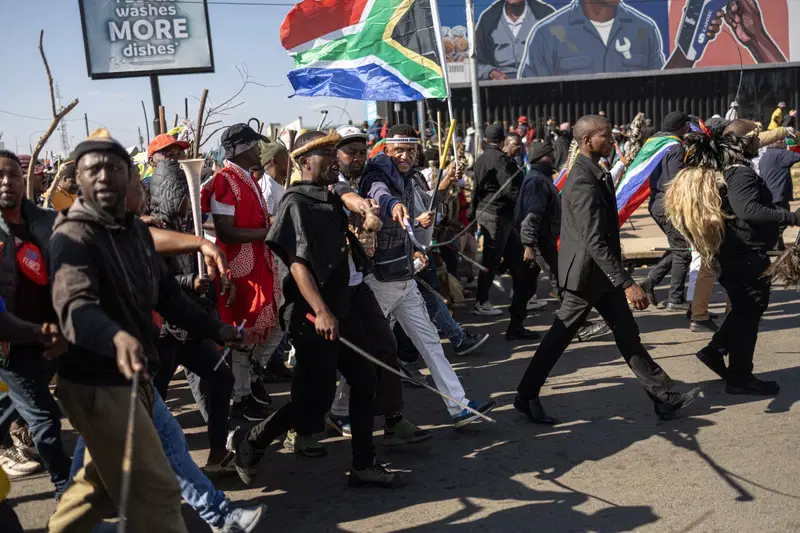
There is a word deeply rooted in African philosophy that captures an idea the continent desperately needs in an age of rising tribalism, xenophobia and identity politics: “Ubuntu”. Often translated as “I am because we are,” Ubuntu is the belief that a person’s humanity is inseparable from the humanity of others. It teaches that we do not exist as isolated individuals, but as members of a wider human community, and that our dignity, wellbeing and progress are tied to the dignity, wellbeing and progress of those around us. In practical terms, Ubuntu means recognizing the humanity of the stranger, respecting the dignity of people from different ethnic and cultural backgrounds, showing compassion to those who are vulnerable and understanding that another person’s success or presence does not automatically diminish our own. It is, at its core, an African philosophy of shared humanity, mutual respect, solidarity and communal responsibility. It is precisely this philosophy that Africa appears to be losing.
From the streets of Johannesburg to the political battlegrounds of Lagos, a quiet war over identity is being fought across the continent. It does not always feature marching armies or heavy artillery. Instead, its weapons are stereotypes, inflammatory rhetoric, social exclusion, economic discrimination, political manipulation and, in its most dangerous form, violence. The irony is painful: a continent whose traditional philosophy teaches that “I am because we are” is increasingly allowing people to define themselves by who they can exclude, reject or demonize.
In South Africa, the person being rejected may be an African migrant regarded as a foreigner. In Nigeria, the target may be a fellow citizen dismissed because of ethnicity, regional origin or political affiliation. In both cases, the dangerous idea is essentially the same: “that some people belong more than others.” This is where xenophobia and tribalism intersect.
They are not identical phenomena, and it would be misleading to suggest that they have exactly the same historical or structural origins. South African xenophobia is largely centered on hostility towards people perceived as foreigners, while Nigerian tribalism is an internal struggle in which citizens of the same country are divided along ethnic and regional lines. One is principally about nationality and the perceived threat posed by outsiders; the other is about ethnicity and competition among people who are supposed to share the same national home. Yet beneath these differences lies a common and deeply destructive impulse, “othering”.
Othering occurs when human beings are reduced to labels before they are seen as individuals. The migrant becomes “the foreigner.” The Nigerian becomes “the Igbo,” “the Yoruba” or “the Hausa.” The political opponent becomes a representative of an entire ethnic group rather than a citizen with a different political opinion. Once people are reduced to categories, it becomes easier to deny them empathy, fairness and dignity. And that is precisely where the spirit of Ubuntu begins to die.
If Ubuntu teaches that our humanity is interconnected, then xenophobia and tribalism teach the opposite. They tell us that our humanity is conditional, that it depends on where we were born, what language we speak, which ethnic group we belong to or whether we share the same political interests. That contradiction is the central tragedy of contemporary Africa.
A continent that wants greater integration, stronger economic cooperation and a common future cannot afford to continue cultivating suspicion among its own people. Africa cannot preach Pan-Africanism in international conferences while African migrants are treated as enemies on African soil. Nigeria cannot celebrate national unity while citizens are encouraged to view fellow Nigerians through the narrow prism of ethnicity.
Given the backdrop of the foregoing view, it is not out of place to opine that ubuntu demands something better. It demands that Africans understand that diversity is not a threat to humanity but part of it. It demands that the dignity of the stranger matters, that the rights of the minority matter and that the wellbeing of another ethnic or national community cannot simply be dismissed because it does not immediately benefit our own.
That is why the battle against tribalism and xenophobia is ultimately more than a political or economic struggle. It is a struggle over the kind of Africa we want to build; an Africa where identity becomes a bridge rather than a weapon, and where the old wisdom that “I am because we are” is not merely recited as a beautiful African proverb, but lived as a principle of everyday citizenship.




























You must be logged in to post a comment Login